
Key Points
- US
Treasury Secretary Scott Bessent signals upcoming talks with his Chinese
counterpart, raising hopes for progress in US-China trade relations. - Experts
and analysts remain cautious, highlighting significant challenges and the
complexity of ongoing negotiations. - Recent
meetings in Geneva and London produced temporary tariff reductions, but
underlying disputes persist. - President
Donald Trump intensifies tariff threats, with new deadlines and potential
for further escalation. - Both
US and Chinese officials emphasize the importance of de-escalation and
cooperation, but mutual trust remains fragile. - Legal
and political hurdles in the US, as well as Chinese concerns about
“unilateral bullying,” complicate the path forward. - Markets
react positively to signs of negotiation, but uncertainty about long-term
outcomes continues. - Statements
from both sides and expert commentary reflect a mix of optimism and
skepticism regarding the prospects for a durable agreement.
As trade tensions between the United States and China
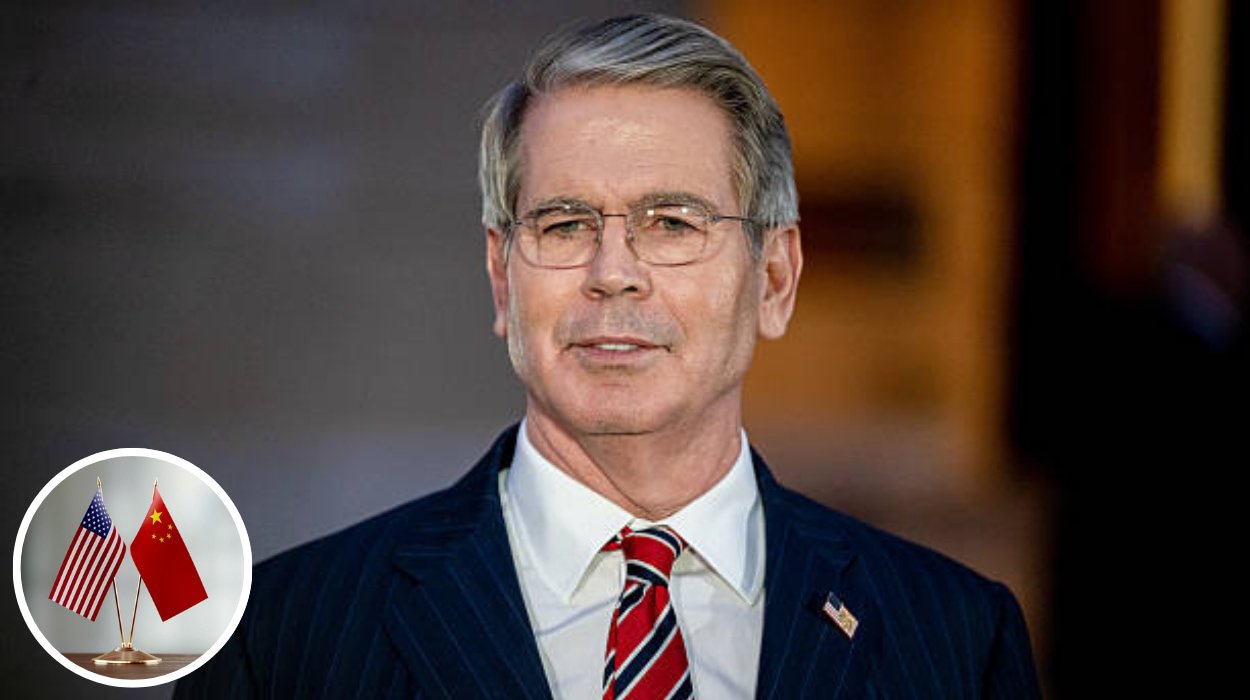
continue to shape global economic dynamics, recent remarks by US Treasury
Secretary Scott Bessent have drawn cautious optimism from experts, while also
underscoring the deep-seated challenges that remain. Bessent’s announcement of
planned discussions with his Chinese counterpart comes amid a flurry of
diplomatic activity, shifting deadlines, and persistent skepticism from
analysts and stakeholders on both sides of the Pacific.
What Did Scott Bessent Say About Upcoming Tariff Discussions
with China?
As reported by CNBC and cited by People’s Daily Online, US
Treasury Secretary Scott Bessent stated on Monday that he would be meeting his
Chinese counterpart within the next two weeks to advance trade discussions
between the world’s two largest economies. In an interview with CNBC,
Bessent remarked,
“We had good meetings in Geneva, in London. We both
approached it with great respect. I think there are things for us to do
together if the Chinese want to do it. So we will discuss whether we are able to
move beyond trade into other areas”.
Bessent’s remarks were echoed by Bloomberg reports, which
noted his openness to expanding cooperation beyond the immediate issues of
tariffs and trade. The Treasury Secretary’s comments come at a time when
President Donald Trump has intensified pressure on China and other trading
partners through new tariff threats and deadlines.
How Have Experts Reacted to Bessent’s Announcements?
According to People’s Daily Online, Chinese experts
emphasized that Bessent’s remarks highlight the importance of the economic and
trade relationship between China and the US, signaling a potential shift in
Washington’s approach to negotiations. Zhou Mi, a senior researcher at the
Chinese Academy of International Trade and Economic Cooperation, told the
Global Times that following recent talks in London, both sides had finalized
implementation details to carry out the consensus reached by the two heads of
state during their June 5 phone call and to consolidate the outcomes of the
Geneva talks.
However, as reported by the Atlantic Council, many experts
remain cautious. Melanie Hart, for example, argued that “it looks like China
has the upper hand in trade talks with the US,” while Josh Lipsky warned that
“treating US-China trade like a light switch will cause it to short circuit”. Other
analysts, such as Barbara C. Matthews and L. Daniel Mullaney, pointed out that
the unpredictability of tariff policy could incentivize third countries to
choose sides and reduce US trade dependence on China, respectively.
What Progress Has Been Made in Recent US-China Trade Talks?
As reported by the BBC, significant advancements were made
during high-level discussions in Geneva, Switzerland, where Bessent and China’s
Vice Premier He Lifeng participated in confidential, closed-door negotiations. While
Bessent refrained from providing specifics, he indicated that further
information would be revealed soon and that President Trump had been briefed on
the developments.
President Trump characterized the negotiations as a “total
reset” of the bilateral relationship, posting on social media that “GREAT
PROGRESS MADE!!!” and emphasizing the desire for China to open its markets to
American businesses. The talks resulted in a temporary reduction of US
tariffs on Chinese goods from 145% to 30%, and Chinese tariffs on US goods from
125% to 10%, for a period of 90 days. This reprieve, however, is set to
expire in mid-August, with both sides pledging to continue discussions to reach
a broader agreement.
Why Are Experts Still Cautious Despite Recent Developments?
As noted by People’s Daily Online, significant challenges
remain in the US-China trade relationship, with experts warning that mutual
trust is fragile and that both sides must meet halfway to achieve lasting
cooperation. The Atlantic Council highlighted that the temporary tariff
reductions create incentives for both countries to build new bilateral
arrangements with third parties, but also risk abrupt changes if negotiations
falter.
Barbara C. Matthews of the Atlantic Council observed that
the tariff suspension “creates a powerful incentive for third countries to
choose a side,” while Hung Tran warned that the agreement is “overshadowed by
the possibility of abrupt change”. The unpredictability of the current
environment, combined with ongoing disputes over issues such as export controls
and rare earth minerals, means that the path to a comprehensive agreement
remains uncertain.
What Are the Main Obstacles to a Lasting US-China Trade
Agreement?
As reported by IDN Financials and Yahoo News, Bessent
acknowledged that the ongoing tariff negotiations have reached an impasse and
suggested that direct talks between President Trump and President Xi Jinping
may be necessary to break the deadlock.
“I believe we might at some point
have a call between the president and party chair Xi,”
Bessent told Fox News,
as quoted by the Financial Times.
Legal and political hurdles in the US further complicate
matters. Trump’s tariffs are currently facing legal challenges, with critics
claiming he overstepped his authority by imposing widespread import duties
without congressional approval. Although Trump has so far avoided legal
defeat, the proceedings are ongoing, with the next hearing scheduled for early
June, according to the BBC.
On the Chinese side, President Xi has criticized the US for
what he described as “unilateral bullying” during a meeting with Latin American
leaders at the China-CELAC Forum in Beijing. The recent US-UK tariff
agreement has also triggered backlash from China, as the new rules are seen as
potentially excluding China from the UK’s supply chain.
How Have Markets and Other Countries Responded to the Latest
Developments?
According to the Atlantic Council, the announcement of the
90-day tariff reprieve sent global markets soaring, reflecting optimism about
the possibility of de-escalation. However, as reported by Politico and
Bloomberg, the Trump administration has threatened to impose tariffs as high as
50% on dozens of trading partners if they do not strike deals by the July 8
deadline, with those that do ink agreements still subject to a baseline rate of
10%.
Commerce Secretary Howard Lutnick confirmed plans to
finalize deals with ten major trading partners by July 9, while only the United Kingdom has secured preferential treatment so far, with auto tariffs reduced
and aerospace duties eliminated. The ongoing negotiations have also
impacted discussions with other major economies, including India, Japan,
Canada, Mexico, and the European Union.
What Are the Next Steps in US-China Trade Talks?
As reported by Politico, Bessent signaled that the Trump
administration’s tariff negotiations with more than a dozen trading partners
could stretch until September, despite the previously announced July deadline.
“We
have 18 important trading partners — U.K., China are behind us for now — and
then Secretary [Howard] Lutnick said yesterday that he expects 10 more deals.
So, if we can ink 10 or 12 of the important 18 — there are another important 20
relationships — then I think we could have trade wrapped up by Labor Day,”
Bessent told Fox Business.
President Trump echoed this flexibility, telling reporters,
“We can do whatever we want. We could extend it, we could make it shorter. I’d
like to make it shorter. I’d like to just send letters out to everybody:
‘Congratulations, you’re paying 25 percent’”.
How Do Experts View the Broader Impact of US-China Trade
Tensions?
As summarized by the Atlantic Council, the ongoing US-China
trade conflict has far-reaching implications for the global trading system,
with both sides recognizing the need to address longstanding imbalances while
avoiding long-term decoupling. The temporary reduction in tariffs is seen
as a positive signal, but experts warn that unpredictability and the risk of
abrupt policy shifts could undermine stability and confidence in international
markets.
Zhou Mi of the Chinese Academy of International Trade and
Economic Cooperation concluded that
“if both sides can meet each halfway and
actively seek cooperation, it will not only be beneficial to the two countries
but also bring more stability to the global market and have a positive impact
on other countries”.
In summary, while Scott Bessent’s remarks and the recent
flurry of diplomatic activity offer some hope for progress in US-China trade
relations, experts remain cautious. The complexity of the issues, the fragility
of mutual trust, and the unpredictability of political and legal developments
mean that a durable resolution remains elusive. As negotiations continue, all
eyes are on the next round of talks and the potential for direct engagement
between President Trump and President Xi — a step many believe is necessary to
break the current impasse and chart a path toward lasting stability.