
Key Points
- Israeli
Prime Minister Benjamin Netanyahu officially nominated U.S.
President Donald Trump for the Nobel Peace Prize during a private dinner
at the White House. - Netanyahu
cited Trump’s role in “forging peace” and specifically referenced the
Abraham Accords and ongoing efforts in the Middle East. - The
nomination was presented in person, with Netanyahu giving Trump a copy of
the letter sent to the Nobel committee. - Netanyahu
praised Trump’s “leadership of the free world” and his pursuit of peace
and security, particularly in the Middle East. - Trump
expressed surprise and gratitude for the nomination, calling it “very
meaningful” coming from Netanyahu. - The
meeting occurred amid global criticism of Israel’s military actions in
Gaza and ongoing diplomatic efforts for a ceasefire. - Netanyahu
also voiced support for Trump’s controversial proposal to relocate
Palestinians from Gaza and redevelop the area. - The
news comes as the International Criminal Court (ICC) has issued arrest
warrants for Netanyahu over alleged war crimes in Gaza. - Trump
has previously expressed frustration at being overlooked for the Nobel
Peace Prize, despite multiple nominations for his mediation efforts in
global conflicts. - The
White House dinner was the third meeting between Trump and Netanyahu this
year.
Israeli Prime Minister Benjamin Netanyahu has nominated U.S. President Donald Trump for the Nobel Peace Prize, citing Trump’s
“exceptional dedication to promoting peace, security, and stability around the
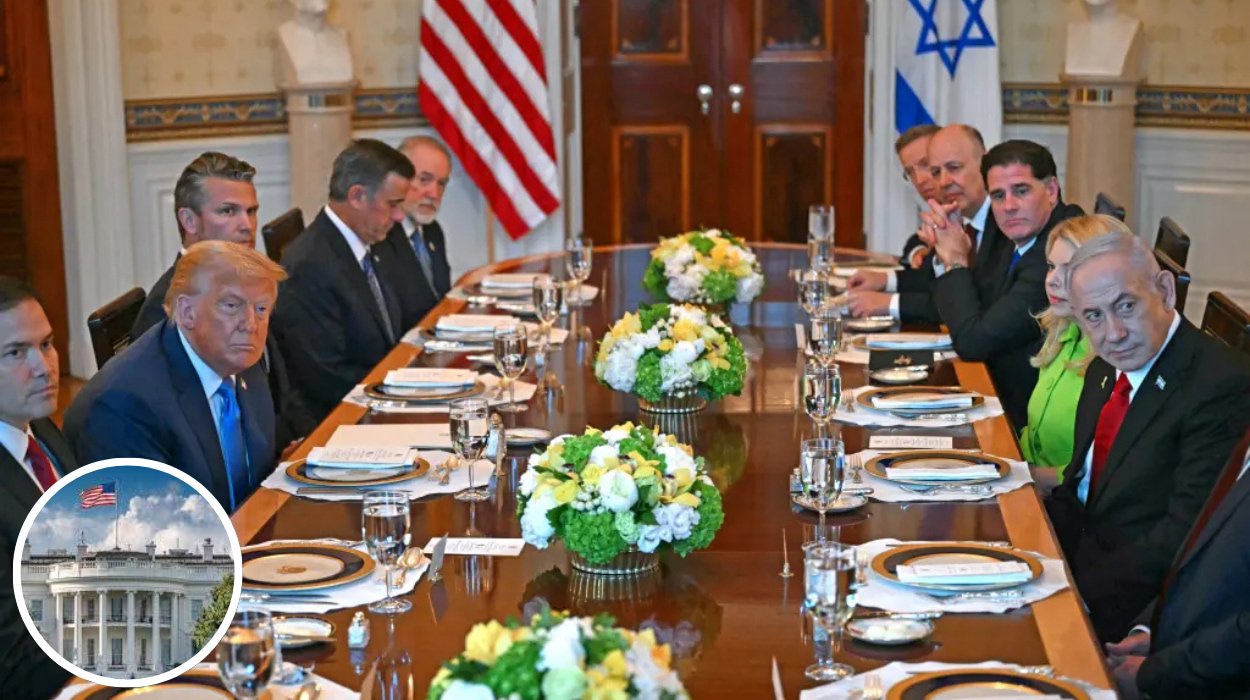
world.” The nomination was made during a private dinner at the White House,
marking a significant diplomatic gesture amid ongoing tensions in the Middle East.
What Led Netanyahu to Nominate Trump for the Nobel Peace
Prize?
As reported by the News On Air editorial team, Prime
Minister Netanyahu nominated Trump for the Nobel Peace Prize due to his “role
in forging peace,” particularly referencing the Abraham Accords and Trump’s
broader efforts to promote stability in West Asia. Netanyahu personally
handed Trump a copy of the nomination letter addressed to the Nobel committee
during their meeting at the White House.
According to Alexandra Hutzler and Kevin Shalvey of ABC
News, Netanyahu stated,
“He’s forging peace as we speak, in one country, in one
region after the other. So, I want to present to you, Mr. President, the letter
I sent to the Nobel Prize Committee. It’s nominating you for the Peace Prize,
which is well deserved. You should get it”.
What Happened During the White House Meeting?
During the private dinner, as covered by ThePrint, Netanyahu
expressed his “appreciation and admiration not only of all Israelis but of the
Jewish people and many, many admirers around the world” for Trump’s leadership.
He added,
“Your leadership of the free world, your leadership of a just cause,
and the pursuit of peace and security which you are leading in many lands, but
now especially in the Middle East. President has an extraordinary team, and I
think our teams together make an extraordinary combination to meet challenges
and seize opportunities”.
Trump, visibly surprised, responded,
“This I didn’t know.
Wow. Thank you very much. Coming from you in particular, this is very
meaningful. Thank you very much, Bibi. Thank you. Thank you for everything you
do. Thank you. It’s a great honor”.
Why Did Netanyahu Highlight Trump’s Role in the Abraham
Accords?
As reported by NDTV, Netanyahu emphasized Trump’s
instrumental role in brokering the Abraham Accords, which normalized relations
between Israel and several Arab states. Netanyahu said,
“The President has
already realized great opportunities. He forged the Abraham Accords. He’s
forging peace as we speak in one country, in one region after the other”.
Netanyahu’s letter to the Nobel committee, as cited by The
Times of Israel, praised Trump’s “steadfast and exceptional dedication to
promoting peace, security, and stability around the world”.
How Has the International Community Reacted to the
Nomination?
According to Dawn’s international desk, the nomination comes
at a time when Israel faces mounting global criticism over its ongoing military
campaign in Gaza, which has resulted in the deaths of over 57,000 Palestinians. The
United Nations-backed International Criminal Court (ICC) has issued arrest
warrants for Netanyahu, citing allegations of war crimes and crimes against
humanity, including “intentionally and knowingly depriving the civilian
population in Gaza of objects indispensable to their survival,” such as food,
water, medicine, fuel, and electricity.
Despite these controversies, Netanyahu maintained his
support for Trump’s peace initiatives, including a contentious proposal to
relocate Palestinians from Gaza and transform the area into a luxury waterfront
development.
What Has Trump Said About the Nobel Peace Prize in the Past?
As highlighted by Dawn, Trump has received multiple
nominations for the Nobel Peace Prize from supporters and lawmakers over the
years. He has publicly expressed frustration at being overlooked, especially
after his mediation efforts in conflicts between India and Pakistan, as well as
Serbia and Kosovo. In 2024, Trump insisted he was more deserving of the
Nobel than former President Barack Obama, stating it was unfair “anybody else”
but him would have been honored with the prize.
What Is the Broader Context of the Netanyahu-Trump
Relationship?
The White House dinner marked the third meeting between
Trump and Netanyahu this year, underscoring the close relationship between the
two leaders. According to coverage by ABC News, Netanyahu’s public praise
of Trump’s “pursuit of peace and security” comes as both leaders face
significant political and legal challenges at home and abroad.
During the dinner, Netanyahu also addressed questions about
the ongoing conflict in Gaza, reiterating Israel’s position on security and the
future of Palestinian governance. As reported by ThePrint, Netanyahu said,
“I think Palestinians should have all the
powers to govern themselves, but none of the powers to threaten us. That means
that certain powers like overall security will always remain in our hands.”
What Are the Implications for the Middle East Peace Process?
The nomination of Trump for the Nobel Peace Prize is seen by
some analysts as an attempt to bolster the legitimacy of both leaders’
approaches to Middle East diplomacy. As noted by Reuters, Netanyahu’s move
comes amid ongoing negotiations for a 60-day ceasefire between Israel and
Hamas, with Trump claiming Israel had accepted the deal and Hamas submitting a
“positive response” to mediators.
Netanyahu’s remarks also touched on the potential for
expanding the Abraham Accords, stating,
“There is an opportunity here to create
a historic expansion of the Abraham Accords which were themselves an act of
history that deserve a Nobel prize for the president. But I think the
opportunities are much bigger”.
How Has the Media Covered the Event?
Media outlets across the globe have reported extensively on
the nomination. News On Air, Dawn, ABC News, NDTV, ThePrint, Reuters, and The
Times of Israel all provided detailed accounts of the White House meeting, the
statements made by both leaders, and the broader geopolitical context.
Each outlet highlighted Netanyahu’s direct nomination of
Trump, the presentation of the nomination letter, and the leaders’ mutual
expressions of respect and gratitude. The coverage also noted the ongoing
controversies surrounding both leaders, particularly the international scrutiny
facing Israel’s actions in Gaza and Trump’s continued efforts to claim
recognition for his diplomatic initiatives.
What Happens Next?
The Nobel Peace Prize nomination process is confidential,
and the final decision rests with the Norwegian Nobel Committee. While
Netanyahu’s nomination of Trump is unlikely to resolve the controversies
surrounding either leader, it has reignited debate over the criteria for the
world’s most prestigious peace award and the role of political leaders in
shaping global diplomacy.
As the region continues to grapple with conflict and
diplomatic uncertainty, the nomination serves as a reminder of the complex
interplay between personal relationships, international recognition, and the
pursuit of peace.