
- Iran’s
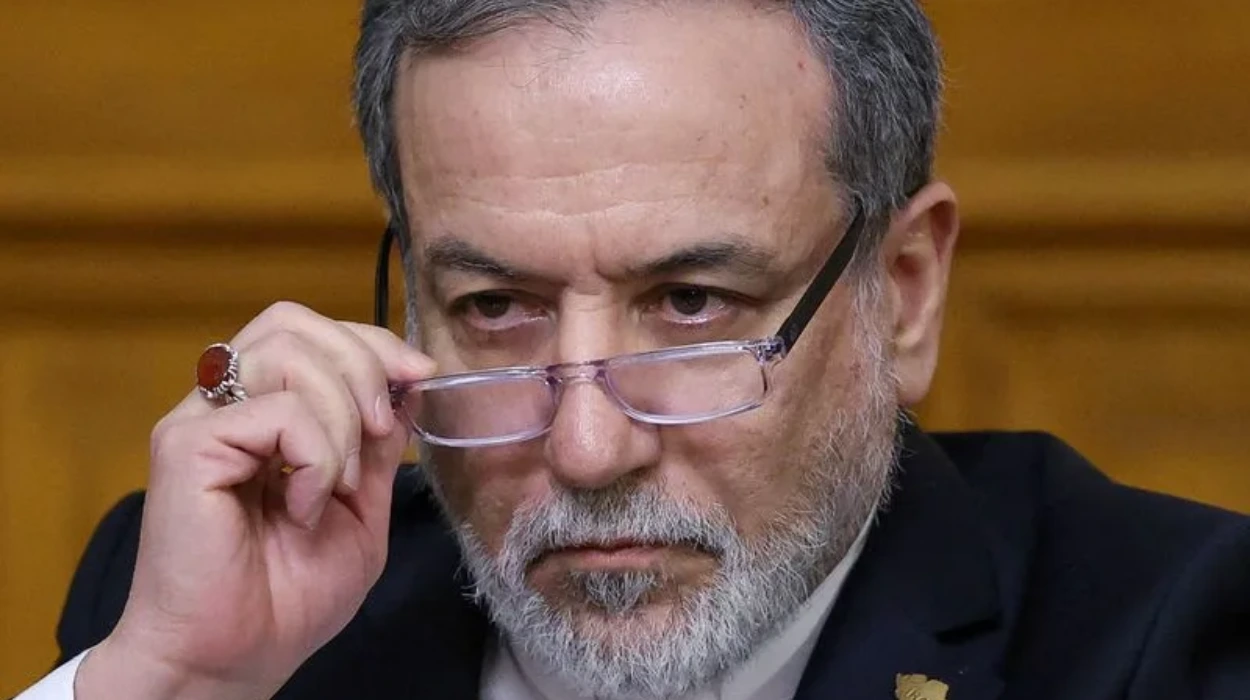
Foreign Minister Abbas Araghchi denied recent contact with US special
envoy Steve Witkoff and stated Tehran made no request for negotiations,
directly contradicting President Trump’s claim that Iran seeks a deal. - Araghchi
emphasized that talks cannot succeed under US military threats, excessive
demands, or intimidation, insisting on equal footing without menaces. - The
denial follows US naval deployments to the Gulf amid Iran’s ongoing
anti-government protests and crackdown, heightening regional war fears. - Intermediaries
from various countries remain in touch with Iran, sharing concerns over
destabilization, while President Masoud Pezeshkian signaled openness to
war-preventing processes under international law. - This stance
aligns with Iran’s history of rejecting direct US talks, as seen in prior
responses to Trump initiatives on nuclear issues.
Tehran (Washington Insider Megazine) January 28, 2026 –
Iranian Foreign Minister Abbas Araghchi stated that Tehran did not request
negotiations with the United States, rejecting claims made by President Donald
Trump during a White House press conference on 27 January 2026. The denial
follows Trump’s assertion that Iran had sent a secret emissary seeking talks on
its nuclear programme and regional security issues, which Iranian officials
described as “baseless propaganda.”
Araghchi emphasised Tehran’s commitment to its
“resistance economy” and strategic partnership with Russia and China,
while calling U.S. pressure tactics a sign of weakness. The exchange occurs
against a backdrop of heightened military posturing in the Strait of Hormuz and
ongoing U.S. sanctions targeting Iran’s oil exports and ballistic missile
programme.
Foreign Minister Abbas Araghchi made the remarks during a
televised interview on Iran’s state broadcaster IRIB on 28 January 2026, hours
after President Trump’s comments sparked widespread coverage across
international media outlets. Araghchi accused the U.S. of fabricating the story
to justify escalated sanctions and military deployments in the Persian Gulf
region.
“There has been no request for negotiations, direct
or indirect,”
Araghchi said.
“Iran does not beg for talks; we dictate terms from
a position of strength.”
Trump’s Claims and White House Position
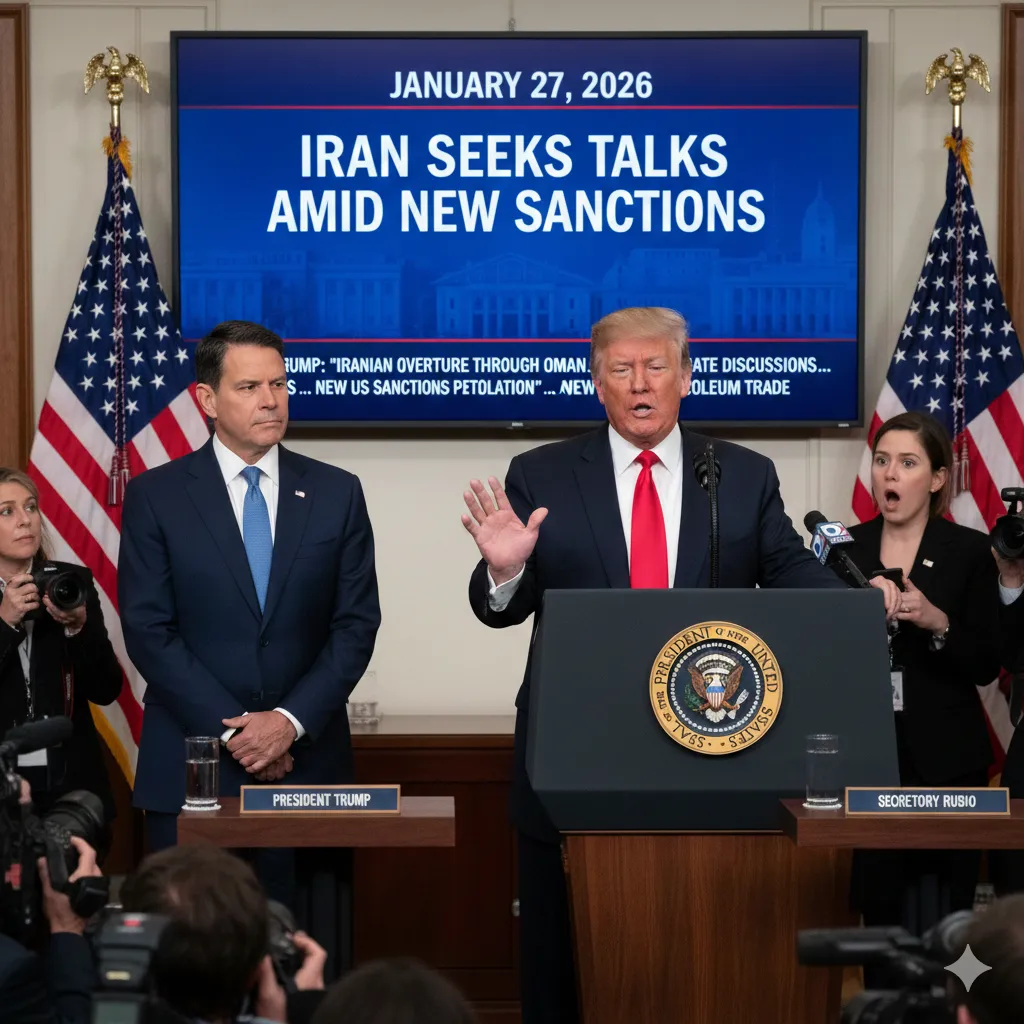
President Trump stated during a 27 January 2026 press
conference alongside Secretary of State Marco Rubio that Iran had approached
the U.S. through intermediaries in Oman, seeking immediate discussions to avert
further economic isolation. Trump described the alleged overture as a response
to new U.S. sanctions announced earlier in the week, which target secondary
entities trading in Iranian petroleum products.
White House Press Secretary Karoline Leavitt confirmed the
claim in a briefing, stating that the administration welcomed any genuine
Iranian initiative but remained firm on demands for full dismantlement of
Tehran’s nuclear enrichment capabilities and cessation of support for regional
proxies. Leavitt noted that similar backchannel communications occurred during
Trump’s first term, leading to the 2018 Helsinki summit proposal, though no
meeting materialised.
The State Department released a statement echoing Trump’s
remarks, indicating readiness for “unconditional talks” but warning
that Iran faced “maximum pressure” if it continued uranium enrichment
beyond civilian needs.
Iranian Official Rejections and Strategic Posture
Araghchi’s denial aligns with consistent messaging from
Supreme Leader Ayatollah Ali Khamenei, who in a 25 January 2026 speech
prohibited direct negotiations with Washington under current conditions.
Khamenei described U.S. overtures as “deceptive tricks” aimed at
dividing Iran’s leadership and public support for the nuclear programme.
Iranian Ambassador to the United Nations Amir Saeid Iravani
sent a letter to the Security Council on 28 January 2026, reiterating Tehran’s
rejection and accusing the U.S. of violating the 2015 Joint Comprehensive Plan
of Action (JCPOA) through unilateral withdrawal in 2018. Iravani highlighted
Iran’s compliance with IAEA monitoring until recent escalations, calling for
European guarantors to enforce sanctions relief.
Tehran has deepened military and economic ties with Moscow
and Beijing since the U.S. JCPOA exit. Russian Deputy Foreign Minister Sergei
Ryabkov confirmed on 28 January 2026 that Iran-Russia strategic consultations
continued uninterrupted, including joint naval drills in the Gulf of Oman.
Regional and International Reactions
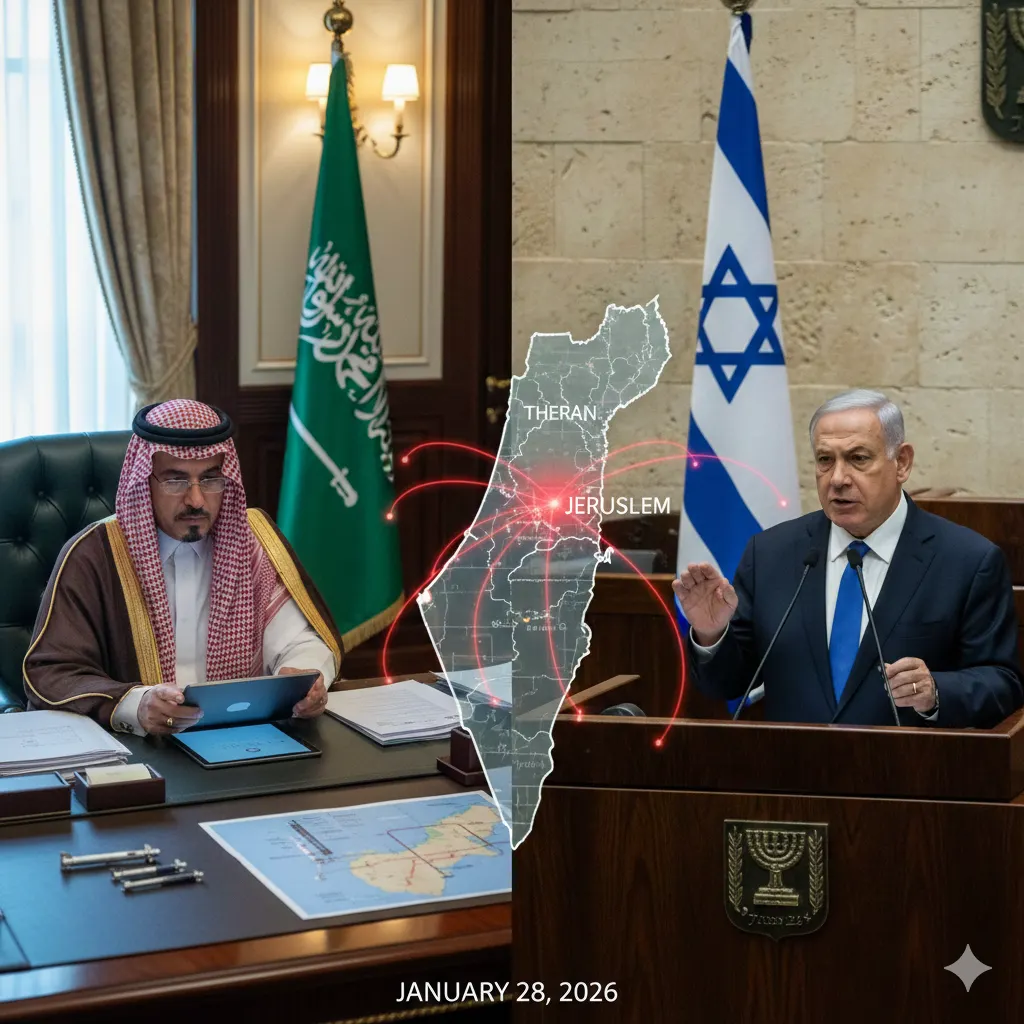
Saudi Arabia’s Foreign Ministry issued a statement welcoming
potential de-escalation but urged Iran to verifiably halt missile transfers to
Houthi rebels in Yemen. Israeli Prime Minister Benjamin Netanyahu, in remarks
to the Knesset, expressed scepticism about Iranian intentions, stating that
Jerusalem would respond forcefully to any nuclear breakout attempts.
European Union foreign policy chief Josep Borrell called for
renewed diplomacy, noting that trilateral talks with Iran in Geneva last month
yielded progress on confidence-building measures. Borrell’s office confirmed
that France, Germany, and the UK (E3) remained committed to the JCPOA framework
despite U.S. reimposition of sanctions.
China’s Foreign Ministry spokesperson Lin Jian stated on 28
January 2026 that Beijing opposed unilateral sanctions and supported Iran’s
sovereign right to peaceful nuclear energy. Lin emphasised ongoing Chinese
purchases of Iranian crude under special payment arrangements.
Nuclear Programme Developments and IAEA Reporting
The International Atomic Energy Agency (IAEA) reported on 23
January 2026 that Iran had enriched uranium to 60 per cent purity at Fordow,
sufficient for three nuclear weapons if further processed. IAEA Director
General Rafael Grossi noted restricted inspector access to Natanz since October
2025, raising verification concerns.
Iran announced expansion of its centrifuge cascade at Natanz
on 26 January 2026, bringing total capacity to over 10,000 advanced IR-6
models. Araghchi defended the moves as reversible responses to U.S.
“economic terrorism,” pending full JCPOA sanctions relief.
U.S. National Security Adviser Michael Waltz briefed
Congress on 27 January 2026 that intelligence indicated Iran could produce
weapons-grade uranium in weeks, though weaponisation would require months to
years.
Military Posturing in Strait of Hormuz
The U.S. Navy’s Fifth Fleet reported increased Iranian
Revolutionary Guard Corps (IRGC) naval patrols near the Strait of Hormuz on 28
January 2026. Two U.S. destroyers, USS Stout and USS Roosevelt, conducted
freedom of navigation operations through the strait overnight.
Iran seized a Greek-owned tanker flagged to the Marshall
Islands on 22 January 2026, citing violations of maritime law, marking the
second such incident in a month. The U.S. designated the vessel’s cargo as
sanctioned property, prompting IRGC threats of retaliation against American
shipping.
British and French naval assets joined U.S. forces in the
Combined Maritime Forces coalition, monitoring Iranian fast-boat swarms
reported near Abu Musa island.
Sanctions Escalation and Economic Impact
The U.S. Treasury Department’s Office of Foreign Assets
Control (OFAC) sanctioned 15 Chinese and UAE-based firms on 26 January 2026 for
facilitating $2 billion in Iranian oil sales since October 2025. Secretary
Rubio announced plans to target Iran’s “shadow fleet” of 300 vessels
evading trackers.
Iran’s Central Bank reported a 45 per cent depreciation of
the rial against the dollar in Q1 2026, amid capital flight and import shortages.
President Masoud Pezeshkian acknowledged public hardship in a 27 January
address but blamed external pressures.
Russia agreed
to supply Iran with Su-35 fighter jets and S-400 air defence systems under
a 2025 defence pact, with deliveries commencing in December 2025.
Historical Context of U.S.-Iran Talks
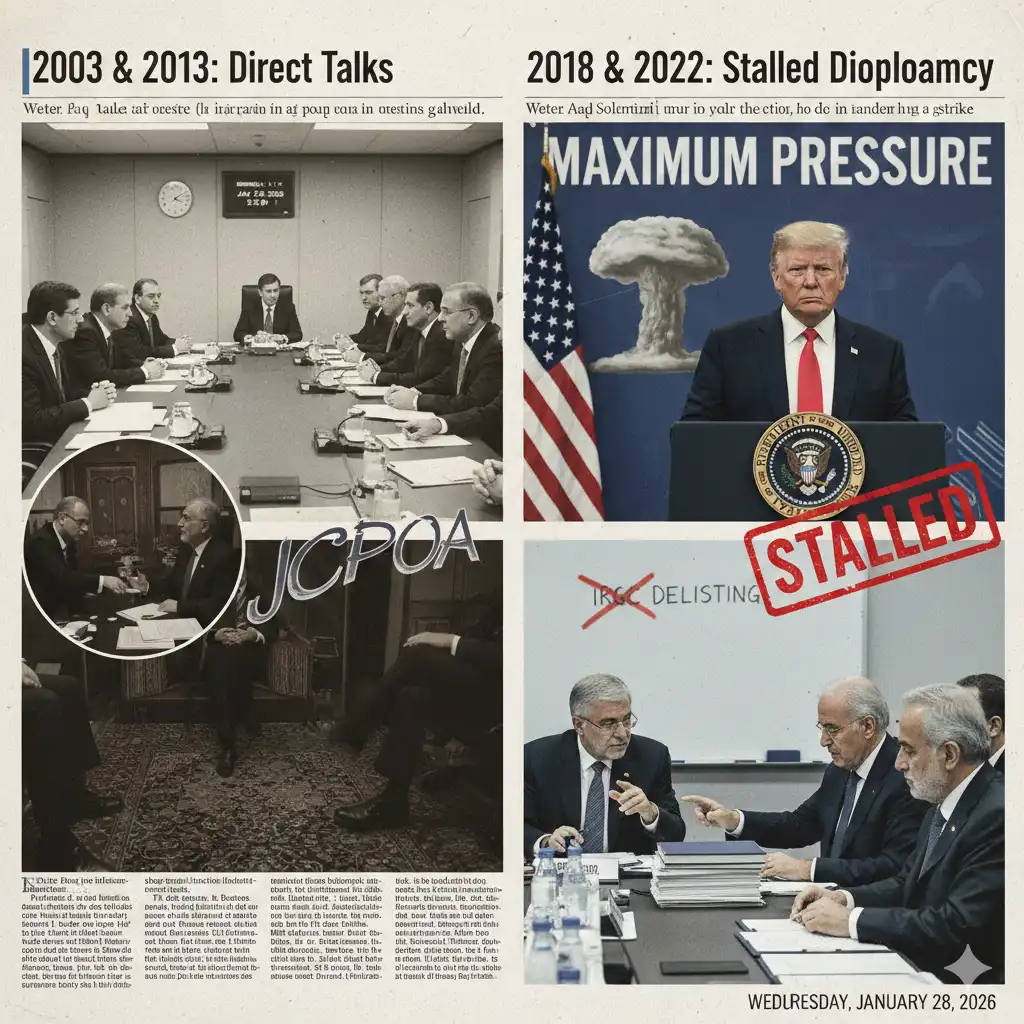
Direct U.S.-Iran negotiations occurred during the 2003 Iraq
invasion coordination and secret 2013 Oman channel leading to the JCPOA.
Trump’s 2018 “maximum pressure” campaign yielded no talks,
culminating in the 2020 Soleimani airstrike.
Biden administration indirect talks in Vienna stalled in
2022 over IRGC designations and Iran’s insistence on delisting. Araghchi
participated as lead negotiator, gaining praise from European counterparts for
pragmatism.
Domestic Political Dimensions
Iranian hardliners rallied in Tehran on 28 January 2026,
chanting “Death to America” and burning U.S. flags in response to
Trump’s remarks. Reformist outlets like Shargh newspaper questioned the
government’s rejection, citing economic strain.
U.S. congressional Republicans praised Trump’s pressure
strategy, while Democrats urged multilateral diplomacy. Senate Foreign
Relations Committee Chair James Risch (R-Idaho) scheduled a 30 January hearing
on Iran policy.