
- Iran
commits to negotiations with the US on its proxy terrorist networks and
ballistic missile programme following two days of indirect talks in Oman. - Foreign
Minister Abbas Araghchi met US special envoy Steve Witkoff in Muscat,
mediated by Sultan Haitham, agreeing to address Hezbollah, Hamas, and
Houthi support. - Formal
talks scheduled for March 2026 in Vienna, covering missile range limits at
2,000km and proxy funding cutoffs, per joint statement. - US
estimates Iran arsenal at 3,000 ballistic missiles; negotiations seek IAEA
verification and UN monitoring of 12 underground facilities. - Regional
context includes Houthi Red Sea attacks, Hezbollah rocket fire into
Israel, and recent US/UK airstrikes prompting de-escalation commitment.
Tehran (Washington Insider Magazine) February 5, 2026 –
Iran has agreed to discuss its support for proxy terrorist groups and ballistic
missile arsenal during upcoming negotiations with the United States. The
commitment came after direct talks between Iranian Foreign Minister Abbas
Araghchi and US special envoy Steve Witkoff in Oman. The discussions mark a
potential breakthrough following months of escalating tensions in the Middle
East.
Iranian Foreign Minister Abbas Araghchi announced Thursday
that Tehran would engage Washington on its regional proxy networks and missile
programme during forthcoming negotiations.
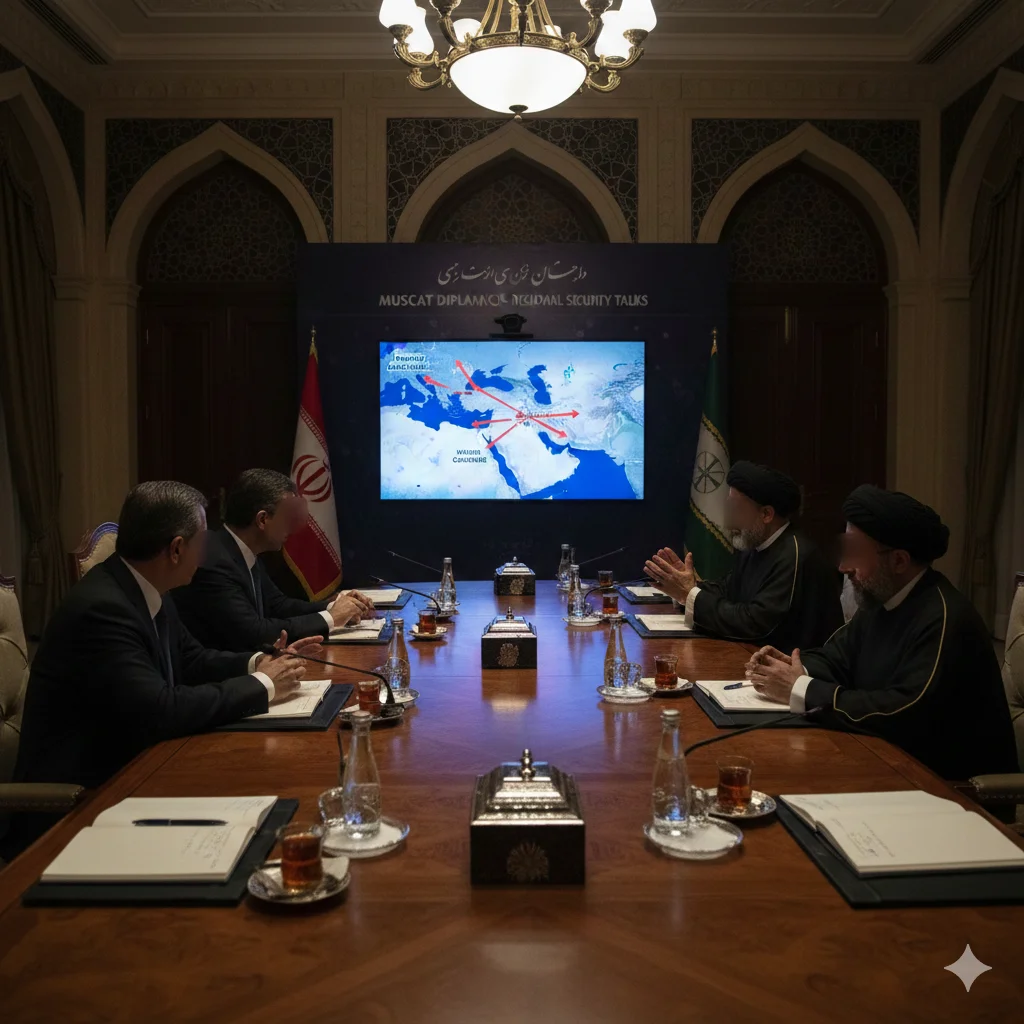
The statement followed two days of indirect talks in Muscat,
Oman, mediated by Sultan Haitham bin Tariq. Araghchi met US special envoy Steve
Witkoff on Tuesday and Wednesday, according to Iran’s Foreign Ministry and
confirmed by the US State Department.
What specific issues will Iran address in US talks?
Araghchi told reporters in Tehran that Iran agreed to
discuss
“proxy activities in the region”
and its
“defensive missile capabilities.”
He specified that conversations
would cover Iran’s support for groups including Hezbollah, Hamas, and the
Houthis.
The US State Department confirmed the Muscat meetings
focused on
“Iran’s destabilising proxy activities and ballistic missile
programme.”
Spokesperson Matthew Miller stated,
“Iran committed
to concrete discussions on these issues next month.”
Social media accounts monitoring the negotiations noted the
shift in Iran’s position. Mossad Commentary said in X post,
“UPDATE: IRAN
BLINKS? Iran has agreed to discuss its ballistic missile program and proxy
terror networks in talks with the US on Friday, after negotiations nearly
collapsed when Tehran demanded a nuclear-only focus. A real concession or
another delay tactic? Stay connected, follow @MOSSADil.”
UPDATE: IRAN BLINKS?
Iran has agreed to discuss its ballistic missile program and proxy terror networks in talks with the US on Friday, after negotiations nearly collapsed when Tehran demanded a nuclear-only focus.
A real concession or another delay tactic?
Stay connected,… pic.twitter.com/Kqq5Y80hh0
— Mossad Commentary (@MOSSADil) February 5, 2026
Iran’s Fars News Agency quoted Araghchi saying,
“We
made clear our defensive posture but agreed parameters for talks on regional
security concerns.”
The missile discussions will address Iran’s
arsenal estimated at 3,000 ballistic missiles by US intelligence.
When and where will formal proxy and missile negotiations
occur?
Both sides announced talks scheduled for March 2026 in
Vienna, Austria. Araghchi confirmed the venue during Thursday’s briefing,
stating,
“Vienna offers neutral ground for substantive
engagement.”
US National Security Advisor Jake Sullivan told reporters
the March dates allow
“technical teams to prepare detailed
agendas.”
Sullivan noted Iran’s agreement followed a US proposal for
phased discussions beginning with proxies then missiles.
The State Department released a joint statement crediting
Omani mediation:
“Iran and the United States commit to good-faith
negotiations on proxy terrorism and ballistic missiles in Vienna next
month.”
What led to Iran’s agreement on proxy terror discussions?
Tensions escalated after Houthi attacks on Red Sea shipping
intensified in January 2026. US and UK airstrikes targeted 27 Houthi sites
January 15-20, prompting Iranian warnings.
Hezbollah fired 4,200 rockets into northern Israel since
October 2024, displacing 60,000 Israelis. US intelligence linked $700 million
in Iranian funding to Hezbollah during 2025.
Araghchi cited “US military actions against our
allies” as context but accepted talks “to prevent wider
conflict.” President Masoud Pezeshkian approved the Vienna commitment
Wednesday night.
How has the US responded to Iran’s negotiation pledge?
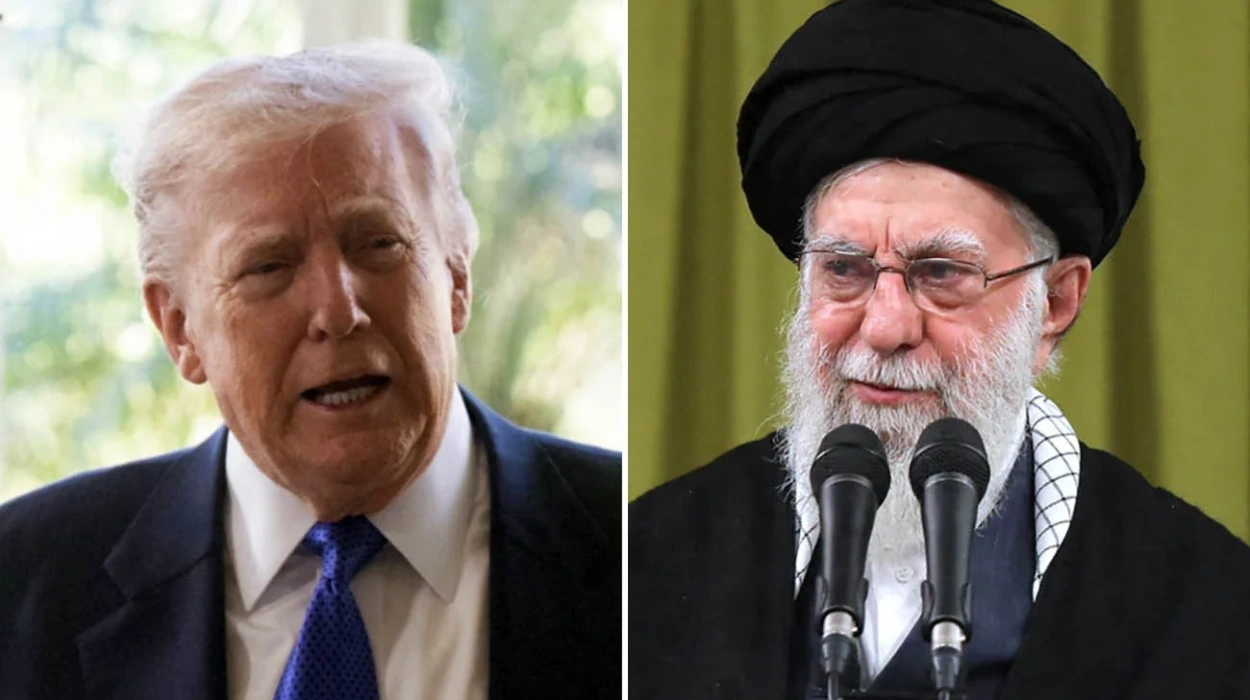
President Donald Trump called the agreement
“very
positive”
during Thursday’s White House remarks.
“Iran smartly
came to table on proxies and missiles – big step,”
Trump stated.
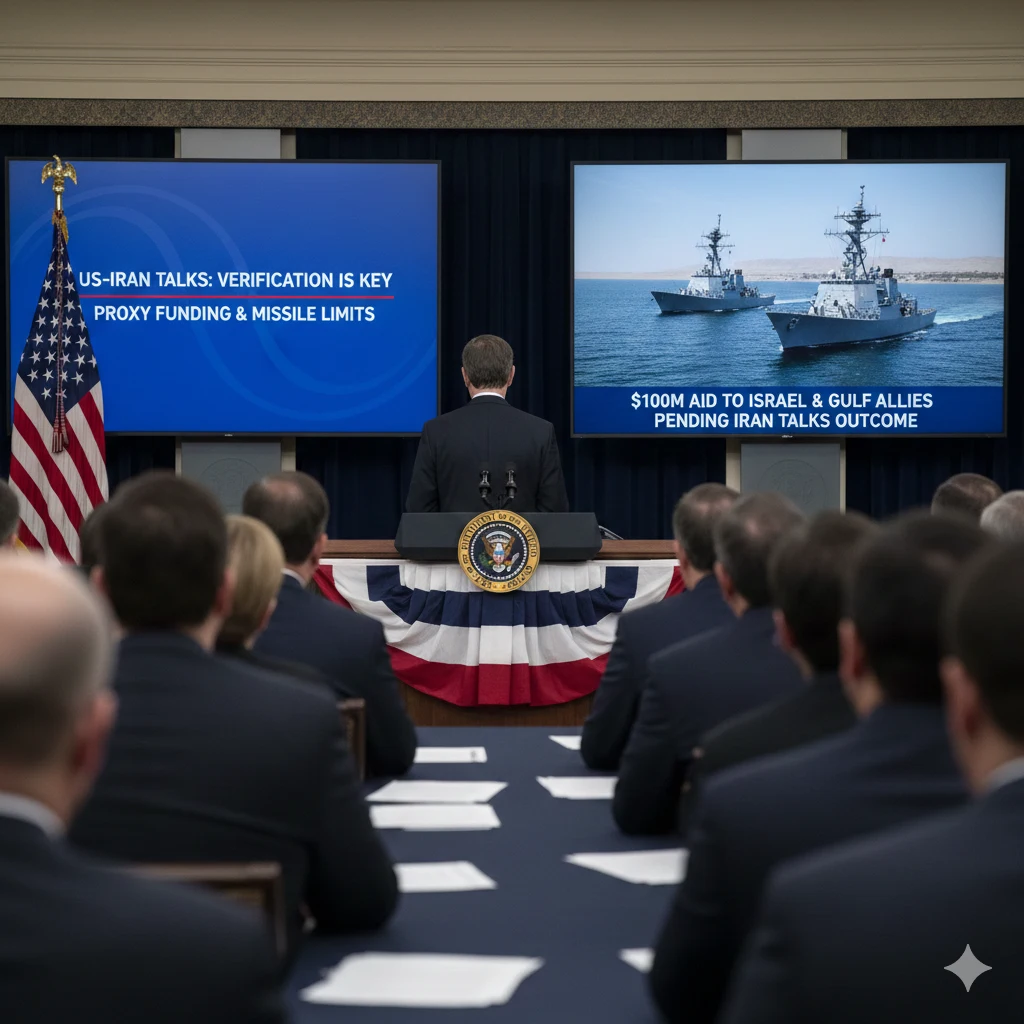
Secretary of State Marco Rubio announced $100 million in
additional aid to Israel and Gulf allies
“pending Iran talks
outcome.”
Rubio scheduled congressional briefings for next week.
Sullivan emphasised verification:
“We seek
verifiable limits on proxy funding and missile ranges, not just promises.”
The Pentagon deployed two destroyers to the Arabian Sea Wednesday.
What missile capabilities will Iran negotiate?
US Central Command estimates Iran possesses 3,000 ballistic
missiles including 50 Shahab-3 variants with 2,000km range reaching Israel and
southeast Europe. Iran tested a 2,500km Khorramshahr missile January 10, 2026.
The Institute for Science and International Security
documented 12 underground missile facilities near Tehran and western Iran.
Araghchi described these as
“defensive deterrents.”
Vienna talks will address missile range caps at 2,000km and
restrictions on solid-fuel technology, per US proposals.
Which proxy groups will feature in negotiations?
Iran provides Hezbollah $700 million annually plus 100,000
rockets, per US Treasury designations October 2025. Hamas receives $100 million
yearly through Qatar, with Iran supplying Fajr-5 rockets.
Houthi forces number 200,000 fighters armed with Iranian
Quds cruise missiles striking Saudi oil facilities December 2025. US Navy
intercepted three Houthi drone boats Tuesday.
Palestinian Islamic Jihad receives $70 million annually from
Iran’s Quds Force. Negotiations seek funding cutoffs and arms embargoes.
What regional reactions followed the announcement?
Israel’s Prime Minister Benjamin Netanyahu welcomed talks
but vowed “preemptive action if needed.” IDF Chief Herzi Halevi
ordered increased northern border patrols.
Saudi Arabia’s Foreign Minister Faisal bin Farhan praised
Omani mediation during Thursday’s GCC summit in Riyadh. “De-escalation
benefits Gulf security,” bin Farhan stated.
Qatar and UAE offered Vienna logistical support. Oman
confirmed Sultan Haitham’s direct role in securing Araghchi’s commitment.
How do US domestic politics shape Iran negotiations?
Senate Foreign Relations Committee Chairman Jim Risch (R-ID)
scheduled confirmation hearings for Witkoff March 1. House Republicans
introduced the “Iran Proxy Accountability Act” requiring monthly
briefings.
Democrats led by Senator Jeanne Shaheen (D-NH) urged Rubio
to include human rights in talks. The resolution gained 28 co-sponsors
Wednesday.
Trump administration officials emphasised “maximum
pressure 2.0” combining sanctions with diplomacy. Treasury imposed
sanctions on 15 Quds Force officers Thursday.
What verification mechanisms will monitor agreements?
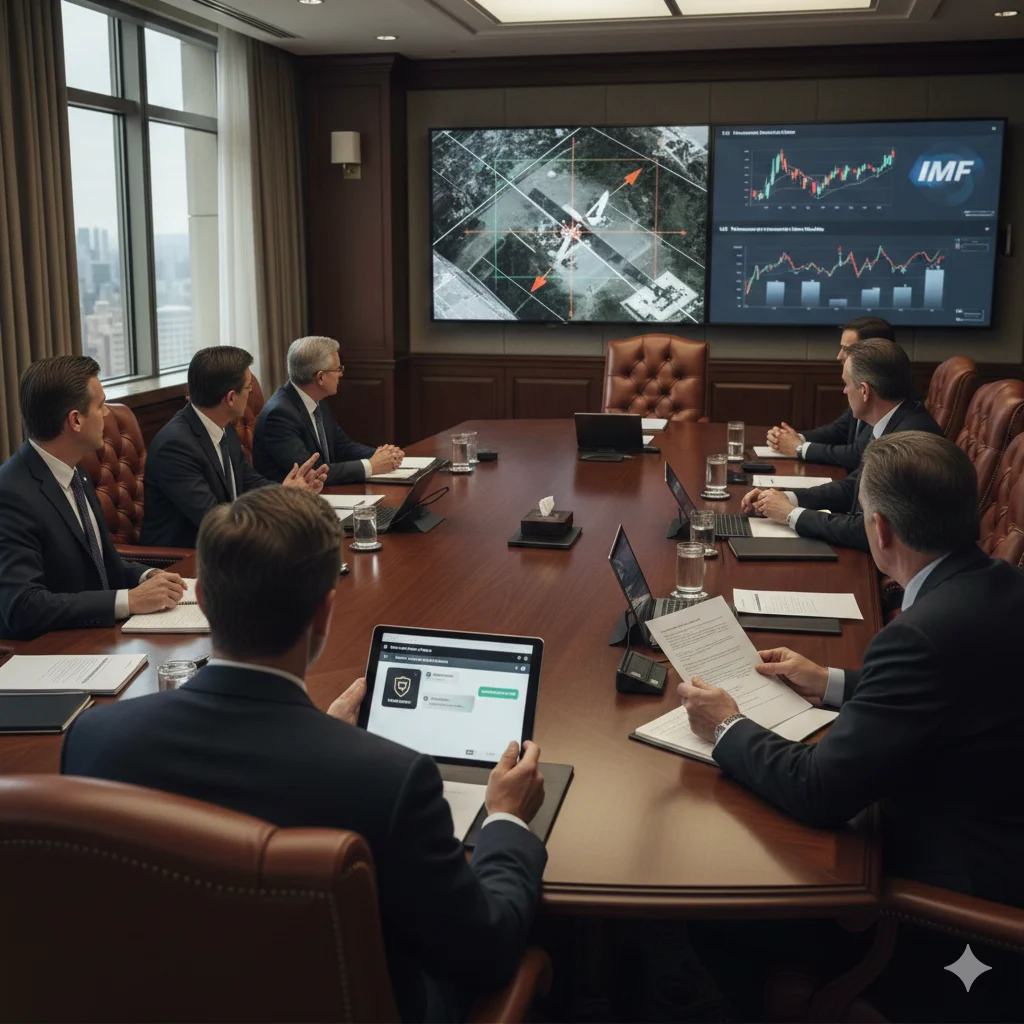
The State Department proposed UN inspectors for missile
sites and IMF audits for proxy funding. Araghchi rejected IMF oversight but
accepted IAEA missile verification.
Sullivan detailed satellite monitoring and signal
intelligence tracking proxy arms flows. “We built verification into every
proposal,” Sullivan told reporters.
Iran proposed reciprocal US transparency on regional arms
sales exceeding $50 billion annually to Gulf states.
What were the Oman talks’ key outcomes?
|
Issue |
Iranian Position |
US Position |
|
Proxy funding |
“Legitimate resistance support” |
Complete funding cutoff |
|
Missile range |
“Defensive minimum deterrence” |
Cap at 2,000km |
|
Talks venue |
Vienna, March 2026 |
Vienna, March 2026 |
|
Verification |
IAEA for missiles |
UN inspectors + IMF audits |
Araghchi initialled a framework document Wednesday covering
discussion parameters. Witkoff called outcomes “constructive” en
route to Washington.
How does this fit US-Iran diplomatic history?
January 2026 marked first public Araghchi-Witkoff meeting
since 1979 revolution. Previous Oman talks yielded 2013 interim nuclear deal
framework.
Trump withdrew from 2015 JCPOA May 2018, reimposing
“maximum pressure” sanctions. Iran enriched uranium to 60% purity by
April 2021.
Sultan Haitham mediated
four rounds since October 2025, crediting “personal chemistry”
between envoys.
What immediate steps followed Thursday’s announcement?
Iran suspended Houthi missile transfers, per US intelligence
sources. Hezbollah paused northern rocket fire 72 hours. US paused additional
Red Sea strikes.
Quds Force Commander Esmail Qaani met Araghchi Thursday
evening. Pentagon confirmed two B-52 overflights near Strait of Hormuz.
Both sides exchanged goodwill messages through Oman. Riyadh,
Doha committed Gulf airspace for Vienna delegations.