
Key Points
- Saudi
Arabia’s National Center for Environmental Compliance (NCEC) has launched
a drone-based program to monitor 2,480 km of the Kingdom’s coastal areas. - The
initiative is in cooperation with the Marine Operations for Environmental
Services organization. - Drones
provide live video feeds for real-time analysis to detect activities
threatening marine resources, including pollution and illegal practices. - Each
drone can operate for up to 55 minutes per sortie, covering 20 km, with
instant data transmission to control rooms. - Amer
Bamoneef, NCEC’s director-general for network monitoring, emphasizes the
efficiency and expanded coverage drones offer. - The
Red Sea coastline extends 1,830 km from the Gulf of Aqaba to Jazan
province; the Arabian Gulf coastline is 630 km from Kuwait to Qatar. - Drones
enable quicker responses to pollution, allowing teams to promptly
investigate and identify sources. - Advanced
drone monitoring supports broader Saudi environmental protection and
sustainability goals. - Drone
technology is increasingly used in Saudi Arabia for various applications,
including Hajj safety, environmental research, and national security. - The
deployment reflects a regional trend toward integrating unmanned aerial
vehicles (UAVs) for environmental monitoring and strategic defense.
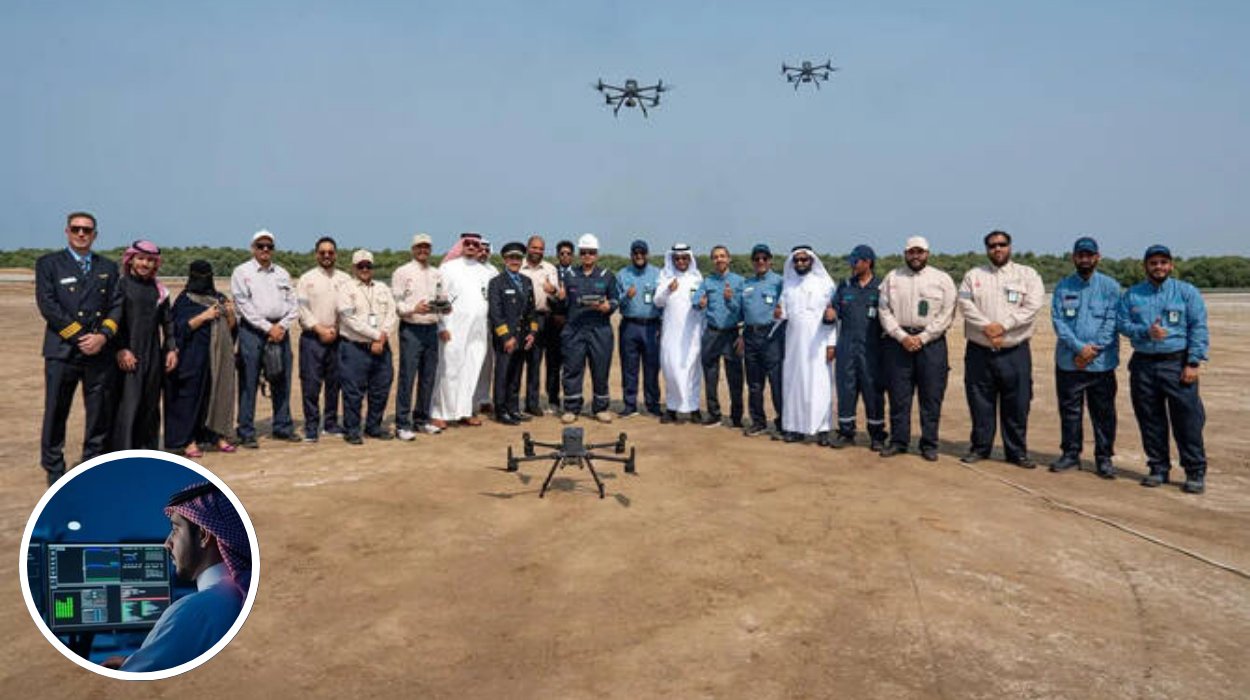
Saudi Arabia has launched an ambitious drone-based
initiative to monitor its extensive coastlines, aiming to safeguard marine
resources and respond swiftly to environmental threats, according to a recent
report by the Saudi Press Agency (SPA) and coverage by Arab News.
Why Has Saudi Arabia Launched a Drone-Based Coastal
Monitoring Program?
As reported by Arab News, Saudi Arabia’s National Center for
Environmental Compliance (NCEC) has initiated a comprehensive drone program to
oversee the Kingdom’s 2,480-kilometer-long coastal areas. The program,
conducted in partnership with the Marine Operations for Environmental Services
organization, is designed to provide real-time surveillance and rapid response
capabilities to protect marine ecosystems from pollution, illegal fishing, and
other harmful activities.
Amer Bamoneef, director-general for network monitoring at
the NCEC, explained,
“By leveraging advanced technology, we can expand coverage
and detect harmful practices more efficiently”.
Bamoneef emphasized that drones
enable teams to investigate sources of pollution promptly and identify those
responsible, marking a significant improvement over traditional monitoring
methods.
How Do the Drones Operate and What Areas Are Covered?
According to details provided by the Saudi Press Agency and
reported by Arab News, each drone deployed in the initiative can operate for up
to 55 minutes per sortie, covering a distance of 20 kilometers. The drones
transmit live video feeds directly to control rooms, allowing for real-time
analysis and immediate action if suspicious or illegal activities are detected.
Saudi Arabia’s coastline is divided into two major segments:
the Red Sea coastline, which stretches 1,830 kilometers from the Gulf of Aqaba
in the north to Jazan province in the south, and the Arabian Gulf coastline,
which extends 630 kilometers from the northern border with Kuwait to the
southern border with Qatar. The deployment ensures comprehensive surveillance
across both regions, enhancing the country’s ability to protect its diverse
marine environments.
What Are the Broader Environmental and Strategic Goals
Behind the Drone Deployment?
The launch of this drone initiative is part of Saudi
Arabia’s broader strategy to strengthen environmental protection and
sustainability. As noted by Amer Bamoneef to Arab News, the use of drones
allows for faster detection and response to environmental threats, which is
critical for preserving marine biodiversity and supporting the Kingdom’s
ambitious Vision 2030 sustainability targets.
The program also aligns with ongoing research and
technological advancements in the region. According to a study by KAUST
Discovery, drones have proven to be valuable tools for monitoring coastal water
flows and tracking pollution sources, offering a cost-effective and accessible
method for regular environmental monitoring. Dr. Kasper Johansen, a remote
sensing researcher at KAUST, highlighted that UAVs can map the movement of
pollutants and nutrients along the coast, providing insights into ecosystem
health and supporting large-scale environmental projects.
How Does This Initiative Fit Into Saudi Arabia’s Wider Use
of Drones and AI?
Saudi Arabia’s deployment of drones for environmental
monitoring is part of a larger trend of integrating advanced technologies,
including artificial intelligence (AI), into national operations. As reported
by Al-Monitor, the Kingdom has utilized AI-powered drones and thousands of
cameras to ensure the safety of millions of Hajj pilgrims, demonstrating the
versatility and effectiveness of these technologies in diverse contexts.
Lieutenant General Mohammed bin Abdullah Al-Bassami,
director general of public security, told reporters,
“We use artificial
intelligence and other tools like drones and thermal imaging cameras to
monitor and manage large-scale events such as Hajj, further underscoring the
Kingdom’s commitment to high-tech solutions for public safety and environmental
management.”
What Is the Regional and Global Significance of Saudi
Arabia’s Drone Strategy?
Saudi Arabia’s investment in drone technology for
environmental and security purposes reflects a broader regional and global
trend. According to Breaking Defense, the Kingdom is in talks to acquire up to
200 MQ-9 unmanned systems from General Atomics, signaling a major
transformation in its surveillance and defense capabilities. Kristian
Alexander, a senior fellow at the Rabdan Security and Defence Institute,
commented that such a large-scale acquisition “suggests Saudi Arabia is
planning for a major doctrinal and operational transformation of its airpower
and surveillance architecture”.
The integration of drones into environmental monitoring and
national security not only enhances Saudi Arabia’s ability to protect its
resources but also positions the country as a leader in adopting cutting-edge
technologies for sustainable development and regional stability.
What Are the Potential Challenges and Future Developments?
While the deployment of drones offers significant benefits,
experts caution that technological solutions must be complemented by robust
regulatory frameworks and ongoing research. As noted by KAUST’s Dr. Johansen,
the continuous evolution of satellite and UAV technologies will enable even
more comprehensive monitoring in the future, but it is essential to ensure data
accuracy and effective response protocols.
Jacopo Maria Mazzucco, an independent researcher in Gulf
security affairs, told Breaking Defense that while platforms like the MQ-9
Reaper are valuable for surveillance, they remain vulnerable to certain threats
and require ongoing upgrades to maintain operational effectiveness. This
highlights the need for Saudi Arabia to invest not only in hardware but also in
training, cybersecurity, and international cooperation to maximize the impact
of its drone initiatives.
In summary, Saudi Arabia’s deployment of drones to monitor
its coastlines marks a significant step toward protecting marine resources and
advancing environmental sustainability. The initiative, backed by advanced
technology and strategic partnerships, demonstrates the Kingdom’s commitment to
leveraging innovation for national and regional benefit, while also
highlighting the challenges and opportunities inherent in adopting new
surveillance tools.