
Damascus (Washington Insider Magazine) – February
5, 2026 — Syria has relaunched Damascus Radio as a modern multi-platform
broadcaster, marking a milestone in the country’s transitional media landscape.
The state broadcaster now serves both the capital and national audiences
through FM, online streaming, podcasting, and social media distribution. The
initiative coincides with broader stabilisation efforts in post-Assad Syria.
Expanding Reach and Digital Platforms
The Ministry of Information unveiled the upgraded Damascus
Radio on Thursday as a fully integrated service offering news, cultural,
and entertainment programming across diverse channels. The station broadcasts
on 98.1 FM, with extended shortwave coverage nationwide and streaming available
via a dedicated mobile app, website, and smart speaker integration.
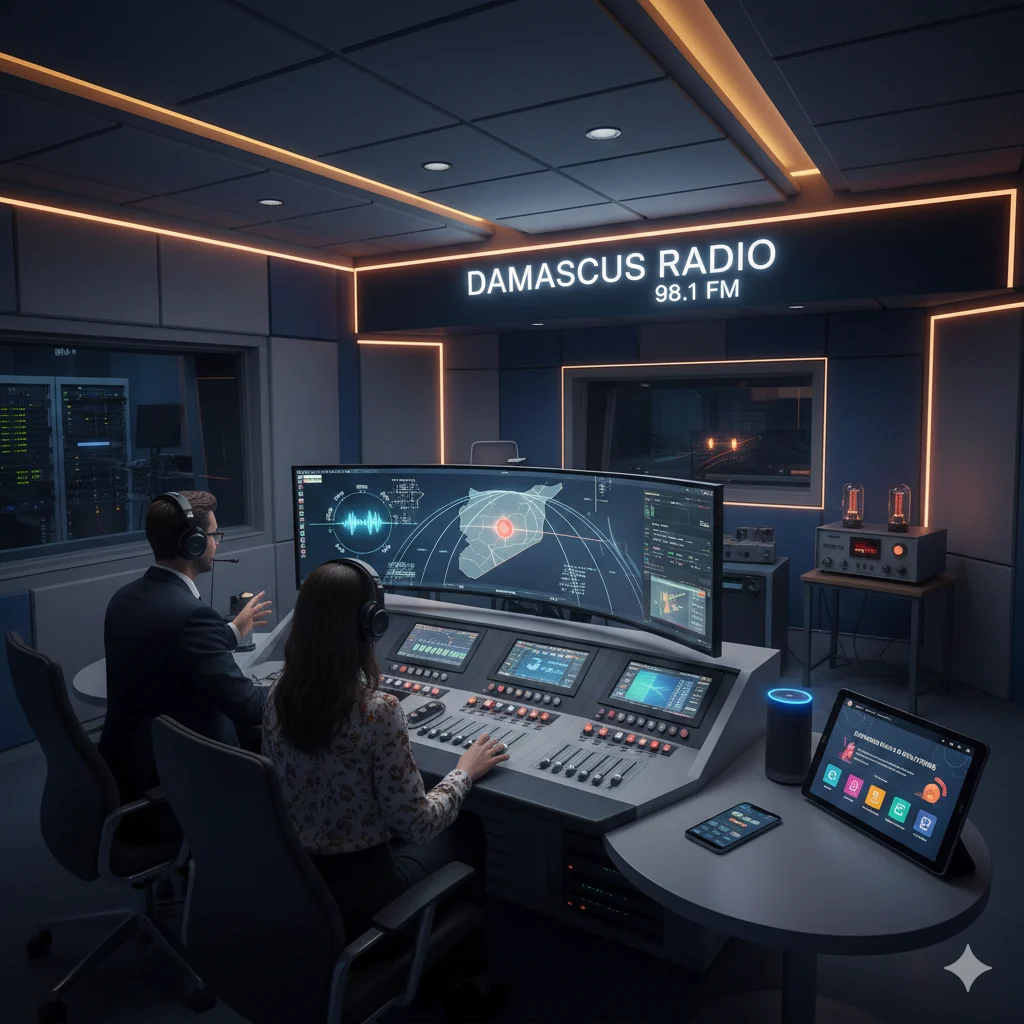
Information Minister Muhammad Kanjo Hassan presided over the
opening at the refurbished Barzeh studios, describing the return of Damascus
Radio as a
“symbol of unity for all Syrians.”
Reflecting on the milestone, media outlet Radio Free
Syria noted the historic context of the relaunch, linking it to Syria’s
broader democratic transition.
Radio Free Syria said in X post,
“Damascus Radio Relaunches in a Free Syria
for the First Time in Over Half a Century.”
Damascus Radio Relaunches in a Free Syria for the First Time in Over Half a Century
Read the article on:
https://t.co/Ef7ocDp5P4 pic.twitter.com/asbVaOY7x6— Radio Free Syria (@Radio_FreeSyria) February 4, 2026
Multilingual and Multimedia Expansion
According to SANA, the broadcaster now operates official
YouTube, Telegram, and X channels, rapidly amassing 1.2 million followers
within the first 24 hours. Podcast editions of its flagship programmes —
including “Damascus Today” — are also available on-demand, delving into
themes of transitional governance and reconstruction.
Ministry spokesperson Rima Abdul Razzaq confirmed that
Arabic remains the primary language of service, supplemented by Kurdish,
Turkish, and English streams to reflect national diversity.
Modernised Studios and Technical Upgrades
The relaunch follows extensive renovation of Damascus
Radio’s headquarters in the Barzeh district, where 12 broadcast studios
have been fitted with digital audio workstations and satellite uplinks. SANA
released images showing newly installed 5G-enabled transmission towers
expanding FM coverage to an 80-kilometre radius around the capital. Additional
studios in Aleppo and Latakia will support regional production.
A network of fibre-optic connections and power backup
systems ensures continuous operation, while the Ministry confirmed full
interconnection with state television for cross-platform coordination.

Cultural, News, and Public Service Programming
The new Damascus Radio delivers a diverse schedule of
18 daily news bulletins from 06:00 to midnight. Flagship talk programme “Syria
Forward” airs weekdays featuring government officials, analysts, and civil
society representatives. Cultural programming includes “Heritage Hour,”
showcasing regional music and literature, and “Rebuilding Voices,” a
weekend magazine highlighting reconstruction projects.
Sports coverage includes Syrian Premier League matches and
national team qualifiers, complemented by religious programming that maintains
sectarian balance.
Reaching the Nation and the Diaspora
Shortwave transmissions on 17495 kHz (day) and 13735 kHz
(evening) continue reaching domestic and neighbouring audiences. Satellite
audio feeds expand access via C-band and Ku-band, while an upgraded mobile app
supports Apple, Android, and web users — including diaspora communities in
Turkey, Lebanon, Europe, and Canada.
FM expansion to additional provinces such as Homs, Hama,
Deraa, and Deir ez-Zor is planned within 60 days, supported by newly leased
transmission sites.
Technology Backbone and Media Oversight
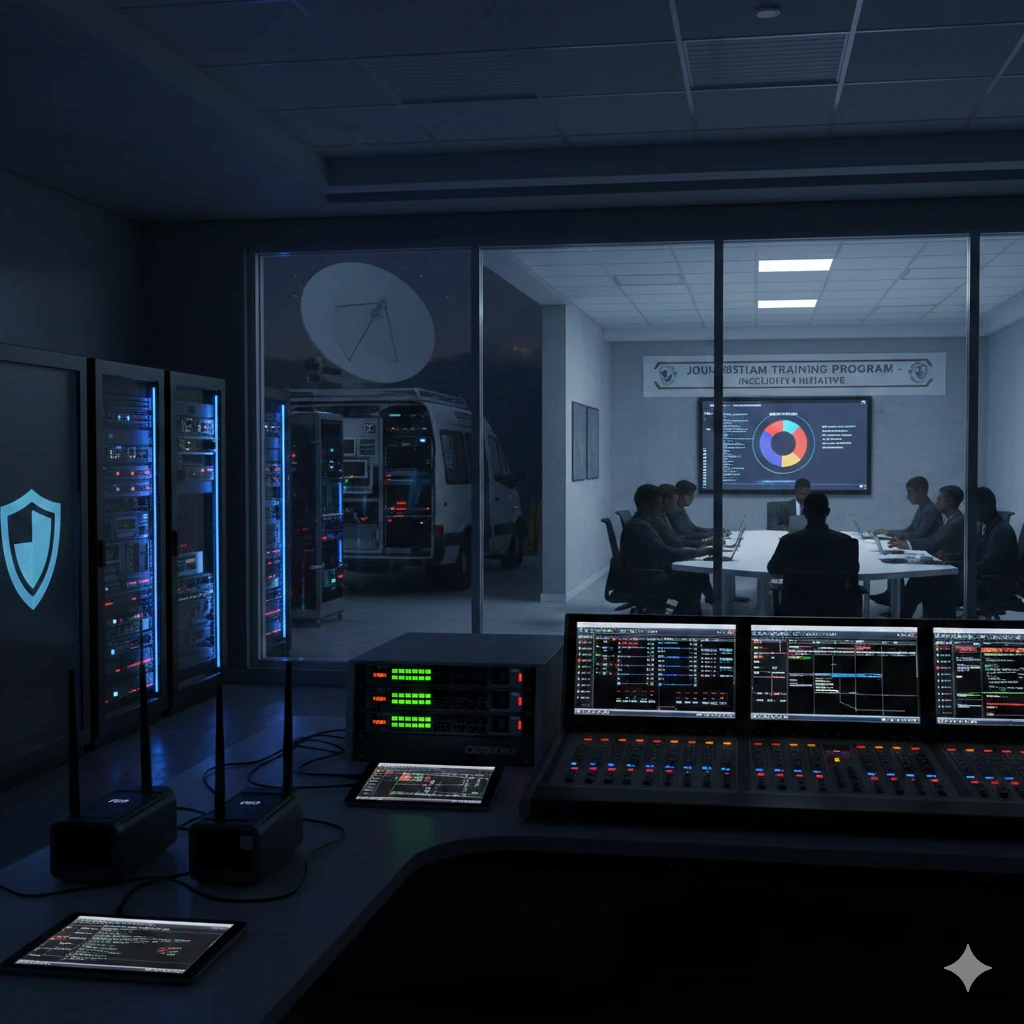
Digital routing and audio systems link all studios to a
central master control room powered by Lawo consoles, Orban Optimod processors,
and 5G reporting units. Satellite news-gathering vans enhance field coverage,
and a cybersecurity suite safeguards streaming infrastructure.
The service operates under the oversight of an independent
transitional media board, which reviews content for neutrality and social
cohesion. Training programmes launched in January aim to recruit 50 new
journalists from across Syria, reflecting the ministry’s commitment to
inclusivity.
A Voice for a Transitional Era
Minister Kanjo
described the relaunch as
“a service to all Syrians regardless of
affiliation,”
adding that the broadcaster’s mission is to promote unity and
reconciliation during the country’s transition.
Early metrics suggest widespread public enthusiasm — app
downloads surpassed 450,000, and social media interactions exceeded 2.8 million
within 48 hours.
Phase Two of the rollout in March 2026 will extend coverage
to Aleppo and Homs, with full national reach expected by December 2026.
With technical partnerships involving Eutelsat, Nokia, and
Huawei, and a dedicated operating budget of SYP 12 billion, Damascus Radio
now stands as one of the central pillars of Syria’s emerging information
ecosystem — bridging divides across the nation and diaspora alike.