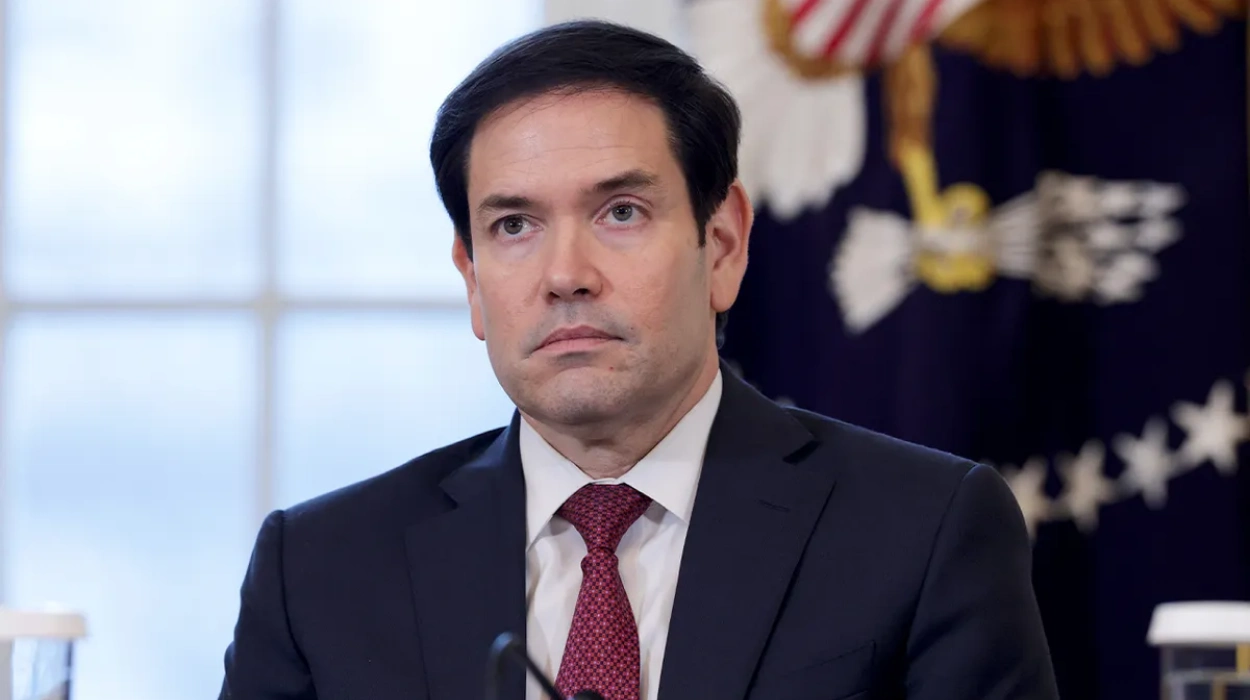

- Secretary
of State Marco Rubio testifies before Senate Foreign Relations Committee
on 28 January 2026 at 10 a.m. EST on Trump administration’s Venezuela
policy. - Hearing
follows U.S. raid capturing ex-President Nicolás Maduro for U.S. drug
charges, plus strikes killing 126 on drug boats and oil tanker seizures. - Rubio
to defend actions as law enforcement aid, deny war/occupation, warn of
force if interim leader Delcy Rodríguez rejects U.S. demands like oil
sector access. - Democrats’
war powers resolutions failed in tied House (215-215) and Senate votes
broken by VP Vance; Republicans back presidential authority. - Rubio
meets opposition figure María Corina Machado post-hearing; State Dept.
plans embassy reopening amid prisoner releases and diplomatic overtures.
Washington (Washington Insider Magazine) – Secretary of
State Marco Rubio is set to testify before the Senate Foreign Relations
Committee on 28 January 2026 at 10 a.m. EST to outline the Trump
administration’s policy towards Venezuela. The hearing follows a U.S. military
raid that captured former Venezuelan President Nicolás Maduro to face drug
trafficking charges in the United States, as well as ongoing strikes on
suspected drug-smuggling boats and the seizure of sanctioned oil tankers. Rubio
will defend these actions, state that there is no war or U.S. occupation in
Venezuela, and warn that the administration is prepared to use force if interim
President Delcy Rodríguez fails to cooperate on key objectives including
opening the energy sector to U.S. companies. Congressional Democrats have
challenged the actions through war powers resolutions, which failed in both
chambers amid Republican support for presidential authority.
Secretary of State Marco Rubio, who previously served as a
Florida senator, will appear before the Senate Foreign Relations Committee
chaired by James Risch (R-Idaho) to discuss U.S. policy towards Venezuela. The
testimony comes amid heightened congressional scrutiny following recent Trump
administration military operations in the region.
Rubio has committed to notifying Congress consistent with
the War Powers Resolution should any new military operations introduce U.S.
Armed Forces into hostilities. In a letter to Chair Risch, Rubio stated:
“Should there be any new military operations that
introduce U.S. Armed Forces into hostilities, they will be undertaken
consistent with the Constitution of the United States, and we will transmit
written notifications consistent with section 4(a) of the War Powers Resolution
(Public Law 93-148).”
Recent Military Actions and Maduro’s Capture
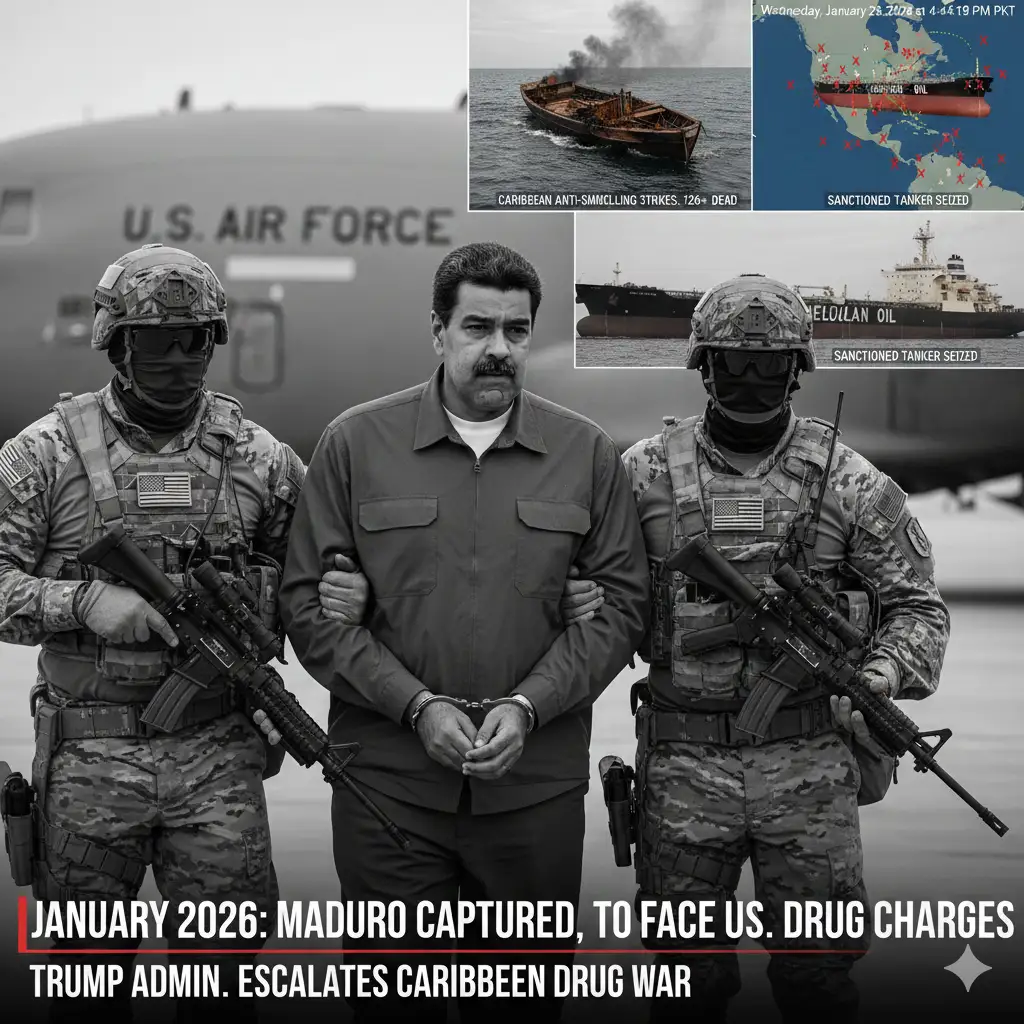
Early this month, U.S. forces conducted a raid that captured
former Venezuelan President Nicolás Maduro, who was removed to face drug
trafficking charges in the United States. The Trump administration has also
continued deadly military strikes on boats suspected of smuggling drugs, with
three dozen strikes in the Caribbean Sea and eastern Pacific Ocean killing at
least 126 people since September. Additionally, the administration seized
sanctioned tankers carrying Venezuelan oil.
Semafor White House Correspondent Shelby Talcott reported on
details from Rubio’s prepared remarks ahead of the hearing. Shelby Talcott
(@ShelbyTalcott) – White House Correspondent at Semafor said in X post,
“Per prepared remarks reviewed by Semafor, Sec. Rubio is
expected to highlight that the US is not at war against Venezuela or occupying
a country during his testimony tomorrow before the Senate Foreign Relations
Committee. He will argue that capturing Maduro was “an operation to aide law
enforcement” and that it has allowed Venezuela to begin rebuilding. Rubio will
also note that administration believes interim President Delcy Rodriguez’s “own
self-interest aligns with advancing our key objectives.” And: “We are prepared
to use force to ensure maximum cooperation if other methods fail.””
Per prepared remarks reviewed by Semafor, Sec. Rubio is expected to highlight that the US is not at war against Venezuela or occupying a country during his testimony tomorrow before the Senate Foreign Relations Committee.
He will argue that capturing Maduro was “an operation to…
— Shelby Talcott (@ShelbyTalcott) January 27, 2026
In prepared testimony released by the State Department,
Rubio will assert:
“There is no war against Venezuela, and we did not
occupy a country. There are no U.S. troops on the ground. This was an operation
to aid law enforcement.”
He will defend these decisions as legitimate exercises of
presidential power, rejecting allegations of constitutional violations.
Venezuelan acting President Delcy Rodríguez, who previously
served as Maduro’s vice president, has committed to establishing respectful
channels of communication with the Trump administration. During televised
remarks on 27 January 2026, Rodríguez stated she is working with President
Trump and Secretary Rubio to set a working agenda.
Congressional Pushback and War Powers Resolutions
The House of Representatives rejected a Democratic-backed
resolution that would have prevented President Trump from sending U.S. military
forces to Venezuela, with a tied vote of 215-215. A similar Senate resolution
also ended in a tie, resolved by Vice President JD Vance’s deciding vote.
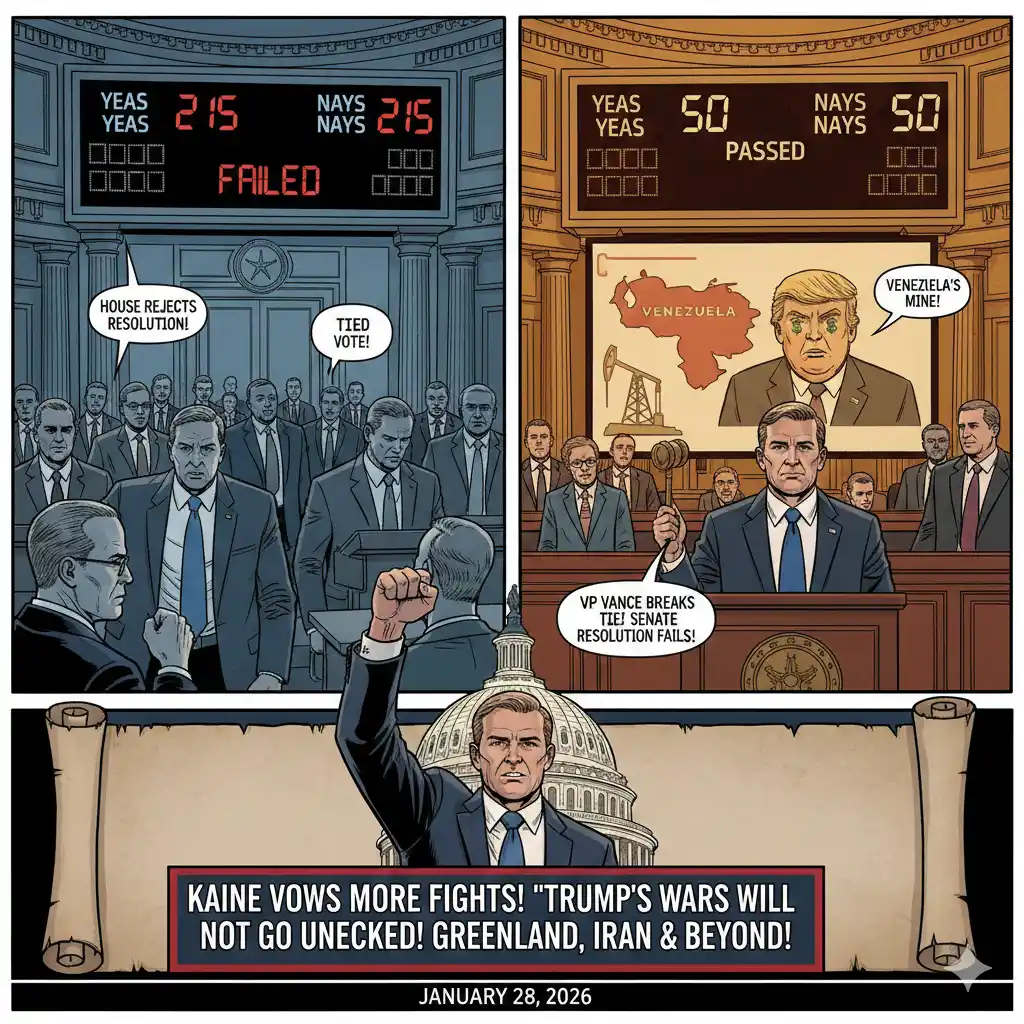
Senator Tim Kaine (D-Va.) spurred these efforts, arguing
they were necessary after the Maduro raid and Trump’s stated plans to control
Venezuela’s oil industry. Kaine has vowed to file additional war powers
resolutions against Trump administration actions in Greenland, Iran and
elsewhere, stating:
“I’m going to file every one I can to challenge
emergencies, to challenge unlawful wars, to seek human rights reports, arms
transfers if they’re wrong.”
Earlier this month, five Republicans joined all Senate
Democrats to advance Kaine’s resolution requiring congressional approval for
future military action in Venezuela. Rubio and administration officials
convinced Senators Todd Young (R-Ind.) and Josh Hawley (R-Mo.) to change their
votes, assuring no further military action without congressional notification.
Senator Young described the effort as
“a communications exercise”
that highlighted Congress’s shortcomings on war powers.
U.S. Demands on Interim Venezuelan Leadership
In his prepared remarks, Rubio will note that Rodríguez is
aware of Maduro’s fate and that her self-interest aligns with U.S. objectives.
These include opening Venezuela’s energy sector to U.S. companies, providing
preferential access to production, using oil revenue to purchase American
goods, and ending subsidized oil exports to Cuba.
Rubio will state:
“We are prepared to use force to ensure maximum
cooperation if other methods fail. It is our hope that this will not prove
necessary, but we will never shy away from our duty to the American people and
our mission in this hemisphere.”
President Trump has praised prisoner releases by the
Rodríguez government, with 266 political prisoners freed since 8 January 2026,
according to a Venezuelan human rights group.
The State Department notified Congress this week of its
intent to send additional diplomatic and support personnel to Caracas to
prepare for reopening the U.S. Embassy, which closed in 2019. Full
normalization would require revoking U.S. recognition of the 2015-elected
Venezuelan parliament as the legitimate government.
Diplomatic Engagements and Opposition Involvement
Latin America policy expert Eric Farnsworth highlighted
Rubio’s packed schedule on Venezuela. Eric Farnsworth (@ericfarns) – Likely a
policy expert/analyst on Latin America/Venezuela said in X post,
“Busy day on Venezuela tomorrow for SecState Rubio as he
testifies in the Senate at 10:00 am and then receives Maria Corina Machado at
the State Department at 1:00 pm. Excellent chance to clarify the timeline for
democratic transition. What would you like to see the headlines be?”
Busy day on Venezuela tomorrow for SecState Rubio as he testifies in the Senate at 10:00 am and then receives Maria Corina Machado at the State Department at 1:00 pm. Excellent chance to clarify the timeline for democratic transition. What would you like to see the headlines be?
— Eric Farnsworth (@ericfarns) January 28, 2026
Rubio is scheduled to meet Venezuelan opposition leader
María Corina Machado at the State Department at 1:00 p.m. on 28 January 2026.
Machado, who went into hiding after the disputed 2024 Venezuelan presidential
election, reemerged in December 2025 to receive her Nobel Peace Prize in Norway
and met President Trump in Washington, presenting him with her medal.
The administration maintains there is no U.S. occupation and
no troops on the ground in Venezuela, despite a large military buildup in the
region. Congressional Democrats have condemned the moves as exceeding executive
authority, while most Republicans support them.
Legal challenges have emerged, including a wrongful death
lawsuit filed by families of two Trinidadian nationals killed in a Trump
administration boat strike.
Rubio’s Dual Roles and Broader Foreign Policy Context
Rubio
holds the roles of Secretary of State and a position making him the first
person to do so simultaneously since Henry Kissinger in the 1970s. His
appearances on Capitol Hill have become frequent amid the administration’s
foreign policy activities in the Western Hemisphere, Europe and the Middle
East.
The hearing occurs amid domestic unrest, including a fatal
shooting in Minnesota during a Department of Homeland Security immigration
operation, though Rubio will not address it directly. Senate attention has
shifted in recent days due to these events.
The Senate Foreign Relations Committee announced the hearing
titled “U.S. Policy Towards Venezuela,” with Rubio as the witness.
The State Department’s public schedule confirms the 10:00 a.m. appearance on
Capitol Hill.
President Trump has stated plans to control Venezuela’s oil
industry for years, contributing to the contentious congressional debates.