

- New
Delhi Gateway Launch: Europe’s first legal gateway office opened in New
Delhi on January 20, 2026, centralising visa services for over 20 EU
countries to streamline student and skilled worker applications. - Student
Visa Benefits: Expedites master’s/PhD processing from 15 weeks to 4 weeks
with on-site verification, biometrics, and guidance on
scholarships/post-study work rights. - Professional
Mobility Gains: Fast-tracks EU Blue Card/work permits (90 days), verifies
IT/engineering qualifications, and includes family reunification with
spousal employment. - Operational
Features: Handles 500 daily applicants via digital kiosks, multilingual
support, and fraud prevention; integrates with Aadhaar for quick identity
checks. - Economic
Impact: Supports EU’s 1.5M migrant goal by 2030, boosts €120B
trade/remittances, with expansions planned for Mumbai/Bangalore in 2027.
Brussels (Washington Insider Megazine) January 27, 2026 –
Europe has established its first legal gateway office in India to streamline
visa processes for students and skilled professionals. The office, located in
New Delhi, aims to facilitate legal migration pathways under enhanced EU-India
mobility agreements. Officials state it will process applications faster,
reducing wait times and providing on-site guidance for qualified applicants.
The legal gateway office opened on January 20, 2026, marking
a significant step in EU-India relations. European diplomats and Indian
government representatives attended the inauguration. The facility centralises
visa services previously handled through external contractors, offering direct
access to consular staff.
Establishment and Purpose of Legal Gateway Office
European Union member states jointly funded the office to
address rising demand for study and work visas from India. Located in central
New Delhi, it operates under the auspices of multiple Schengen Area countries.
Services include pre-screening for student visas, skilled worker permits, and
intra-corporate transfers. Indian officials welcomed the initiative as a boost
to bilateral ties.
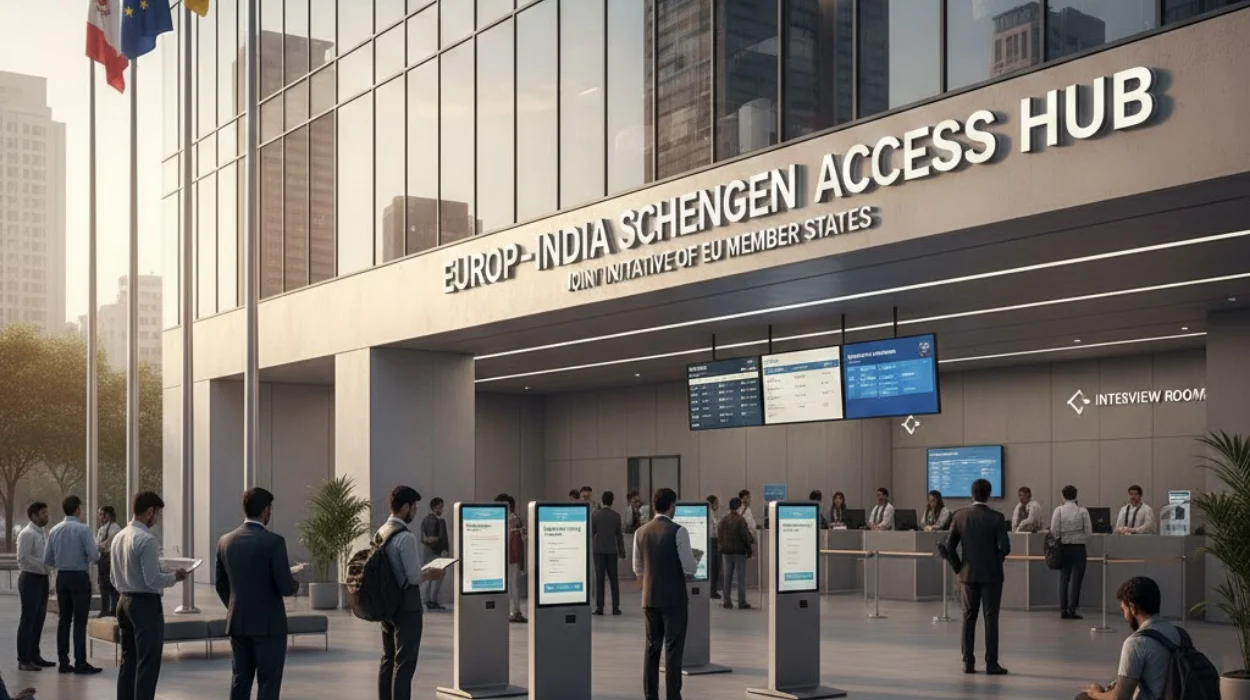
The office processes applications for over 20 EU countries
initially, with plans for expansion. Daily capacity targets 500 applicants,
prioritising those with confirmed university admissions or job offers. Digital
integration allows preliminary online submissions, followed by in-person
biometrics and interviews.
Streamlined Visa Processes for Indian Students
Indian students form the primary beneficiary group, with
over 50,000 studying in Europe annually. The gateway introduces expedited
tracks for master’s and PhD programmes, cutting processing from 15 weeks to
four. Eligibility requires proof of admission from accredited institutions and
financial solvency. Successful applicants gain two-year stay permissions,
extendable post-graduation.
Counsellors provide guidance on popular destinations like
Germany, France, and the Netherlands. Sessions cover scholarship opportunities
and post-study work rights. Data from 2025 shows 25 per cent approval rates for
student visas, expected to rise with on-site verification reducing fraud
concerns.
Advantages for Skilled Indian Professionals
Professionals in IT, engineering, healthcare, and finance
gain dedicated counters for Blue Card and work permits. The EU Blue Card
targets high earners, requiring job offers above €58,000 annually. Processing
times drop to 90 days, compared to six months previously. Intra-company
transfers for multinational employees receive priority.
The office verifies qualifications against EU standards,
eliminating delays from document authentication. Family reunification options
accompany work visas, allowing spouses employment rights. Indian IT firms
report 40 per cent faster placements for Europe-bound talent.
Operational Features and Capacity Building
Biometric centres and interview rooms equip the
5,000-square-metre facility. Digital kiosks offer real-time application
tracking and multilingual support in Hindi, English, Tamil, and Telugu. Staff
training emphasises cultural sensitivity and anti-trafficking protocols.
Integration with India’s Aadhaar system speeds identity checks.
Weekly workshops educate applicants on EU labour laws and
integration courses. Partnerships with Indian universities provide
pre-departure orientations. Capacity builds through secondments from European
consulates, ensuring consistent standards.
Economic Impact on EU-India Relations
The gateway supports EU goals to attract 1.5 million skilled
migrants by 2030. India supplies 20 per cent of Europe’s international students
and key STEM workers. Remittances from Europe reached €10 billion in 2025,
bolstering India’s economy. Trade volumes between regions hit €120 billion last
year.

European businesses gain faster access to Indian talent
pools. Germany’s Federal Employment Agency notes shortages in 500,000 tech
roles. France targets 30,000 Indian nurses annually. The office facilitates
bilateral mobility pacts signed in 2025.
Student-Specific Benefits and Success Stories
Prior applicants praise reduced bureaucracy. A Delhi
engineering graduate received a German master’s visa in 35 days via early
access programmes. Similar cases from Mumbai and Bangalore highlight efficiency
gains. Post-study work visas allow one-year job searches, with 60 per cent
conversion to employment.
Scholarship databases link applicants to Erasmus Mundus and
national funds. Language proficiency centres offer discounted tests for IELTS
and Goethe-Institut certifications. Alumni networks provide mentorship for
newcomers.
Professional Mobility Pathways Enhanced
Skilled worker quotas rise under new frameworks. The
Netherlands plans 10,000 IT visas yearly, processed through the gateway. Sweden
emphasises green tech roles, verifying credentials on-site. UK post-Brexit
arrangements align with EU standards for mutual recognition.
Family provisions include schooling rights for children.
Spousal work permissions activate immediately upon approval. Return migration
options preserve social security contributions for future claims.
Government Statements and Official Endorsements
EU Ambassador to India highlighted the office as a
“bridge for talent exchange.” India’s External Affairs Minister
termed it a “win-win partnership.” German Foreign Office confirmed €5
million seed funding. French Consul General noted alignment with Macron’s
migration reforms.
Joint communiqués outline anti-fraud measures, including
database sharing. Annual reviews assess performance against targets. Expansion
to Mumbai and Bangalore planned for 2027.
Application Procedures and Eligibility Criteria
Online portals accept submissions four months pre-departure.
Required documents include passports, offer letters, qualifications, and
insurance proofs. Fees remain unchanged at €80 for students and €160 for
workers. Walk-in slots prioritise urgent cases.
Rejection appeals process via dedicated desks. Success tips
disseminated through embassy websites. Helplines operate 24/7 in multiple
languages.
Challenges Addressed by the Initiative
Previous bottlenecks involved appointment backlogs exceeding
six months. External vendors faced criticism for delays and errors. The gateway
internalises services, enhancing oversight. Digital tools mitigate peak-season
overloads.
Fraud prevention employs AI screening and cross-verification
with Indian authorities. Training combats visa overstays through integration
mandates.

Future Expansion and Long-Term Goals
Phase two
targets regional offices serving southern states. Integration with EES and
ETIAS systems ensures seamless border processing. Long-term aims include
100,000 annual visas. Monitoring committees track outcomes like employment
rates and remittance flows.
Stakeholder forums engage industry, academia, and migrants.
Annual reports publish statistics on approvals, demographics, and sectors.
Comparative Advantages Over Existing Systems
Neighbouring countries like Canada and Australia maintain
similar hubs, but Europe’s offers Schengen-wide access. Processing speeds
surpass U.S. H-1B lotteries. Cost efficiencies benefit applicants avoiding
agents.
Feedback mechanisms refine services quarterly. User
satisfaction surveys guide improvements.