
As the war in Ukraine grinds on into its fourth year, the
question of how to guarantee Ukraine’s security against future Russian
aggression remains a critical and contentious issue. European countries, long
committed to supporting Ukraine, now face harsh realities about the limits of
their own defense capabilities and the likely financial and operational
dependence on the United States. Recent developments show that despite Europe’s
willingness to contribute troops and resources, the United States, under
President Donald Trump’s administration, is poised to play a central
coordinating role, compelling Europe to bear much of the financial burden for
security guarantees in Ukraine.
The Context of Security Guarantees for Ukraine
Since Russia’s full-scale invasion of Ukraine in February
2022, Kyiv has received substantial military, economic, and diplomatic support
from Western powers. Yet, discussions around formal security guarantees—a
commitment to protect Ukraine from future attacks—have become increasingly
complex. In recent joint meetings between the defense chiefs of the United
States, Finland, France, Germany, Italy, the United Kingdom, and Ukraine,
military options on how to secure Ukraine were finalized and presented to
national security advisers. These discussions followed President Trump’s pledge
to help protect Ukraine, but with significant caveats about the role and
preferences of the US in such guarantees.
One major point emerging from these talks is the prospect of
European forces being deployed to Ukraine. However, the United States would likely
retain command and control over the troops on the ground. This hybrid approach
acknowledges Europe’s readiness to deploy peacekeeping or security forces while
accepting that US leadership remains critical for operational effectiveness,
especially given the technological sophistication and experience of US military
command structures.
Financial Implications: Europe’s Burden to Pay the US
The reality emerging from recent talks indicates that Europe
may have to spend billions—potentially up to $90 billion—on US-made weaponry
and military support to ensure that America stays engaged in Ukraine’s
security. Ukrainian President Volodymyr Zelenskyy has reportedly suggested
purchasing this volume of US weapons to incentivize continued US military
involvement.
Vice President JD Vance underscored this potential financial
dynamic, stating,
“No matter what form this takes, the Europeans are
going to have to take the lion’s share of the burden. It’s their continent, its
their security and the president has been very clear — they are going to have
to step up here.”
This assertion embodies Trump’s transactional approach to
diplomacy, emphasizing financial and logistical commitments from Europe in
exchange for US military support.
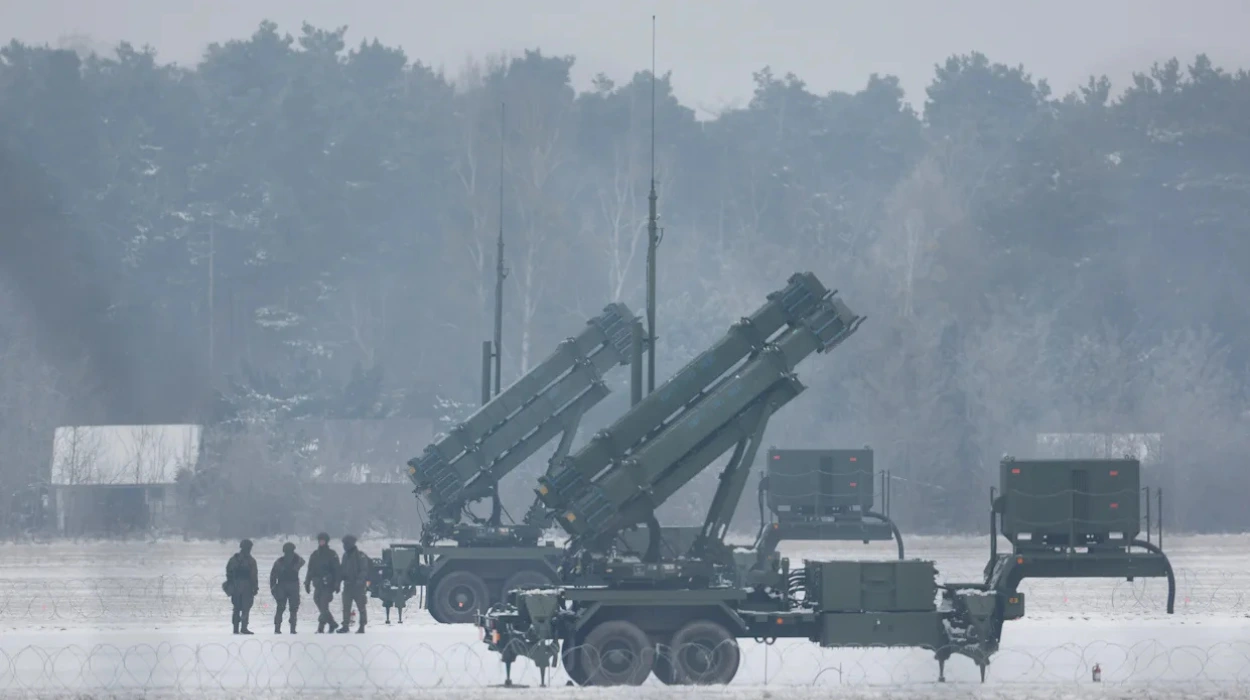
Analysts note that much of Europe’s defense
arsenal—including critical systems like the Patriot missile batteries—is
US-manufactured, and Europe has struggled to develop independent production
sufficient to substitute American weaponry. Yohann Michel of the French IESD
think tank emphasized this point, stating,
“Most of the weaponry needed comes from the U.S.,
like Patriot. If we don’t produce it, we need to pay… If the way to avoid
that is to pay the U.S., it has to be done in the short term.”
This scenario revives
a long-standing dynamic where European security relies heavily on American
military technology and leadership, but now with greater transparency about the
costs involved.
Europe’s Strategic Dilemma and Dependence on the US
European leaders face a complex strategic dilemma. On one
hand, there is broad recognition of the necessity to support Ukraine militarily
to prevent further Russian advances that would destabilize the continent. On
the other hand, there is increasing awareness of Europe’s limited ability to
provide this support independently and affordably.
Christian Mölling from the European Policy Center
noted,
“Europe is avoiding discussion about the billions
that could be paid to the U.S…. There is no alternative to Patriot
batteries.”
This reflects a broader reluctance among European
governments to openly discuss the financial and political concessions they
might need to make to maintain robust security guarantees, especially amid
domestic pressures around defense spending and economic challenges.
Russia’s outright rejection of any European troop presence
in Ukraine—highlighted by Russian Foreign Minister Sergei Lavrov’s statement
that such a presence is “absolutely unacceptable”—adds to the complexity,
funneling much of the responsibility and operational weight toward the US-led
coordination, even as European forces supply the bulk of manpower.
The US Perspective and the Transactional Approach
President Donald Trump’s approach to Ukraine security
underscores his administration’s transactional view of international alliances
and security guarantees. Rather than committing US forces outright in Ukraine,
Trump favors a model where the US provides strategic leadership and selective
military assistance while compelling European nations to finance and contribute
the majority of troops and resources.
The Trump administration’s stance marks a shift from traditional
US defense commitments in Europe, signaling that American involvement in
Ukraine is contingent on financial and operational engagement by European
allies. This approach is also consistent with Trump’s broader foreign policy
themes of burden-sharing and transactional diplomacy, asserting that European
nations must invest heavily in their own security rather than relying on US
commitments unconditionally.
The security of Ukraine is inextricably linked to the
security of Europe. Any failure to offer credible protection to Ukraine invites
further Russian aggression that could destabilize the region profoundly.
European security planners recognize this, prompting discussions about
underwriting massive arms purchases and troop deployments.
However, these discussions inevitably raise questions about
Europe’s strategic autonomy and the sustainability of relying so heavily on US
military hardware and leadership. As some analysts suggest, while Europe may be
compelled to pay for US security guarantees in the short term, there remains a
critical need for the continent to develop more independent defense
capabilities in the medium to long term.
This challenge is heightened by the unpredictability of US
political commitment over time and the evolving geopolitical landscape where
China, Russia, and other actors influence security calculations. For now, the
pragmatic choice appears to center on accepting a financial and operational
quid pro quo with the US to secure Ukraine and contain Russian ambitions.
The prospect of Europe paying billions to the US for
security guarantees in Ukraine reveals a stark truth about current
transatlantic relations and the balance of power regarding European defense.
While European nations remain committed to defending Ukraine, the limitations
of their capabilities and production capacities mean that US leadership and
military technology remain indispensable. President Trump’s pledge to assist Ukraine,
while framed by a transactional and cost-sharing philosophy, keeps the US
central in European security dynamics, compelling Europe to finance a
significant portion of the defense framework. Going forward, European leaders
must navigate these financial, military, and political complexities carefully
as they work to stabilize Ukraine and secure broader regional peace.