
Summary
- Guard
activations in 19 states unrelated to DC crackdown. - Troops
assist Homeland Security with immigration processing. - Up to
1,700 Guardsmen mobilizing nationwide soon. - White
House emphasizes different missions for deployments.
In the upcoming weeks, the Department of Homeland Security
plans to mobilize up to 1,700 National Guard members in 19 states to support
the administration’s national campaign against illegal immigration.
“This isn’t new nor is it tied to the President’s
efforts to address violent crime in DC,”
the official said late Friday.
“DoD announced last month that National Guard troops
would assist DHS with clerical support and other logistical tasks for
processing illegal aliens at ICE facilities. It is separate from the federal
interagency crime crackdown.”
According to a White House official, the effort, which was
first revealed last month, has nothing to do with possible federal assistance
in areas beset by violence.
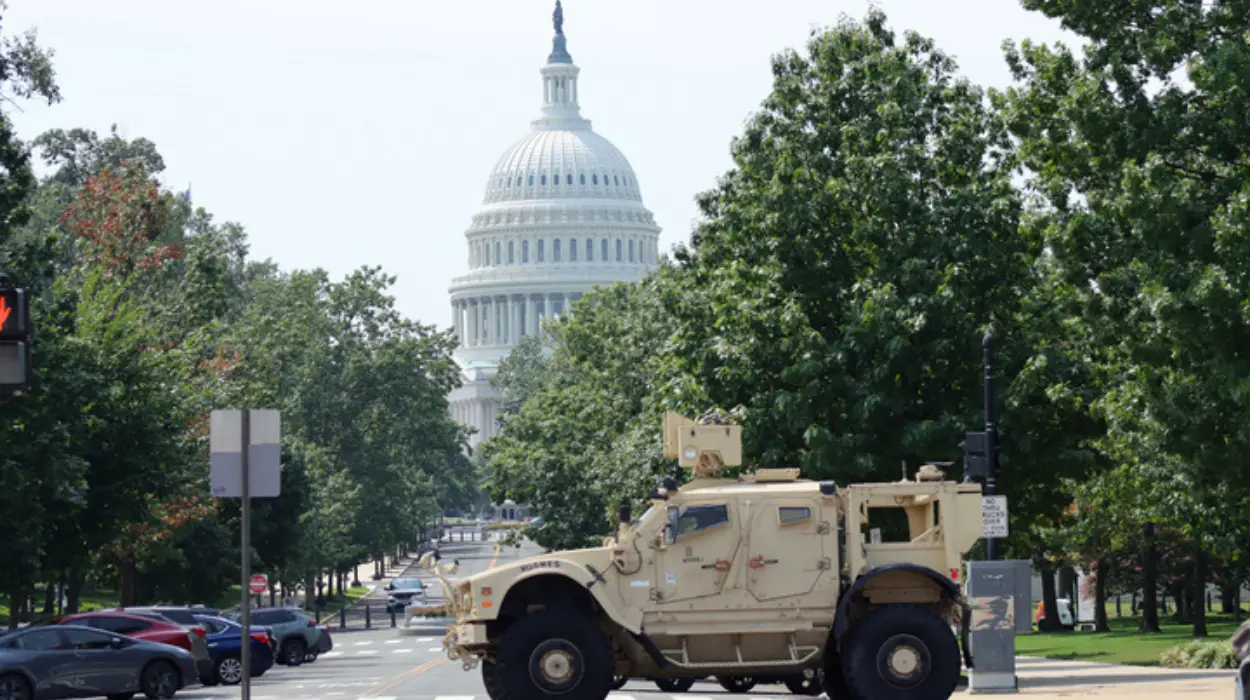
In an attempt to reduce violent crime in the nation’s
capital, Trump activated the National Guard in Washington, D.C., earlier this
month.
Trump has hinted
that he plans to expand the D.C. mission to other cities, praising the
operation’s accomplishments, which include at least 465 arrests.
On Friday, Trump added,
“I think Chicago will be our
next. And then we’ll help with New York.”
The White House has now clarified the operations are
separate.
“The National Guard mobilizing to assist ICE processing
with clerical and logistical tasks in several states is not the same as the
President’s actions to stop crime in DC,”
the official said.
On July 25, a Pentagon press release initially indicated the
deployment of 1,700 National Guardsmen. In order for ICE officers to
concentrate on enforcement, they are responsible for gathering personal
information, taking prisoners’ fingerprints, swabbing their DNA, and taking
their photos.
The use of federal armed forces for civilian law enforcement
is usually forbidden by the Posse Comitatus Act of 1878. However, Posse
Comitatus is exempt from Title 32 Section 502F jurisdiction, which governs the
National Guard’s operations.
In July, Defense Secretary Pete Hegseth changed the status
of current approvals from Title 10 to Title 32 and authorized hundreds of more
forces for ICE support at DHS’s request.
“We understood ICE’s needs at that time to be more
administrative in nature… as planning continued, working with our partners, it
became clear more that ICE needed something different,”
a U.S. defense
official said.
Meanwhile, 2,279 National Guard soldiers and airmen from
Washington, D.C., and six states are already mobilized in the capital, having
completed training, according to a Joint Task Force spokesperson.
What specific clerical and logistical tasks will Guardsmen
perform for ICE in those 19 states?
Assisting with fingerprinting, DNA swabbing, photographing
people in ICE custody, and gathering biographical and detention information.
These roles are designed to free ICE personnel to focus more
on enforcement duties, with Guard members remaining under state command and not
engaging in law enforcement or making arrests. Most tasks involve indirect
interaction with detainees under strict oversight to comply with legal
restrictions on military participation in domestic law enforcement.
The deployment is federally funded but technically under
state control, and the Guard members are trained for these support roles.
Specific operational details and timelines vary by state based on local
agreements and coordination with DHS and ICE.