
Summary
- Trump
administration halts nearly complete Rhode Island wind project. - Project
80% finished, key to regional clean energy goals. - The
federal order cites unspecified national security concerns. - Developers
and state officials plan legal challenges.
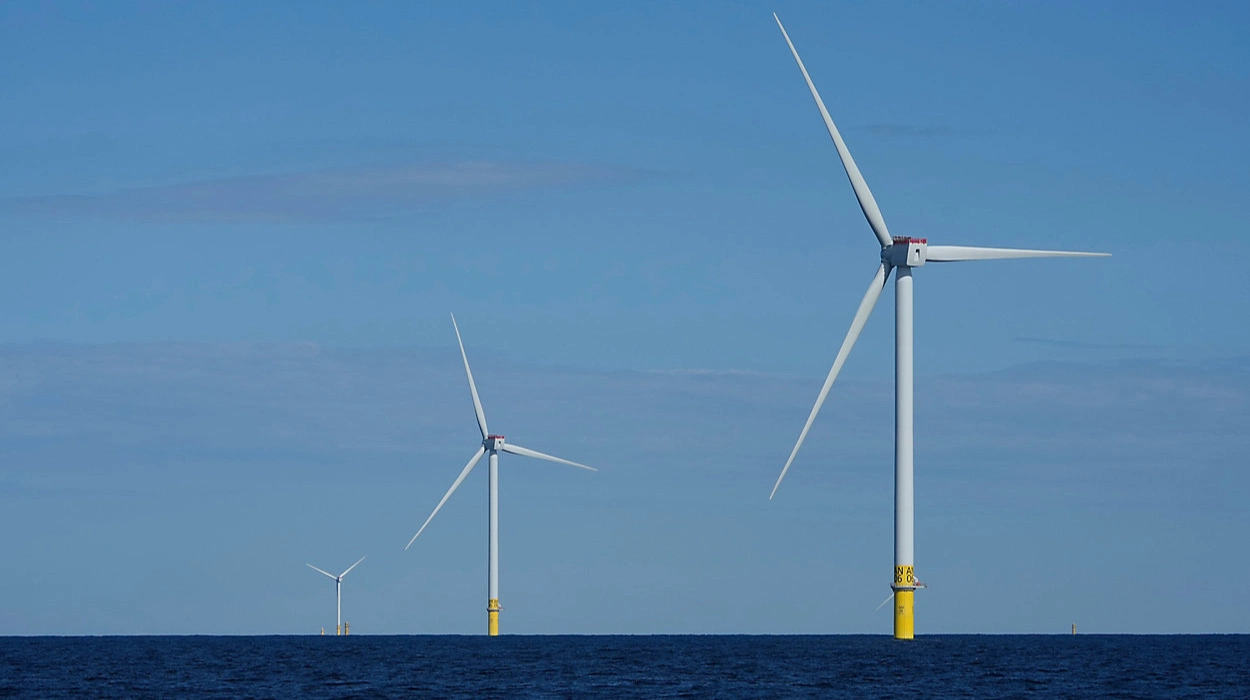
According to Danish wind farm developer Orsted, 45 of the 65
turbines in the Revolution Wind project have already been placed, making the
project around 80% finished.
Even though the project had passed years of federal and
state reviews, the Bureau of Ocean Energy Management issued the order Friday,
stating that the federal government must review the project and “address
concerns related to the protection of national security interests of the United
States.”
The nature of the national security issues was not made
clear.
President Donald Trump has taken broad actions to put fossil
fuels first and obstruct renewable energy initiatives. In a recent social media
post, Trump referred to wind and solar energy as “THE SCAM OF THE
CENTURY!” and promised not to support the wind.
In order to prevent the worst consequences of climate
change, such as severe heat and drought, larger and more powerful wildfires,
and supercharged hurricanes, typhoons, and rainstorms that cause
catastrophic flooding, scientists from all over the world concur that countries
must quickly adopt renewable energy.
The governors of Rhode Island and Connecticut, Dan McKee and
Ned Lamont, respectively, “will pursue every avenue to reverse the
decision to halt work on Revolution Wind” in a post on X, criticizing the
stop-work order. Both governors are Democrats.
Revolution Wind’s construction was scheduled to start in
2023 and be completed the following year. According to Orsted, it is assessing
the financial effects of halting construction and is thinking about taking
legal action.
“This arbitrary decision defies all logic and reason —
Revolution Wind’s project was already well underway and employed hundreds of
skilled tradesmen and women. This is a major setback for a critical project in
Connecticut, and I will fight it,”
Connecticut Sen. Richard Blumenthal, a
Democrat, said in a statement.
Wind power is the largest source of renewable energy in the
U.S. and provides about 10% of the electricity generated in the nation.
“Today, the U.S. has only one fully operational
large-scale offshore wind project producing power. That is not enough to meet
America’s rising energy needs. We need more energy of all types, including oil
and gas, wind, and new and emerging technologies,”
said Erik Milito,
president of the National Ocean Industries Association, a group that supports
offshore oil, gas and wind.
This is the second major offshore wind project the White
House has halted. Work was stopped on Empire Wind, a New York offshore wind
project, but construction was allowed to resume after New York Sen. Chuck
Schumer and Gov. Kathy Hochul, both Democrats, intervened.
“This administration has it exactly backwards. It’s
trying to prop up clunky, polluting coal plants while doing all it can to halt
the fastest growing energy sources of the future – solar and wind power,”
said Kit Kennedy, managing director for the power division at Natural Resources
Defense Council, in a statement.
“Unfortunately, every American is paying
the price for these misguided decisions.”
What specific national security concerns did BOEM cite for
the stop-work order?
The Bureau of Ocean Energy Management (BOEM) cited concerns
related to national security as the reason for the stop-work order on the
Revolution Wind offshore project near Rhode Island.
These concerns appear to be focused on potential impacts on
military and naval capabilities, though BOEM did not provide detailed specifics
in the stop-work letter signed by acting director Matthew Giacona.
The stop-work order is part of a broader Trump
administration review of offshore wind projects initiated by a January 2025
presidential memorandum aimed at reassessing the environmental, economic, and
security implications of such developments.