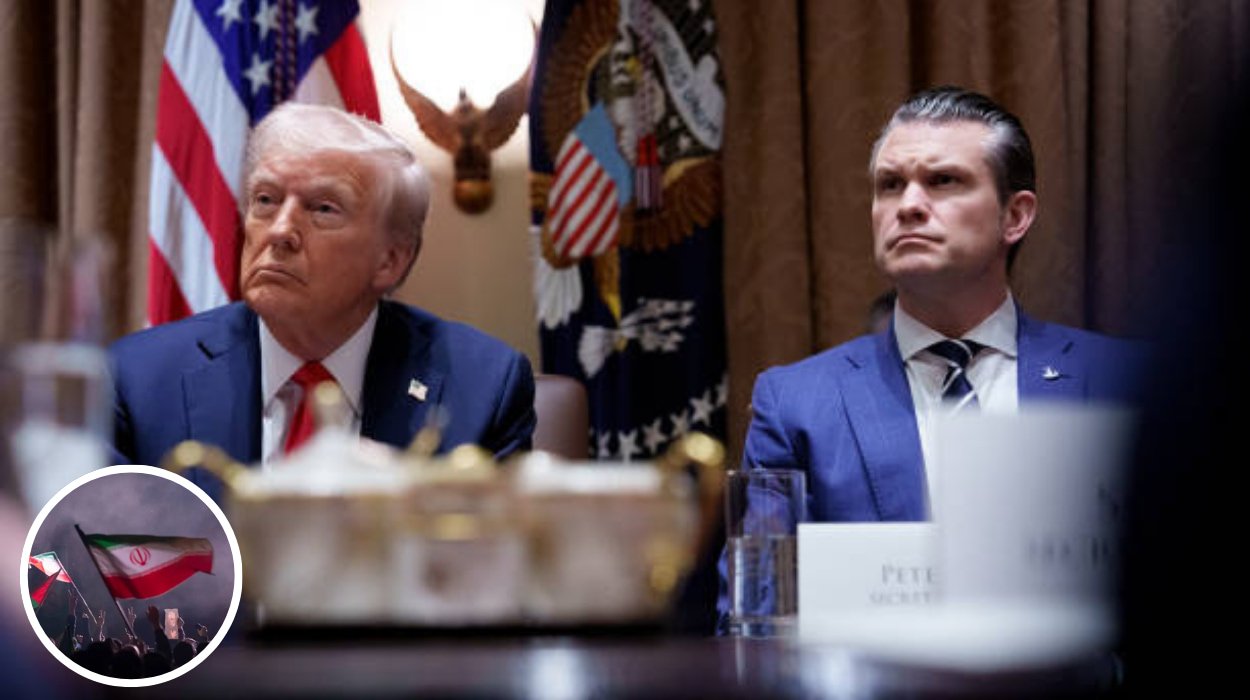

Key Points
- Pete
Hegseth, a Fox News host, stated that President Donald Trump’s
approach to Iran remains steadfast as the National Security
Council (NSC) heads into a high-level Situation Room meeting. - The
NSC meeting comes amid heightened tensions in the Middle East,
particularly concerning Iran’s regional activities and nuclear ambitions. - No
official changes to U.S. policy on Iran have been announced; Trump’s
administration continues to emphasize a “maximum pressure” strategy. - The
White House has not released an official statement regarding the agenda or
potential outcomes of the NSC meeting. - Hegseth’s
remarks were made in the context of ongoing debates about U.S. foreign
policy and national security priorities. - This
development follows a series of recent international events, including
Israeli military actions in Syria and Gaza, and shifts in U.S. military
deployments. - There
is significant public and political scrutiny over how the Trump
administration will address Iran amid broader regional instability.
In a moment of intensifying geopolitical uncertainty, Fox
News host Pete Hegseth publicly affirmed that Donald Trump’s position on Iran
remains unchanged, even as the National Security Council (NSC) convenes for a
critical Situation Room meeting. The statement comes as the administration
faces mounting pressure to clarify its strategy toward Tehran, following a
series of escalations in the Middle East and persistent concerns over Iran’s
nuclear program and regional influence.
Why Did Pete Hegseth Emphasize Trump’s Unchanging Iran
Policy?
Fox News host Pete Hegseth, known for his close alignment
with conservative perspectives, underscored on-air that Donald Trump’s
stance on Iran has not wavered. As reported by multiple outlets, Hegseth’s
comments come at a time when speculation is rife regarding possible shifts in
U.S. foreign policy, particularly as the NSC prepares for a high-level meeting
in the White House Situation Room.
Hegseth’s assertion is significant because it seeks to
reassure both domestic and international audiences that the Trump
administration’s “maximum pressure” campaign against Iran remains in force.
This strategy, which was a hallmark of Trump’s previous tenure, has involved
severe economic sanctions, diplomatic isolation, and a readiness to use
military force if necessary.
What Is the Context Behind the NSC’s Situation Room Meeting?
The National Security Council’s meeting in the
Situation Room comes amid a series of recent developments in the
Middle East:
- According to Al Jazeera and CTV News, Israel forces
have conducted airstrikes in Syria, targeting what they claim are Hamas
operatives, and have been involved in deadly incidents at aid distribution
sites in Gaza. - The United States has recently increased its
military presence in various hotspots, including the deployment of Marines
to Los Angeles to address domestic unrest, highlighting the
administration’s readiness to use force both at home and abroad. - Ongoing conflicts involving groups like Al-Shabaab in
Somalia and continued violence in the Gaza Strip add to the complexity of
the security environment in which U.S. policy toward Iran is being
formulated.
The White House has not released an official
statement detailing the specific agenda or expected outcomes of the
NSC meeting, leading to heightened speculation among analysts and the press.
How Has the Media Reported on Trump’s Iran Policy and the
NSC Meeting?
Media coverage has focused on the continuity of
Trump’s Iran policy and the broader implications of the NSC’s
deliberations:
- As
reported by Wikipedia’s Current Events Portal, no official changes
to U.S. policy on Iran have been announced in the lead-up to the
NSC meeting. - Fox
News host Pete Hegseth’s statement is being interpreted as an
attempt to project stability and resolve, especially to U.S. allies and
adversaries monitoring Washington’s next moves. - Other
media outlets, including Al Jazeera and CTV News, have highlighted
the broader regional context, noting that U.S. policy toward
Iran cannot be viewed in isolation from developments in Syria, Gaza, and
elsewhere in the Middle East.
What Are the Stakes for U.S. Foreign Policy?
The stakes are high for the Trump administration as it
navigates a complex web of security challenges:
- Ongoing concerns about Iran’s nuclear program
remain at the forefront of U.S. national security priorities. - The U.S. must balance its relationships with key allies,
including Israel and Gulf states, while managing the risks of direct
confrontation with Iran. - With the NSC meeting drawing significant
attention, any perceived shift in policy could have far-reaching
consequences for regional stability and U.S. credibility.
Have There Been Any Official Statements from the White House
or the NSC?
As of the time of reporting, the White House has not
issued an official statement regarding the NSC meeting or any
potential policy changes toward Iran. The administration’s silence has fueled
speculation among journalists and analysts, but Hegseth’s remarks
suggest that no immediate changes are forthcoming.
How Does This Fit into the Broader Pattern of Trump’s
Foreign Policy?
Donald Trump’s approach to Iran has been characterized by
a hardline stance and a willingness to use both economic and military
tools to achieve U.S. objectives. The “maximum pressure” campaign, which
included the withdrawal from the Iran nuclear deal and the imposition of
sweeping sanctions, has been a defining feature of his administration’s foreign
policy.
As reported by multiple outlets, including Fox News and
Wikipedia’s Current Events Portal, there is no indication that Trump
intends to deviate from this approach, even as the NSC reviews the current
security landscape.
What Are Analysts and Experts Saying?
While official statements remain scarce, analysts
note that the timing of the NSC meeting and Hegseth’s public remarks are likely
intended to send a message of continuity and resolve. The administration
appears focused on maintaining a posture of strength, both to deter Iranian
aggression and to reassure U.S. allies in the region.
What Happens Next?
With the NSC meeting underway and no immediate policy shifts
announced, all eyes remain on the White House for any signs of change.
The outcome of the Situation Room discussions could have significant
implications for U.S.-Iran relations and the broader security environment in
the Middle East.