
The United States maintains deep strategic interests in
Venezuela due to its vast oil reserves, regional security concerns, and
geopolitical rivalries. As of January 2026, following the US military
intervention that captured Nicolás Maduro, these interests have intensified,
focusing on energy access, counternarcotics efforts, and countering influences
from China and Russia.
Historical Ties and Monroe Doctrine Legacy
US involvement in Venezuela traces back to the 19th century
under the Monroe Doctrine, which warned European powers against recolonizing
the Americas. In 1902-1903, President Theodore Roosevelt dispatched warships to
secure Venezuelan debt repayments, establishing a precedent for intervention to
protect economic stakes. By the mid-20th century, Venezuela supplied 15% of US
oil imports, peaking at 1.5 million barrels per day in the 1990s, making it a
key hemispheric partner.
The 1976 nationalization of oil under PDVSA shifted
dynamics, yet joint ventures like Chevron’s operations persisted, producing
200,000 barrels daily pre-crisis. The 2002 coup attempt against Hugo Chávez,
allegedly CIA-backed per declassified documents, underscored Washington’s
aversion to anti-US regimes. Chávez’s alignment with Iran and Cuba prompted the
2015 Obama-era sanctions, framing Venezuela as a national security threat due
to its role in the “Troika of Tyranny” alongside Nicaragua and Cuba.
Post-Chávez, Maduro’s survival despite 125 sanctioned
officials reflected US policy limits until the 2026 operation, which Trump
described as reimbursing “damages caused us by that country” through
oil revenues. This echoes historical patterns where US actions, from the 1989
Panama invasion to Grenada in 1983, prioritized hemispheric dominance.
Energy Security and Oil Dependence
Venezuela holds the world’s largest proven oil reserves at
303 billion barrels, exceeding Saudi Arabia’s, concentrated in the Orinoco
Belt’s extra-heavy crude. For the US, securing this resource counters domestic
production plateaus and replenishes the Strategic Petroleum Reserve (SPR),
depleted to 57% capacity after Biden’s 180 million barrel release from
2022-2024.
Pre-2019 sanctions, Venezuela exported 600,000 barrels daily
to US Gulf Coast refineries optimized for its heavy sour crude, comprising 10%
of imports. Maduro’s alliances funneled oil to China (60% of exports) and
Russia, displacing US access and funding adversaries; PDVSA shipped $12 billion
worth to Asia in 2023 alone. The 2026 intervention enabled a $2 billion
US-Venezuela oil deal, with first sales of $500 million on January 14, aiming
to revitalize fields dormant since production fell to 300,000 barrels per day.
US firms like Chevron, previously operating under licenses,
now eye billions in investments to rebuild infrastructure, as Secretary of
Defense Pete Hegseth stated:
“We are going to get American companies in
there”.
This secures affordable energy amid global prices hovering at $70
per barrel in 2026, while denying rivals leverage; China’s $60 billion loans
since 2007 were collateralized by future oil deliveries. Long-term, Venezuelan
output could reach 3 million barrels daily within a decade, stabilizing US
markets and reducing OPEC sway.
Regional Security and Migration Pressures
 Credit: Wilfredor
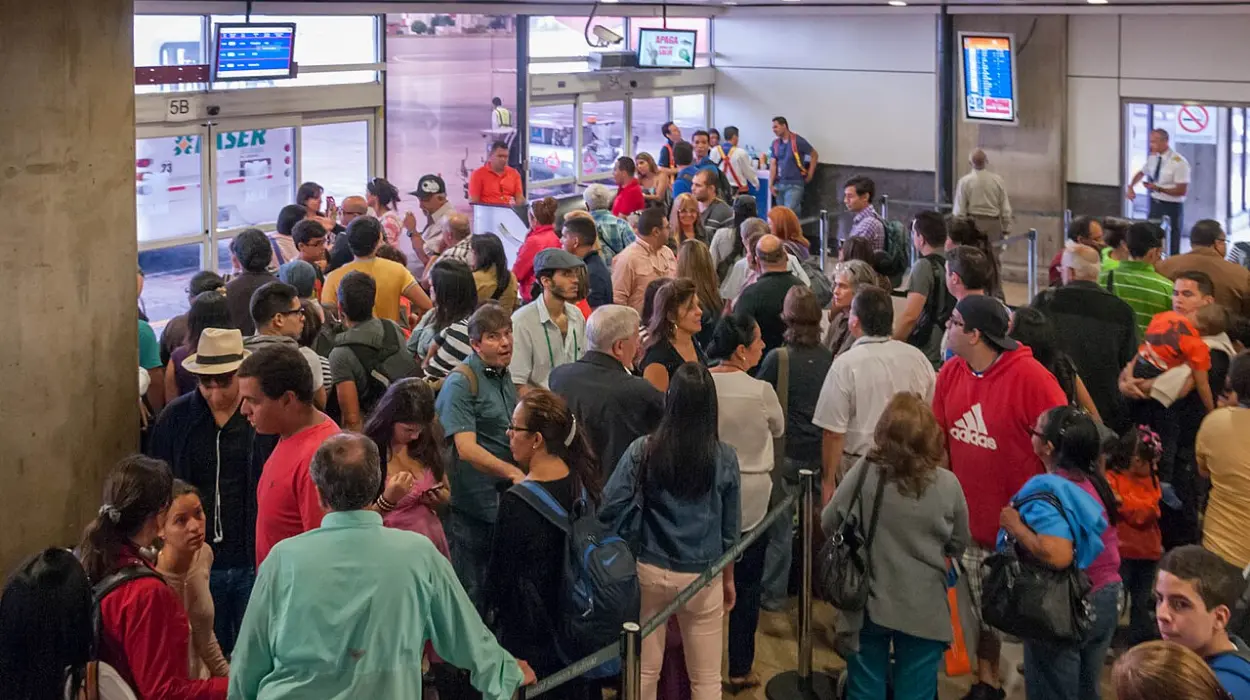
Venezuela’s collapse triggered the largest external
displacement crisis in Latin American history, with 7.7 million refugees by
2025 straining US borders. Over 500,000 Venezuelans crossed into the US since
2018, contributing to 20% of southern border encounters in fiscal 2024,
exacerbating political debates during Trump’s reelection. The Biden
administration’s parole programs admitted 300,000, but reversals under Trump
prioritized repatriation post-intervention.
Criminal elements embedded in migration flows amplified
concerns; Venezuelan gangs like Tren de Aragua established footholds in US
cities, linked to 400 murders and fentanyl trafficking. Maduro’s regime
allegedly protected cocaine routes from Colombia’s FARC dissidents through
Venezuela’s “Cocaine Coast,” with 80% of US-bound drugs transiting
per DEA estimates. The 2026 strikes targeted these networks, aligning with
Trump’s designation of cartels as Foreign Terrorist Organizations.
Proximity heightens risks: Venezuela’s 2,000-mile Caribbean
coastline facilitates smuggling, while porous borders with Colombia fuel
leftist insurgencies. US Southern Command views instability as a vector for
ISIS sympathizers, with 200 extremists reportedly trained in Venezuelan camps
by 2024. Stabilizing Venezuela mitigates these threats, reducing the $150
billion annual US cost of border security and drug interdiction.
Geopolitical Rivalries with China and Russia
Maduro’s pivot to US adversaries elevated Venezuela’s
strategic value. China invested $65 billion in oil-for-loans deals, gaining 10%
of PDVSA equity and rare earth mineral rights essential for batteries and tech.
Russia supplied $3 billion in arms, including Su-30 jets, and backed Maduro
diplomatically, deploying Wagner mercenaries until 2023. Iran provided gasoline
during shortages, exchanging for gold worth $1.2 billion evading sanctions.
The 2026 operation disrupted these ties: US strikes
challenged Beijing’s energy foothold, capturing gold deposits eyed by Trump for
reimbursement. Delcy Rodríguez’s post-Maduro roadmap loosens bonds with Tehran
and Moscow, welcoming US investors in exchange for transitional support. This
counters China’s Belt and Road expansion in Latin America, where Venezuela
served as a debt-trap archetype with $10 billion in unpaid loans by 2025.
Russia’s loss weakens its Western Hemisphere projection;
Putin condemned the intervention as “imperialist,” but with Ukraine
consuming resources, response was limited to rhetoric. For the US, Venezuela
exemplifies “America First” grand strategy, asserting Monroe Doctrine
revival against multipolar challenges.
Narcotrafficking and Organized Crime Disruption
Venezuela under Maduro became a narco-state, with Diosdado Cabello
and Tareck El Aissami indicted by the US for cocaine trafficking worth $3
billion. The regime’s Casa Militar laundered profits through PDVSA, using
“ghost ships” to ship 200 tons annually to US ports. Trump’s
administration framed the intervention as a “war on drugs,” targeting
routes fueling the US opioid epidemic that claims 100,000 lives yearly.
Pre-operation CIA actions severed ties between security
forces and cartels, per Reuters, enabling opposition safe havens. Post-capture,
US plans include military advisors to dismantle networks, potentially extending
to Mexico per Trump’s threats. This aligns with broader hemispheric efforts,
like Plan Colombia’s $10 billion investment that halved coca cultivation.
Disrupting these flows secures US streets and finances
reconstruction; oil revenues will fund counternarcotics, as Trump pledged
proceeds to
“the Venezuelan people, US oil companies, and the United
States”.
Economic Opportunities for US Firms

Credit: virtuzone.com
Beyond oil, Venezuela’s minerals—gold, coltan, lithium—offer
trillion-dollar potential. The country produced 120 tons of gold yearly
pre-crisis, much smuggled to fund arms. US seizure of assets compensates for $8
billion in expropriations from ExxonMobil and ConocoPhillips since 2007.
Chevron’s return, alongside Halliburton and Schlumberger, promises jobs and
technology transfer.
Rodríguez’s hydrocarbon law reforms invite foreign direct
investment into untapped fields, projecting $50 billion inflows by 2030. This
boosts US GDP through exports of drilling rigs and services, while stabilizing
global commodity prices. Post-intervention oil sales already generated $500
million, with PDVSA negotiating further under US oversight.
Humanitarian and Democratic Ideals
US rhetoric emphasizes restoring democracy eroded by
Maduro’s 2018 fraudulent election and 2024 disputed vote. Juan Guaidó’s 2019
recognition by 60 nations set precedents, but military action fulfilled regime
change goals. Humanitarian aid, blocked during 2019 convoy clashes, now flows
unimpeded, addressing 30% child malnutrition rates.
Congress allocated $500 million for stabilization,
supporting free elections by 2028 as Rubio outlined in a three-phase plan:
economic relief, transitional government, political reforms. This upholds US
values, countering autocracy spread.
Global Power Projection and Precedents
The January 3, 2026, Operation Absolute Resolve demonstrated
US military precision, achieving domain dominance without ground occupation.
Trump’s openness to prolonged involvement signals resolve against powers like
China, potentially emboldening Taiwan defenses despite expert concerns.
Latin American allies like Brazil and Colombia welcomed the
move, fearing refugee spillovers, while foes decry “new imperialism”.
Success could blueprint interventions in Cuba or Nicaragua, reshaping
hemispheric order.
Long-Term Strategic Realignment
Venezuela’s realignment fortifies US dominance in the
Americas, securing energy for electric vehicle transitions and deterring
rivals. With production rebounding to 800,000 barrels daily by late 2026,
economic recovery promises mutual benefits. Challenges persist—entrenched
chavistas, reconstruction costs estimated at $200 billion—but US leverage
positions it as arbiter of Venezuela’s future.