
Key Points
- Israeli
Prime Minister Benjamin Netanyahu arrives in Washington for high-stakes
talks with U.S. President Donald Trump, with the Gaza ceasefire and
hostage negotiations at the forefront. - Netanyahu’s
visit marks his third to the White House since Trump’s return to office,
but the first since recent U.S.-Israeli airstrikes on Iran and a fragile
ceasefire between Israel and Iran. - Negotiations
in Doha, Qatar, between Israeli and Hamas delegations resume, focusing on
a U.S.-backed 60-day truce and the release of hostages in exchange for
Palestinian prisoners. - Netanyahu
insists on a deal “on our terms,” vowing that Hamas will be eliminated and
rejecting any agreement that leaves the group in power in Gaza. - President
Trump expresses optimism, stating there is a “good chance” of reaching a
deal, and has been “very firm” with Netanyahu about concluding
hostilities. - Hamas
has responded “positively” to the U.S. proposal but demands guarantees on
humanitarian aid, Israeli troop withdrawal, and the return of UN-led
relief efforts. - Public
pressure mounts in Israel for a deal to secure the return of hostages,
while humanitarian conditions in Gaza continue to deteriorate. - Analysts
suggest Netanyahu’s strengthened domestic standing after the Iran strikes
gives him leverage, but far-right coalition partners oppose concessions. - The
outcome of the Trump-Netanyahu meeting could determine the next phase of
the Gaza conflict and the fate of ongoing ceasefire efforts.
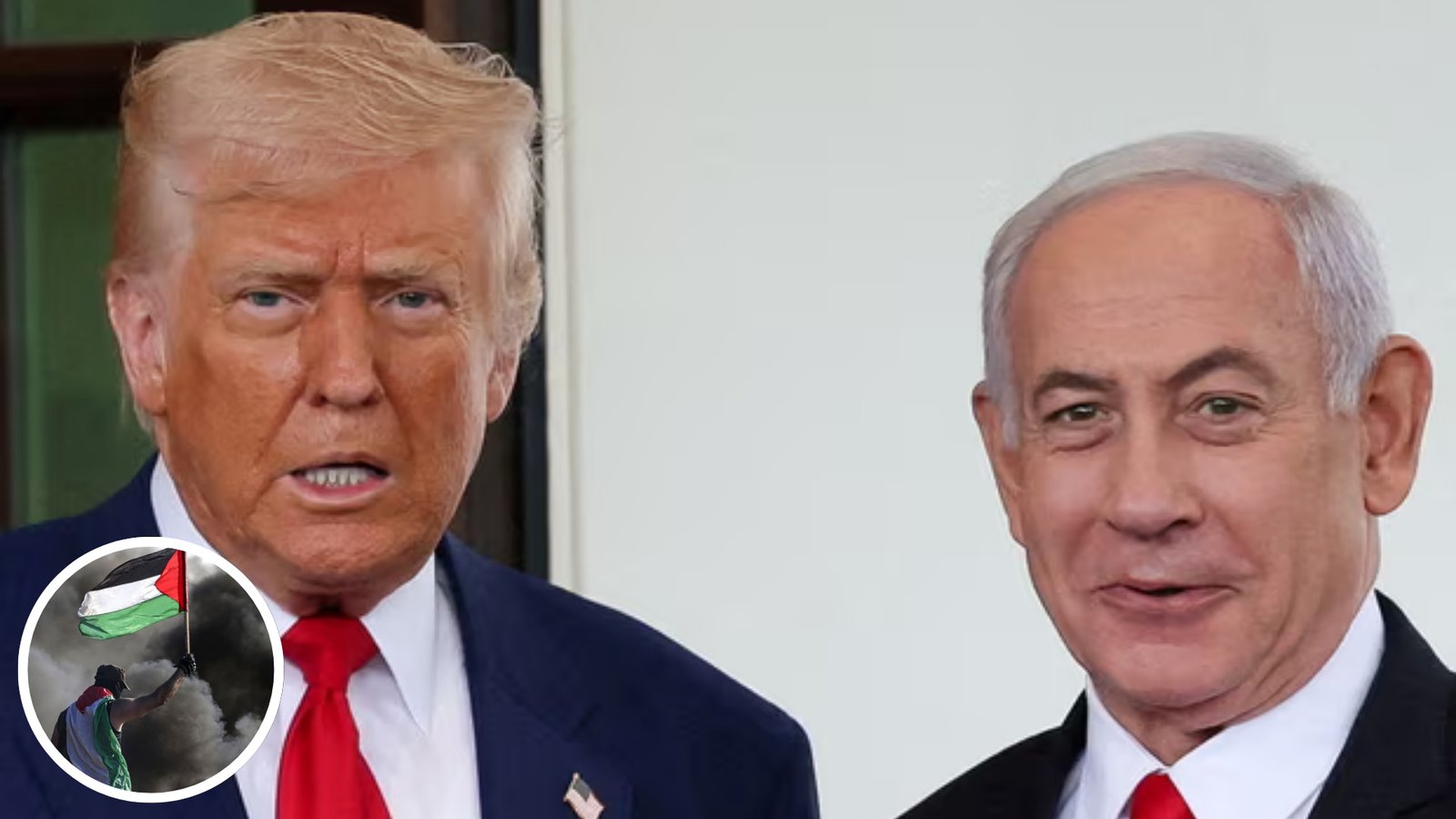
Israeli Prime Minister Benjamin Netanyahu arrived in
Washington on Monday, poised for a pivotal meeting with U.S. President Donald Trump that could define the trajectory of the Gaza conflict and broader Middle East stability. With indirect ceasefire negotiations ongoing in Doha and
mounting pressure from all sides, Netanyahu enters the White House wielding
significant leverage—but also facing formidable challenges and expectations.
What Is at Stake During Netanyahu’s White House Visit?
As reported by Steve Hendrix of The Washington Post,
Netanyahu’s return to the White House comes amid “a lot of talk about peace,”
but the reality on the ground in Gaza remains dire. The Israeli leader’s
visit follows recent U.S.-Israeli airstrikes on Iran and a U.S.-brokered
ceasefire with Tehran, shifting the diplomatic spotlight back to the unresolved
war in Gaza.
According to James Hider of NPR, Netanyahu’s
agenda is dominated by the push for a 60-day ceasefire in Gaza, the release of
Israeli hostages, and the fate of Hamas as a governing force. President
Trump, meanwhile, is eager to secure a breakthrough, telling reporters,
“We’ve
gotten a lot of the hostages out, but pertaining to the remaining hostages,
quite a few of them will be coming out”.
How Are the Gaza Ceasefire Talks Progressing?
Daniele Hamamdjian of NBC News reports that
momentum is building in the latest round of talks, with indirect negotiations
between Israel and Hamas resuming in Doha, Qatar, on Sunday. The
U.S.-backed proposal on the table calls for a 60-day truce, during which Hamas
would release 10 living Israeli hostages and the remains of 18 others in
exchange for Palestinian prisoners.
As detailed by Reuters, a Palestinian official
allied with Hamas stated that major concerns remain, particularly over
humanitarian aid, passage through the Rafah crossing, and the timetable for
Israeli troop withdrawals. Netanyahu’s office declared late Saturday that
“the modifications that Hamas intends to propose regarding the Qatari plan were
communicated to us last and are acceptable to,” but also reiterated that some
demands are “not acceptable” to Israel.
What Are Netanyahu’s Conditions and Objectives?
As reported by Lazar Berman of The Times of Israel,
Netanyahu has made clear his red lines:
“We are determined to ensure that Gaza
will no longer constitute a threat to Israel. That means, we will not allow a
situation that encourages more kidnappings, more murders, more beheadings, more
invasions. That means one thing: eliminating Hamas’s military and governing
capabilities. Hamas will not be there”.
Before departing for Washington, Netanyahu told reporters at
Ben-Gurion Airport,
“We are determined to bring back all of them [the
hostages]… I sent a team to the negotiations with clear directives. I think the
conversation with President Trump can certainly help advance the outcome we are
all hoping for”.
What Is the U.S. Position on the Talks?
Barak Ravid of Axios cites U.S. officials
who say President Trump wants to reach an agreement on “what comes next” in
Gaza, including who will govern the territory and what security guarantees will
prevent Hamas’s return. Trump and Netanyahu are expected to meet for
dinner at the White House, with the “day after” issue—post-war governance of
Gaza—central to their discussions.
According to Newsweek, this meeting will not
follow the usual formalities, taking place privately rather than in the Oval
Office and closed to the press. Trump has pushed for a deal, stating last
week, “We anticipate securing a ceasefire within the next week,” though he did
not elaborate on specifics.
What Are Hamas’s Demands and Concerns?
As reported by the BBC, Hamas has indicated a
“positive response” to the U.S. ceasefire plan but continues to insist on
several conditions: an immediate halt to Israeli operations, a clear timeline
for troop withdrawal, and the return of UN-led humanitarian aid distribution. A
Palestinian official told the BBC that the latest round of
talks in Doha ended without a breakthrough, with mediators from Qatar and Egypt
relaying messages but no substantial progress made.
According to AFP via The Defense
Post, Hamas is also demanding guarantees against a resumption of fighting
during negotiations and the restoration of the UN-led aid system, which has
been replaced by the controversial Gaza Humanitarian Foundation (GHF). The UN
and major aid groups have refused to cooperate with GHF, citing concerns over
its alignment with Israeli military objectives.
How Are Israeli and Palestinian Publics Responding?
As reported by BBC News, public pressure in
Israel is intensifying, with large demonstrations demanding the government
finalize an agreement to secure the return of around 50 hostages, 20 of whom
are believed to be alive. Some families have questioned why the proposed
framework would not lead to the immediate release of all captives. “This is the
time to recover bodies from the threat of Hamas,” declared Ilay, whose brother
remains in captivity, at a rally in Jerusalem.
In Gaza, civilians continue to endure severe hardship. Osama
al-Hanawi, a Gaza resident, told AFP,
“We are losing young people,
families and children every day, and this must stop now. Enough blood has been
shed”.
The humanitarian crisis is compounded by ongoing Israeli airstrikes
and a partial blockade on aid deliveries, with the Gaza health ministry
reporting over 57,000 deaths since the conflict began.
What Are the Main Sticking Points in the Negotiations?
According to Reuters and BBC News,
the primary obstacles to a deal remain Israel’s refusal to accept a permanent
ceasefire while Hamas retains power, and Hamas’s insistence on comprehensive
guarantees for aid and troop withdrawal. Israeli negotiators reportedly
lack the authority to finalize an agreement, further complicating the talks.
As noted by Axios, Israel has softened its
stance on the exile of senior Hamas officials, now willing to settle for the
symbolic expulsion of a few top commanders, and is considering amnesty for
militants who lay down their arms. However, the “big political hot potato” remains
the question of who will govern Gaza after the war.
What Is the Broader Regional and Political Context?
As reported by Patrick Kingsley of The New York
Times, Netanyahu’s visit comes at a time when his domestic standing has
improved following the joint U.S.-Israeli strike on Iran’s nuclear facilities. Analysts
suggest this gives him greater leverage in negotiations, despite opposition
from his far-right coalition partners, who advocate for continued Israeli
control over Gaza.
The outcome of the Trump-Netanyahu meeting is expected to
have significant implications for the future of the Gaza conflict, the fate of
hostages, and the broader dynamics of Middle East peace efforts.
What Happens Next in the Gaza Ceasefire Talks?
As reported by BBC News, indirect negotiations
are set to continue in Doha, with mediators from Qatar and Egypt working to
bridge the remaining gaps between Israel and Hamas. President Trump and
Prime Minister Netanyahu are expected to discuss not only the immediate
ceasefire but also the long-term governance of Gaza and security guarantees for
Israel.
Netanyahu, speaking before his departure, summed up the
stakes:
“We are working to reach this deal under the terms we have agreed to. I
think the conversation with President Trump can certainly help advance the
outcome we are all hoping for”.