
Key Points
- President
Donald Trump announced the U.S. is nearing new trade deals, coinciding
with a delay in a key tariff deadline. - The
announcement comes amid heightened global tensions, including ongoing
conflicts in Gaza and the West Bank, as well as significant U.S. arms
sales to Israel. - Trump
labeled a current ceasefire proposal in Gaza as a “final” offer, with
Hamas reportedly reviewing the terms. - Israel’s
Likud party is pushing for formal annexation of the occupied West Bank,
with Prime Minister Benjamin Netanyahu set to visit Washington, D.C., for
talks with Trump. - The
U.S. State Department and Pentagon approved a $510 million sale of bomb
guidance kits to Israel, following recent deadly airstrikes in Gaza using
U.S.-made weaponry. - Global
humanitarian organizations have condemned the ongoing Gaza conflict and
called for an end to the Gaza Humanitarian Foundation, citing violations
of international law. - Britain’s
House of Commons banned the direct action group Palestine Action under
anti-terrorism laws, after recent protests targeting military support for
Israel.
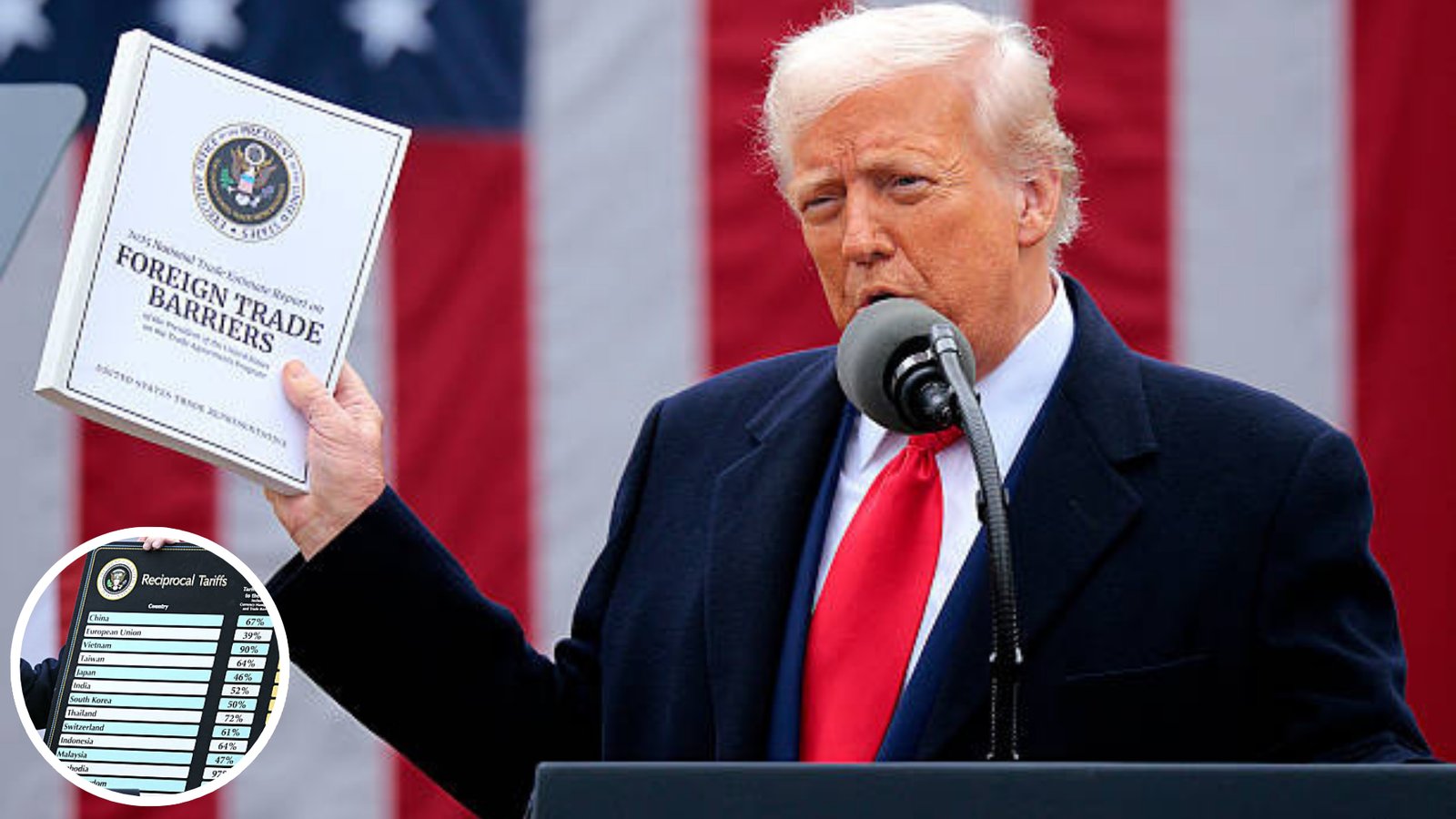
President Donald Trump announced Monday that the United States is close to securing new trade agreements, as his administration opted
to delay a looming tariff deadline. The announcement comes at a time of
escalating international tensions and significant policy decisions impacting
the Middle East and global humanitarian efforts.
Why Did President Trump Delay the Tariff Deadline?
As reported by Julia Frankel of Democracy Now!, President
Trump’s decision to postpone the tariff deadline was made public as he declared
that the U.S. is “nearing trade deals” with several partners. While Trump
did not specify which countries are involved or the precise terms of the
agreements, the move suggests ongoing negotiations are progressing and that the
administration is seeking to avoid immediate economic disruptions.
The delay in tariffs is widely viewed as a tactical maneuver
to provide additional time for negotiations, potentially averting retaliatory
measures from trade partners and stabilizing key sectors of the U.S. economy.
The White House has not released further details on the timeline or expected
outcomes of the trade talks as of Monday evening.
What Is the Context of Trump’s Trade Announcement?
Trump’s trade remarks come against a backdrop of
intensifying geopolitical developments, particularly in the Middle East.
According to Democracy Now!, the Israeli government, led by Prime Minister
Benjamin Netanyahu and the Likud party, is advancing plans for the formal
annexation of the occupied West Bank. This initiative is expected to reach a
critical point before the Israeli parliament’s summer recess at the end of July.
Netanyahu is scheduled to visit Washington, D.C., next week
for direct talks with President Trump, where the annexation and broader
regional security issues are likely to be high on the agenda.
How Is the U.S. Involved in the Israel-Gaza Conflict?
As reported by Democracy Now!, the U.S. State Department and
Pentagon have approved a $510 million sale of bomb guidance kits to Israel,
further cementing Washington’s support for its key Middle Eastern ally. The
sale follows a deadly Israeli airstrike on a crowded beachfront café in Gaza,
which The Guardian reported involved a U.S.-made 500-pound bomb. The attack
killed dozens of Palestinians, including children celebrating a birthday.
These developments have drawn sharp criticism from
international humanitarian organizations. This week, a coalition of 170
charities and aid groups—including Oxfam, Save the Children, and Amnesty
International—issued a joint statement condemning the Gaza Humanitarian
Foundation for its “blatant disregard for international humanitarian law” and
calling for its dissolution.
What Is the Status of the Gaza Ceasefire Proposal?
Hamas, the de facto governing authority in Gaza, is
currently reviewing a ceasefire proposal that President Trump has described as
a “final” offer. The details of the proposal have not been disclosed
publicly, but the language used by Trump suggests that the administration is
seeking a definitive resolution to the ongoing conflict.
The humanitarian situation in Gaza remains dire, with
repeated airstrikes, civilian casualties, and widespread destruction. The
international community continues to urge both sides to agree to a ceasefire
and prioritize the protection of civilians.
What Has Been the International Response to Events in Gaza
and the West Bank?
According to Democracy Now!, the humanitarian fallout from
the Gaza conflict has prompted widespread condemnation. The joint statement
from 170 aid organizations highlights a growing sense of urgency and
frustration over the lack of progress in protecting civilians and upholding
international law.
In the United Kingdom, the House of Commons voted to ban the
direct action group Palestine Action under anti-terrorism legislation, adding
it to a list of proscribed organizations that includes ISIS and al-Qaeda. The
decision followed recent incidents in which Palestine Action members breached
an air force base and damaged warplanes to protest British military support for
Israel’s campaign in Gaza. Hundreds of demonstrators gathered outside 10
Downing Street ahead of the vote, accusing Prime Minister Keir Starmer’s Labour
government of abusing state power.
How Are U.S. Domestic Politics and International Policy
Intersecting?
The Trump administration’s approach to trade and foreign
policy reflects a broader pattern of leveraging economic and diplomatic tools
to achieve strategic objectives. The delay in the tariff deadline, coupled with
high-profile arms sales and direct engagement with Middle Eastern leaders,
underscores the administration’s willingness to use all available levers to
shape global outcomes.
Meanwhile, domestic debates over social spending and tax
policy continue, as GOP leaders advance legislation to cut social programs and
reduce taxes for wealthy Americans—a move that may have implications for U.S.
economic competitiveness and the broader trade agenda.
What Are the Next Steps for U.S. Trade and Foreign Policy?
President Trump’s upcoming meeting with Prime Minister
Netanyahu is expected to yield further clarity on the administration’s Middle
East strategy, particularly regarding the West Bank annexation and the Gaza
ceasefire proposal. The outcome of ongoing trade negotiations, and the eventual
imposition or removal of tariffs, will also have significant consequences for
the U.S. economy and its global standing.
As reported by Julia Frankel of Democracy Now!, the coming
weeks are likely to be pivotal, with major decisions pending on both domestic
and international fronts.
What Are the Broader Implications for Global Stability?
The convergence of trade negotiations, military sales, and
humanitarian crises highlights the complex interplay between economic policy
and international security. The U.S. administration’s actions in the Middle
East, coupled with its evolving trade strategy, will continue to shape global
dynamics and influence the prospects for peace and stability in the region.
Journalists and policy analysts will be closely monitoring
developments in Washington and abroad, as President Trump seeks to balance
competing priorities and deliver on his administration’s promises.