
Key Points:
- The
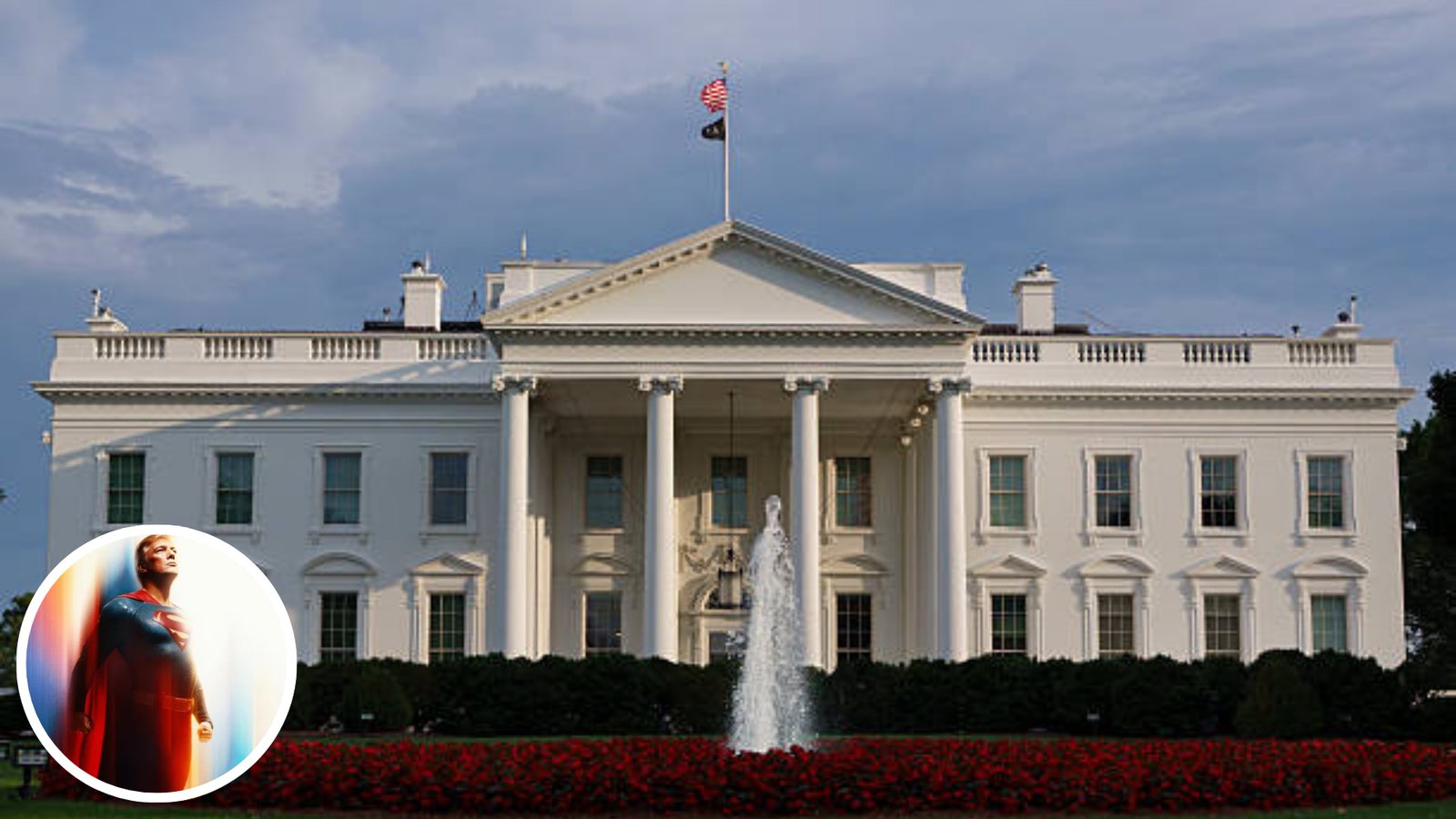
White House posted an AI-generated image of President Donald Trump as
Superman on official social media accounts, coinciding with the release of
the new “Superman” film. - The
post, featuring Trump in Superman’s iconic costume and the slogan
“The symbol of hope. Truth. Justice. The American way. Superman
Trump,” triggered immediate backlash and widespread debate online. - Critics,
including prominent Republicans and social media users, questioned the
professionalism and intent behind the post, with many referencing the
ongoing controversy around the Jeffrey Epstein client list. - The
post reignited discussions about the intersection of politics, pop
culture, and digital media, as well as the use of AI-generated images by
official government channels. - Director
James Gunn’s comments about Superman as an immigrant and the “story of
America” added fuel to the debate, with some conservatives expressing
outrage over perceived changes to the character’s legacy. - Dean
Cain, former Superman actor, criticized both the film and the White House
post, calling Hollywood’s direction “woke” and mocking the
administration’s social media strategy. - The
controversy comes amid President Trump’s announcement of new tariffs on
Canadian and Brazilian imports, further intensifying public scrutiny. - Elon
Musk, CEO of SpaceX and owner of X, announced that exposing the Epstein
files would be a priority for his new political venture, the America
Party, linking the Superman post to broader demands for transparency. - The
White House has previously posted AI-generated images of Trump in other
roles, including as the Pope and as a Jedi, each time sparking heated
reactions. - The
new Superman film, directed by James Gunn and starring David Corenswet,
premiered nationwide, with its own marketing stunts and debates about the
character’s symbolism.
A digitally altered image posted by the White House
depicting President Donald Trump as Superman has ignited a firestorm of
controversy across the United States, drawing sharp criticism from political
opponents, supporters, and pop culture commentators alike. The move, timed to
coincide with the national release of James Gunn’s new “Superman”
film, has become a flashpoint in the ongoing debate over the use of official
government channels for political messaging and the blending of entertainment
with politics.
Why Did the White House Post a “Superman Trump”
Image?
As reported by USA Today, the White House shared an altered
movie poster for “Superman” on Thursday, replacing David Corenswet’s
face with President Donald Trump’s. The image, posted on X (formerly Twitter)
and Instagram, showed Trump in Superman’s signature red, blue, and yellow suit,
accompanied by the bold slogan:
“The symbol of hope. Truth. Justice. The
American way. Superman Trump.”
The original film poster featured Corenswet as
Superman, gazing upward with the tagline “Look Up”.
According to The Hill, the administration’s intent appeared
to be capitalizing on the buzz surrounding the film’s release, casting Trump as
a powerful hero for the nation. The meme was released late Thursday, just hours
before the film’s theatrical debut, and was widely circulated across official
White House social media channels.
How Did the Public and Politicians React to the Post?
The reaction was swift and intense. As noted by Taboola and
Times of India, social media users, including Republicans, were quick to
question the legitimacy and professionalism of the White House’s official page.
Some accused the administration of using the post as a distraction from more
serious issues, particularly the ongoing controversy over the Jeffrey Epstein
client list.
A user quoted by Times of India wrote,
“Massive Distraction
Launched by Trump Regime to distract from his long sordid history of child rape
and trafficking with Jeffrey Epstein and subsequent cover up. Stay tuned for
further embarrassment.”
Other users mocked the post, with comments such as
Did Any Public Figures Respond?
Dean Cain, who played Superman in the 1990s TV series
“Lois & Clark: The New Adventures of Superman,” responded with
laughing emojis and criticized both the film and the White House’s approach. As
reported by Times of India and Economic Times, Cain, a Trump supporter, called
James Gunn’s upcoming Superman film “woke” and questioned Hollywood’s trend of
changing classic characters to “fit the times.” His comments were in direct
response to Gunn’s remarks about Superman representing “basic human kindness”
and the immigrant story of America.
California Governor Gavin Newsom also weighed in, as
reported by Deadline, noting that Superman himself was an “undocumented
immigrant”—a pointed reference to Trump’s anti-immigration policies.
How Did the Superman Film Director’s Comments Influence the
Debate?
James Gunn, director of the new Superman film, had recently
described Superman as “the story of America. An immigrant that came from other
places and populated the country, but for me, it is mostly a story that says
basic human kindness is a value and is something we have lost,” as quoted by
USA Today and Khaleej Times. This framing sparked further debate, with
some conservatives, including Dean Cain, expressing concern that Hollywood was
“reshaping” the character to fit contemporary narratives.
How Did the Meme Tie Into Political Controversies?
The meme’s release came at a time when President Trump was
facing renewed scrutiny over the Epstein files. As reported by India Today and
Economic Times, many users demanded transparency regarding the client list,
referencing the Justice Department’s recent statement that no such list exists.
The backlash was compounded by Elon Musk’s announcement that exposing the
Epstein files would be a top priority for his new political venture, the
America Party.
India Today also reported that the post coincided with
Trump’s announcement of a 35% tariff on Canadian imports and a 50% tariff on
Brazilian imports, moves that have drawn criticism from both domestic and
international observers.
Has the White House Used AI-Generated Images Before?
According to India Today and Khaleej Times, this is not the
first time the White House or Trump’s personal accounts have shared
AI-generated images. In May, Trump posted an image of himself as the Pope,
which drew similar backlash, particularly from Catholic communities. The
administration also posted an image of Trump as a Jedi for “May the
4th,” referencing the Star Wars franchise.
What Was the Reaction from the Entertainment Industry?
The new Superman film, directed by James Gunn and starring
David Corenswet, premiered nationwide with significant marketing efforts,
including stunts in Dubai and London. As noted by Khaleej Times, a Superman
statue was suspended over 300 meters above The Shard in London, and a diver at
Dubai Mall was transformed into Superman for the regional release.
The film’s release and the White House’s meme have become
intertwined, with debates about the symbolism of Superman as an immigrant and
the character’s relevance to American values taking center stage.
How Are Official Channels Being Used for Political
Messaging?
As highlighted by multiple sources, the use of official
White House accounts to post AI-generated memes marks a new frontier in
political communication. Critics argue that such posts blur the line between
governance and entertainment, potentially undermining the professionalism and
credibility of government institutions.
What Does This Incident Reveal About the State of Political
Discourse?
The uproar over the “Superman Trump” post
underscores the polarized nature of American political discourse, where even a
movie poster can become a battleground for debates about immigration,
transparency, and the role of government in shaping cultural narratives.
In summary, the White House’s decision to post an image
of President Trump as Superman has set off a national debate, drawing in voices
from politics, entertainment, and the general public. The incident highlights
the increasingly blurred lines between pop culture and politics, the power of
social media to shape public perception, and the challenges facing government
institutions in the digital age.