
Summary
- Russian
and Ukrainian delegations meet in Istanbul for third peace talks after
seven weeks. - Main
focus: prisoner exchange, war dead return, and humanitarian issues;
ceasefire unlikely. - Russia
led by Vladimir Medinsky; Ukraine by Defense Minister Rustem Umerov; no
direct presidential talks. - Russia
demands Ukraine withdraw from annexed territories and Crimea; Ukraine and
West reject. - Previous
talks yielded prisoner swaps but no ceasefire agreement. - U.S.
threatens further sanctions if no peace in 50 days; Turkey pushes for
direct dialogue. - Recent
military escalations include large drone attacks and Ukrainian strikes on
Russian bases. - Deep
divisions remain; limited optimism for immediate progress.
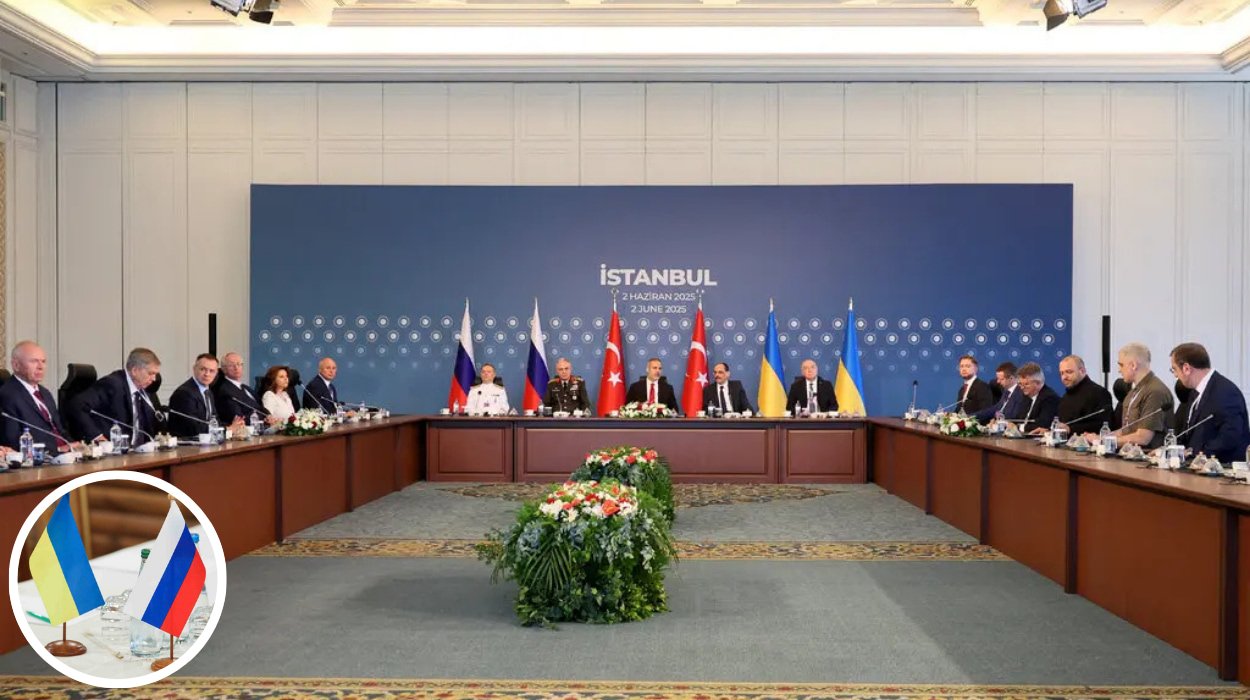
In a significant diplomatic development amid an ongoing
war now in its fourth year, Russian and Ukrainian delegations have travelled to
Istanbul, Turkey, for a highly anticipated new round of peace talks on
Wednesday, July 23, 2025. Despite palpable international pressure and
escalating violence on the battlefield, officials and analysts alike are
tempering expectations for a breakthrough, citing deep-seated disagreements and
starkly opposing agendas.
What Is the Background to the Russia-Ukraine Peace Talks in
Turkey?
As reported by Guy Faulconbridge and Reuters staff for
Al-Monitor and US News, Russian negotiators are heading to Istanbul for their
first direct talks with Ukrainian counterparts in over seven weeks. State
news agency TASS confirmed that the two sides had agreed to meet Wednesday,
with Vladimir Medinsky leading the Russian delegation and Ukrainian Defense
Minister Rustem Umerov representing Kyiv.
The two prior rounds, also held in Istanbul, in May and
June, centered on the exchange of prisoners of war and the remains of dead
soldiers over 6,000 in the most recent swap yet failed to make any progress on
a ceasefire or wider settlement. Both sides exchanged documents, but
Russian demands remain unacceptable to Ukraine, and vice versa.
Who Are the Key Figures Attending the Talks?
According to coverage by Al Jazeera and Euronews, Russia‘s
team is led by Vladimir Medinsky, a political scientist and former culture
minister. Medinsky also headed up previous rounds of negotiation and is
not viewed by Ukraine‘s government as a powerful decision-maker, with Kyiv
describing him as a “puppet” of the Kremlin. President Vladimir Putin is
not attending, and the Kremlin has stated that much more groundwork would be
needed before any summit between Putin and Zelenskyy.
Ukraine’s delegation is headed by Defense Minister Rustem
Umerov, consistent with past sessions, in a team selected to “balance” the
Russian delegation, according to Ukrainian President Volodymyr Zelenskyy, as
quoted by Al Jazeera’s Sinem Koseoglu. Zelenskyy himself remains focused
on ensuring representation and technical dialogue but, according to his
statements, “even his team lacks the authority to make final decisions,”
characterizing the meetings as technical and preparatory in nature.
What Are Each Side’s Demands and Expectations?
As per Andrew E. Kramer and Anton Troianovski in The New
York Times, Kremlin spokesman Dmitri Peskov told journalists before the meeting
there was “no basis to expect any magical breakthroughs,” reflecting the
general skepticism in Moscow and Kyiv. Ukrainian President Zelenskyy has
explicitly ruled out any agreement on territorial concessions or the status of
Crimea prior to a true ceasefire. Ukraine continues to call for a
reciprocal exchange of all prisoners of war, return of civilians from
captivity, and the repatriation of children it says were abducted by Russia.
Moscow, on the other hand, is demanding Ukraine’s total
withdrawal from the four regions it claims to have annexed Donetsk, Luhansk,
Zaporizhzhia, and Kherson as well as Crimea. Medinsky outlined these as
preconditions for any halt in hostilities in a memorandum delivered to Kyiv at
the last session. The document also stipulated ending Ukrainian
mobilization, halting Western arms supplies, prohibiting military deployments
of third parties in Ukraine, and Ukraine declaring official neutrality. These
demands, repeatedly rejected by both Ukraine and Western nations, remain the
central stumbling block preventing any truce.
What Has Been Achieved in Previous Rounds of Talks?
PBS NewsHour, Al Jazeera, and France24 reported that while
little headway was made on a political solution, prior rounds did produce
substantial prisoner exchanges and the repatriation of the remains of thousands
of combatants a rare instance of diplomacy functioning amid the conflict. Rustem
Umerov, Ukraine’s chief negotiator, explained that the sides agreed to an
“all-for-all” exchange of the severely injured and captured young soldiers,
with at least 1,000 on each side returned a swap unprecedented in its scale.
Turkish Foreign Minister Hakan Fidan, who has hosted the
talks at Istanbul’s Ciragan Palace, stated that
“The whole world’s eyes are
focused on the contacts and discussions you will have here.”
However, the
climate has been marked by limited ambition and clear boundaries: as observed
by PBS NewsHour’s reporting, expectations for a diplomatic breakthrough were
“very low,” with both delegations admitting the divisions remained formidable.
What Has Been the International Response, Especially from
the U.S.?
According to Al Arabiya and Euronews, the United States has
intensified its push for a negotiated settlement. President Donald Trump warned
last week that Russia and any countries purchasing its exports would face new
“bruising sanctions” if a peace agreement is not reached within 50 days. Trump,
speaking on Truth Social and to reporters during his Middle East tour,
insisted:
“To Russia and Ukraine, get to the table right now, before it is too
late. Thank you”.
He has also advocated for a direct meeting between Putin
and Zelenskyy, which, so far, the Kremlin has resisted.
Euronews noted additional international diplomatic efforts:
Turkish President Erdogan has called repeatedly for both leaders to meet in
Istanbul or Ankara, proposing a broader summit that could include U.S.
participation. However, Ankara’s energetic shuttle diplomacy has yet to
produce the direct leader-level dialogue it seeks.
How Has the Escalation on the Battlefield Shaped
Discussions?
As noted by The Associated Press (PBS NewsHour) and
France24, the lead-up to the talks was marked by major military escalations.
Ukrainian forces recently carried out a prolonged and strategically complex
drone strike on Russian airbases, reportedly destroying more than 40 warplanes
deep inside Russian territory a blow lauded by President Zelenskyy as
“brilliant” and “a major slap in the face for Russia’s military power”. In
retaliation and as part of ongoing campaigns, Russia launched a barrage of 472
drones at Ukrainian targets in a single night, the highest number since its
invasion.
Latin RTE, DW, and multiple news sources all described the
humanitarian toll of the recent escalation, which has included increased
civilian casualties, destruction of infrastructure, and mounting pressure on
the negotiators to produce at least incremental relief, if not an outright
ceasefire.
What Is on the Agenda for the Istanbul Talks?
According to DW’s live coverage and Al Arabiya, the third
round of discussions in Istanbul aims to focus principally on humanitarian
issues, foremost among them the exchange of prisoners and remains, and
confidence-building steps such as publishing official lists of missing and
detained persons. Talks will additionally revisit the long-standing
Russian and Ukrainian proposals for ceasefire and settlement terms, although
both the nature of the delegations and official statements suggest the
gathering is not authorized to broker a final peace deal.
Ukrainian officials and President Zelenskyy maintain that
further action especially on territory and permanent ceasefire will have to
come from talks at the leader level; neither Putin nor Zelenskyy is expected to
attend unless significant groundwork is achieved.
What Has Turkey’s Role Been in Mediating the Talks?
As detailed by Al Jazeera and France24, Turkey has
positioned itself as an indispensable intermediary, with President Erdoğan
backing persistent diplomatic engagement and Foreign Minister Fidan personally
moderating the meetings. Erdoğan called the ongoing talks and prisoner
exchanges “magnificent” and repeated offers to host direct negotiation between
Putin and Zelenskyy, or even a four-party summit including the US. Turkey’s
stance is driven by both its NATO commitments and economic relationships with
Russia and Ukraine, making it a rare broker with access to both sides.
What Are the Prospects for a Ceasefire or Lasting Peace?
According to reporting by The New York Times, Al Arabiya,
and Al Jazeera, both sides remain far apart on even a provisional ceasefire,
with Russia rejecting unconditional truce offers and Ukraine dismissing
Moscow’s demands for territorial concessions.
Russian sources, as cited by Reuters and DW, say
“President
Putin is unmoved by threats of further Western sanctions and is prepared to
continue military operations in Ukraine until the West agrees to his terms for
peace,”
suggesting Moscow’s own territorial ambitions could expand with further
battlefield advances. Ukraine and the West, for their part, have made
clear that the current Russian requirements withdrawal from occupied
territories, political neutrality, constitutional changes are unacceptable
preconditions for peace.
Are There Any Indications of Progress?
Statements from both camps, chronicled by journalists from
Al Arabiya, PBS, and The New York Times, indicate a prevailing mood of resolve
but resignation. Rustem Umerov told reporters in Istanbul, as quoted by Al
Jazeera,
“We are ready to take at least the initial step toward
de-escalation, but ultimately the process can only succeed at the highest political
level”.
Vladimir Medinsky, for his part, maintains that “constructive
discussions are still possible,” yet concedes the gap remains “vast”.
Despite limited prospects for a breakthrough, the ongoing
humanitarian exchanges are undeniably significant for thousands of families and
suggest that some diplomatic channels, however narrow, are still open between
Russia and Ukraine.