
- Trump
administration unveils Gaza ‘master plan’ focusing on $50 billion
reconstruction, economic zones, and security guarantees including
demilitarisation. - UK
declines invitation to join Trump’s proposed 12-nation Board of Peace,
prioritising UN-led processes and existing Quartet commitments. - Plan
features international investments from Gulf states, US-trained forces, AI
surveillance, and deradicalisation programs targeting 100,000 participants
yearly. - Regional
responses vary: Israel endorses security aspects, PA welcomes economics
but seeks sovereignty, Hamas rejects as colonisation. - Implementation
targets initial phases by mid-2026, with governance transition to
technocratic council and elections by 2028.
Washington (Washington Insider Megazines) – 22 January
2026 – The Trump administration unveiled a comprehensive Gaza reconstruction
plan termed the ‘master plan,’ focusing on economic development and security
guarantees. The United Kingdom declined an invitation to join President Trump’s
proposed Board of Peace for the region, citing existing commitments. The
initiative aims to stabilise Gaza post-conflict through international
investment and deradicalisation measures.
The White House announced the Gaza master plan on 20 January
2026, outlining $50 billion in pledged reconstruction funds from Gulf states
and private investors. President Trump appointed a special envoy to coordinate
demilitarisation efforts alongside the plan’s implementation. UK Foreign Secretary
David Lammy confirmed the snub, stating London prioritises UN-led processes
over new bilateral frameworks.
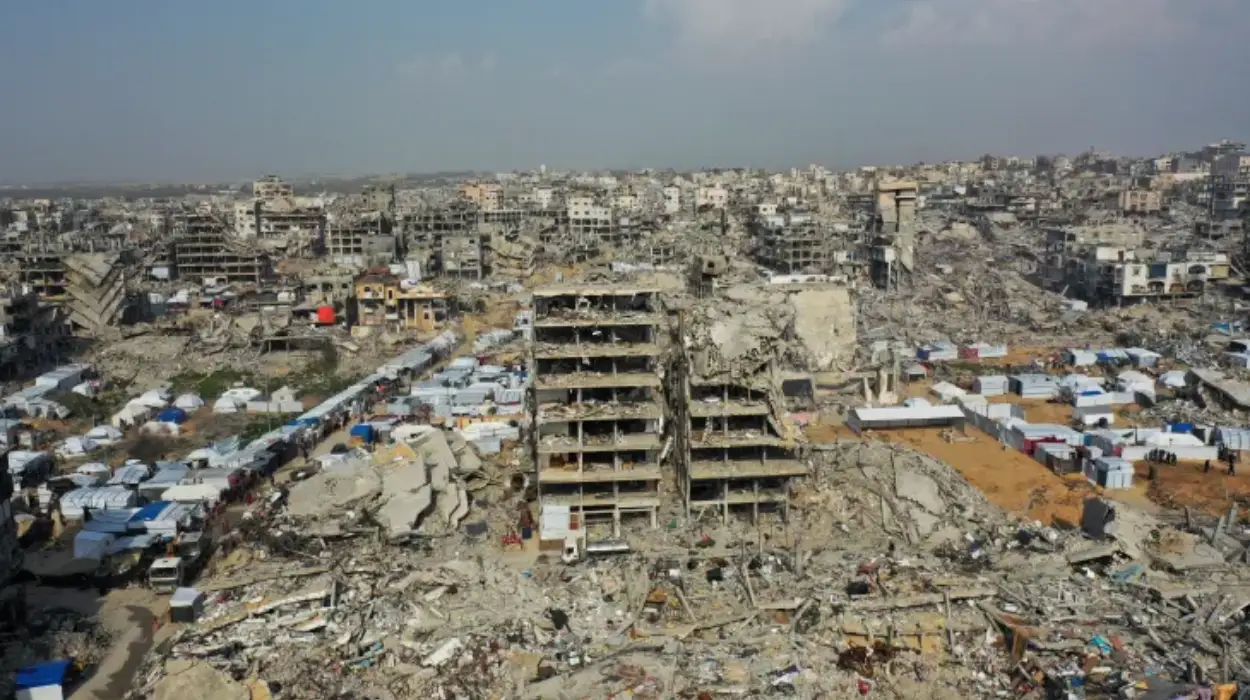
Details of US Gaza Reconstruction Master Plan
 Credit: aljazeera.com
The master plan proposes dividing Gaza into development
zones managed by international consortiums, with revenue from natural gas fields
funding infrastructure. Security features include buffer zones monitored by
US-trained Palestinian forces and AI surveillance systems. The US committed $10
billion in seed funding, conditional on Hamas disarmament verified by third
parties.
Egypt and Jordan expressed reservations about refugee
returns, while Saudi Arabia pledged $15 billion tied to normalisation with
Israel. The plan projects 500,000 new jobs within five years through
desalination plants, housing projects, and tech parks. Implementation timeline
targets initial phases by mid-2026, pending ceasefire formalisation.
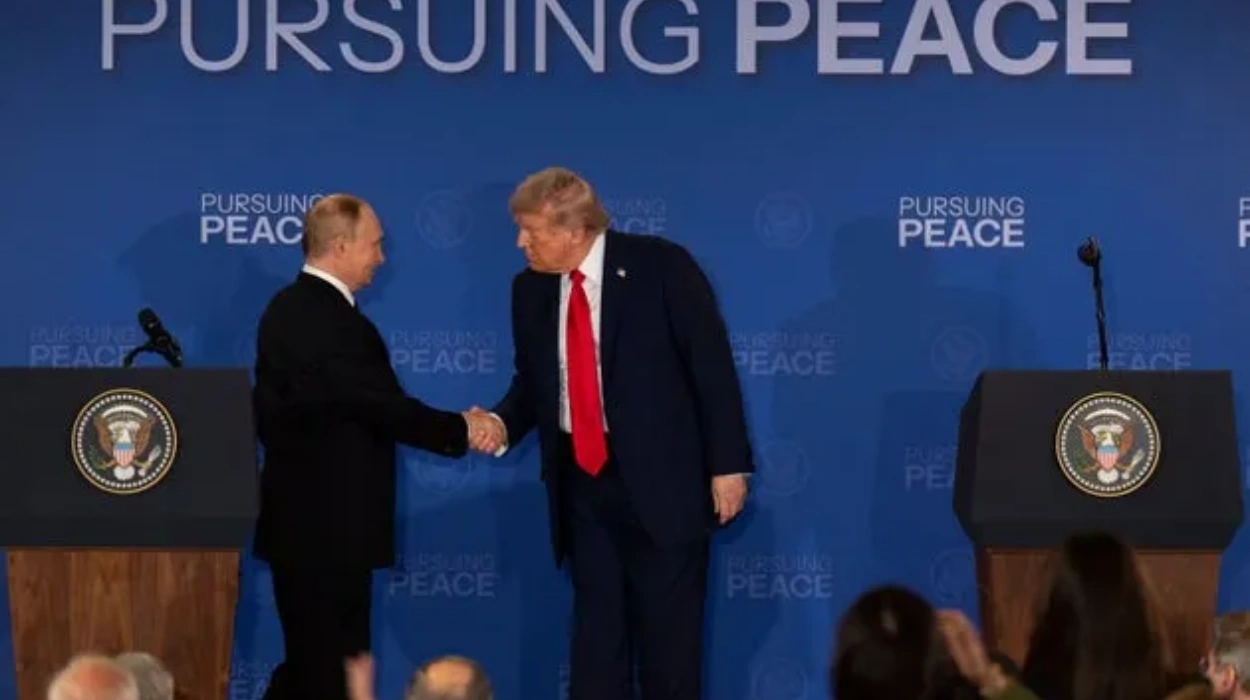
UK’s Rejection of Trump Peace Board Invitation
 Credit: via Associated Press
The UK government received an invitation on 15 January 2026
to join the Board of Peace, a 12-nation body overseeing Gaza’s political
transition. Foreign Secretary Lammy responded that Britain maintains its
Quartet role with the US, EU, and UN for Middle East peace. A Downing Street
spokesperson emphasised commitment to two-state solution parameters established
in prior agreements.
Labour government sources cited misalignment with the board’s
proposed veto powers for Gulf participants as a key factor. Prime Minister Keir
Starmer reaffirmed support for US mediation while prioritising humanitarian
access corridors.
Regional Reactions to Gaza Master Plan Proposal
Israel endorsed the plan’s security components, with Prime
Minister Benjamin Netanyahu confirming cooperation on demilitarisation
protocols. Palestinian Authority President Mahmoud Abbas welcomed economic
aspects but demanded sovereignty guarantees absent in the blueprint. Hamas leadership
dismissed the initiative as economic colonisation, vowing continued
resistance.
Qatar committed $8 billion for education and healthcare
reconstruction, stipulating inclusive governance structures. UAE announced $12
billion for port and airport rehabilitation, linking funds to deradicalisation
curricula implementation.
Historical Context of Previous Gaza Reconstruction
Efforts
Post-2005 disengagement, Gaza received $20 billion in
international aid, with 80% absorbed by reconstruction materials under blockade
restrictions. UN reports documented 17,000 homes destroyed in 2023-2024
hostilities, displacing 1.9 million residents. Previous Cairo conferences
mobilised $5.5 billion in 2009, though corruption and militancy diverted 30% of
funds.
The US-backed Gaza Gateway project collapsed in 2010 amid
security deteriorations, leaving $1.2 billion in stalled contracts. Quartet
principles established benchmarks for aid delivery tied to governance reforms
unimplemented since 2007.
Security and Deradicalisation Components Specified
The master plan mandates decommissioning of 15,000 rockets
and 50,000 firearms, verified by multinational inspectors. Deradicalisation
centres modelled on Saudi programmes target 100,000 participants annually,
focusing on vocational training. US military advisors train 20,000 Palestinian
National Security Forces for internal policing duties.
Border security features Egyptian-monitored Rafah crossing
and Israeli-controlled northern perimeter with drone patrols. Artificial
intelligence platforms from US defence contractors monitor extremist financing
networks.
Economic Projections and Investment Breakdown
 Credit: APP
Plan forecasts $100 billion GDP expansion over decade
through gas exports generating $4 billion annual revenue. Agriculture revival
targets 200,000 dunams under cultivation with Israeli drip irrigation
technology. Free trade zone at Kerem Shalom processes $10 billion annual
exports to Europe and Gulf markets.
Private equity commitments total $25 billion from Blackstone
and UAE sovereign funds for energy and real estate. World Bank assessment
projects 7% annual growth if security benchmarks met consistently.
International Diplomatic Coordination Mechanisms
The Board of Peace convenes quarterly, with observer status
offered to UN and African Union representatives. US Secretary of State Marco
Rubio hosted preparatory talks with 18 nations in Riyadh on 18 January 2026. EU
foreign policy chief Kaja Kallas requested amendments ensuring compliance with
international humanitarian law.
China
expressed interest in infrastructure financing, proposing $20 billion Belt
and Road integration. Russia offered mediation services, leveraging prior Hamas
contacts established in 2023.
Humanitarian and Governance Transition Elements
Immediate phase delivers 500,000 shelter units and water
infrastructure serving 2 million residents. Governance roadmap installs
technocratic council by July 2026, evolving to elections by 2028.
Anti-corruption commission audits all contracts above $10 million, reporting to
board members.
UNRWA restructuring separates operations from political
activities, with $1.5 billion US funding conditional on reforms.