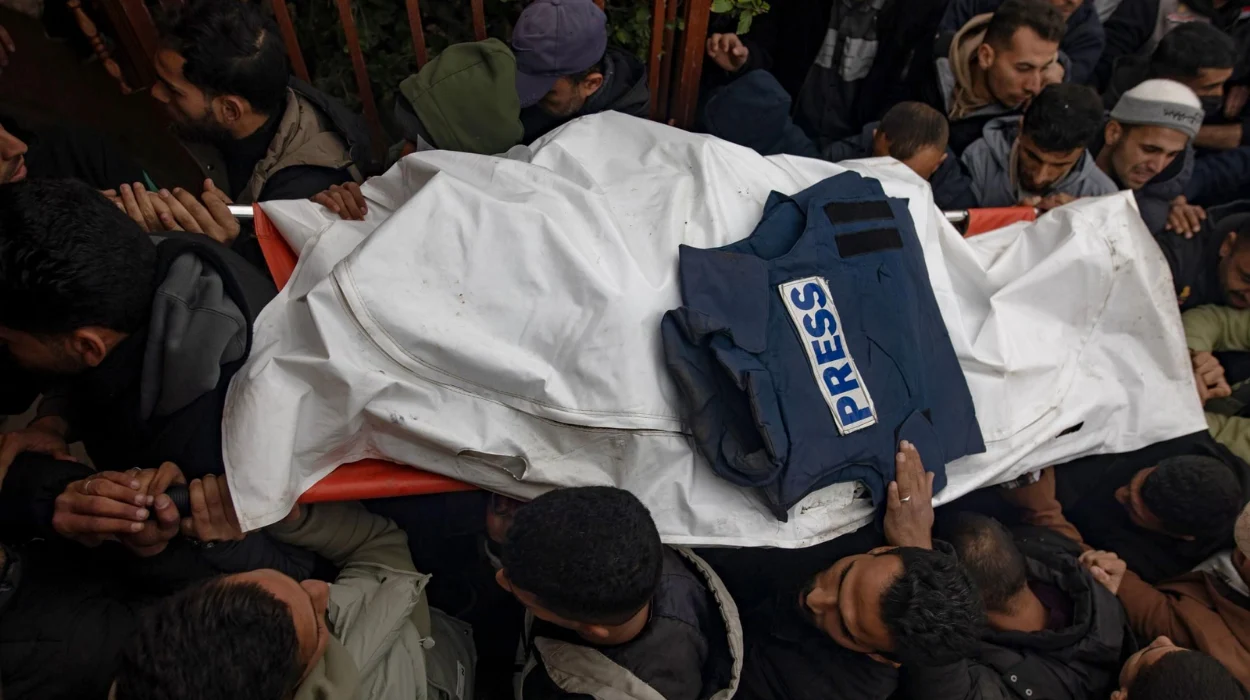
Three Gaza Journalists Killed in Israeli Strike, Egyptian Committee and AFP Respond

- An
Israeli airstrike on January 20, 2026, in Khan Younis, southern Gaza,
killed three journalists: Mohamed Abu Jazar, Issam al-Nafta, and Mohamed
al-Samiri from local media outlets like Al-Aqsa Voice Radio. - The
victims were in a marked press vehicle reporting from a residential area
when struck at around 2:45 PM local time, with rescue teams confirming
fatalities amid damaged structures. - The
Egyptian Relief Committee condemned the attack as a “heinous crime
against humanity,” demanding UN investigation and pledging aid to
victims’ families. - Agence
France-Presse (AFP) labelled it an “unacceptable assault on
journalism,” citing Geneva Conventions protections and noting over
100 media worker deaths in Gaza since October 2023. - The
Israel Defense Forces stated the strike targeted a nearby Hamas command
centre based on intelligence, expressing regret for civilian casualties
without prior knowledge of media presence.
Gaza (Washington Insider Megazines) January 22,
2026 – An Israeli airstrike in Gaza killed three journalists on January 20,
2026, prompting strong condemnation from the Egyptian Relief Committee and
Agence France-Presse (AFP). The victims, affiliated with local media outlets,
died while reporting from a residential area in southern Gaza. Both
organisations described the attack as a deliberate targeting of media
professionals covering the ongoing conflict.
The incident occurred amid continued military operations in
the region, with the journalists’ deaths marking a significant escalation in
risks to press freedom. Eyewitnesses reported the strike hit a building used by
reporters, and international media watchdogs have called for an immediate
investigation. This event has heightened global attention on the protection of journalists
in conflict zones.
Incident Details and Victim Identities
 Credit: Screengrab/Al Jazeera
The airstrike took place in the Khan Younis area of southern
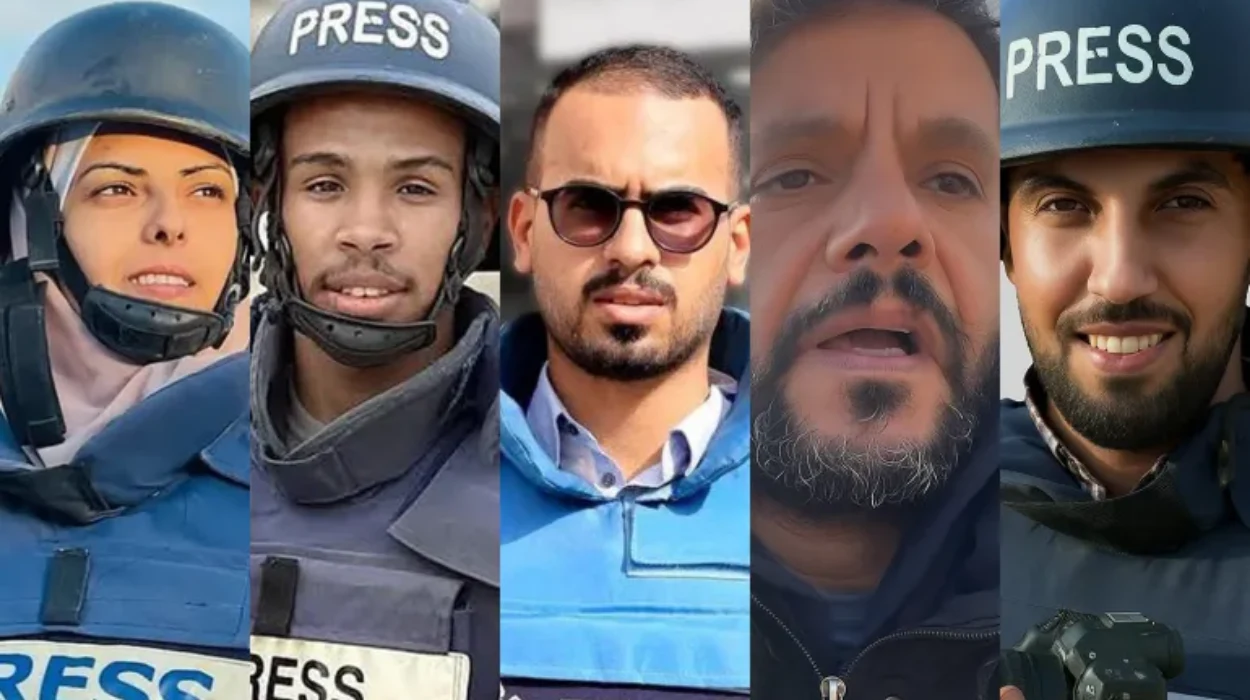
Gaza, where three journalists lost their lives. Identified as Mohamed Abu
Jazar, Issam al-Nafta, and Mohamed al-Samiri, the victims worked for Al-Aqsa
Voice Radio and other local outlets. According to reports from credible
sources, the journalists were inside a marked press vehicle when the strike
occurred at approximately 2:45 PM local time.
Rescue teams recovered the bodies from the wreckage,
confirming the fatalities shortly after. The Egyptian Relief Committee issued a
statement labelling the attack “a heinous crime against humanity” and
demanded accountability from Israeli forces. AFP echoed this sentiment, stating
the deaths represented “an unacceptable assault on journalism.”
Statements from Egyptian Relief Committee
The Egyptian Relief Committee, a humanitarian organisation
focused on Gaza aid, released an official statement on January 21, 2026. Spokesman
Ahmed Abdel-Rahman said,
“The targeting of journalists is a clear violation
of international law and undermines efforts to report the truth.”
The committee highlighted its ongoing relief work in Gaza
and called for Egyptian government intervention to protect media workers.
Committee officials noted that the journalists had been
providing coverage of civilian conditions under bombardment. They urged the
United Nations to investigate the strike’s circumstances, citing previous
incidents involving media personnel. The organisation pledged support to the
victims’ families, including financial aid and legal assistance for justice.
AFP’s Official Response and Context
Agence France-Presse, a global news wire service, condemned
the attack in a statement from its Paris headquarters. AFP Director-General
Fabrice Fries remarked,
“Journalists are civilians protected under the
Geneva Conventions, and their killing is a grave breach.”
The agency emphasised its commitment to field reporting
despite risks, referencing past losses in conflict zones.
AFP clarified that none of its staff were among the victims
but expressed solidarity with Palestinian media. The statement referenced the
International Federation of Journalists’ data, noting over 100 media workers
killed in Gaza since October 2023. AFP called on all parties to ensure safe
access for reporters.
Background of Journalists Killed
Mohamed Abu Jazar, 32, hosted a programme on Al-Aqsa Voice
Radio, focusing on humanitarian issues. Issam al-Nafta, 28, specialised in
video reporting for local networks, while Mohamed al-Samiri, 41, contributed
photography to several outlets. Colleagues described them as dedicated
professionals who continued work despite evacuation orders.
Family members of the victims spoke to reporters, recounting
their final communications. Abu Jazar’s brother stated he was en route to
document aid distributions when struck. The journalists wore protective gear
marked “PRESS,” visible in footage circulating online from the scene.
Israeli Military Position on the Strike
The Israel Defense Forces (IDF) issued a statement on
January 21, 2026, acknowledging the airstrike but denying intent to target
journalists. An IDF spokesperson said,
“The operation targeted a Hamas command centre in
the vicinity, based on precise intelligence.”
The military claimed no prior knowledge of media presence
and expressed regret for civilian casualties.
IDF officials released coordinates showing the site as a
known militant location. They invited international observers to review
evidence, including drone footage of the area. This response aligns with
previous IDF positions on similar incidents, stressing operational necessities
in urban combat.
International Media Reactions
Reporters Without Borders (RSF) labelled the deaths “a
dark day for press freedom,” demanding an independent probe. The Committee
to Protect Journalists (CPJ) documented the incident as the latest in a series,
with 132 media workers killed in Gaza since hostilities intensified. BBC News
and Reuters reported the event, citing eyewitness accounts and official
statements.
Al Jazeera, based in Qatar, aired exclusive footage from the
strike site, showing damaged vehicles and rescue efforts. The New York Times
verified videos through its visual investigations unit, confirming the press
markings. European outlets like The Guardian emphasised the humanitarian crisis
context.
Historical Context of Journalist Casualties
Since October 7, 2023, Gaza has seen unprecedented
journalist deaths, per CPJ records. Palestinian media outlets, operating under
restrictions, have borne the brunt. RSF reported 107 journalists killed by
January 2026, mostly attributed to Israeli strikes. Hamas authorities claimed
higher figures, though independent verification remains challenging.
Previous incidents include the October 2024 killing of two
World Central Kitchen workers misidentified amid fog of war. International
courts, including the ICC, have probed allegations of systematic targeting, but
no convictions have resulted. Journalists face dual threats from airstrikes and
ground risks.
Humanitarian Impact in Khan Younis
Khan Younis, a southern Gaza hub, hosts displaced civilians
fleeing northern fighting. UNRWA reported over 1.9 million internally displaced
as of January 2026. The strike damaged nearby residential structures, injuring
12 others, per Gaza Health Ministry figures. Aid convoys struggle with access,
complicating medical responses.
Médecins Sans Frontières (MSF) treated survivors, noting
shrapnel wounds consistent with airstrikes. The World Health Organisation
warned of collapsing healthcare amid fuel shortages. Journalists’ role in
documenting these conditions underscores the incident’s broader implications
for information flow.
Calls for Investigation and Protection
The UN Secretary-General’s office urged
a thorough inquiry on January 21. Human Rights Watch demanded preservation
of the site for forensic analysis. The Arab League scheduled an emergency
session to address media safety in conflicts.
Egypt, via its foreign ministry, summoned the Israeli
ambassador to protest the killings. President Abdel Fattah el-Sisi reiterated
support for Gaza press corps. AFP and the Egyptian Relief Committee joined 50
organisations in a joint letter to the Security Council.
Ongoing Conflict Developments
 Credit: Getty Images
Israeli operations in Gaza continue into January 2026, with
daily strikes reported. Hamas rocket fire persists intermittently, per IDF
logs. Ceasefire talks in Doha stalled last week over hostage releases. Casualty
figures stand at over 45,000 Palestinian deaths, per Gaza authorities, and
1,200 Israeli fatalities from October 2023.
US envoy Brett McGurk met mediators amid pressure from
President Trump. Qatar hosted indirect negotiations, but gaps remain wide.
Journalists remain vital for external awareness, despite communication
blackouts.