
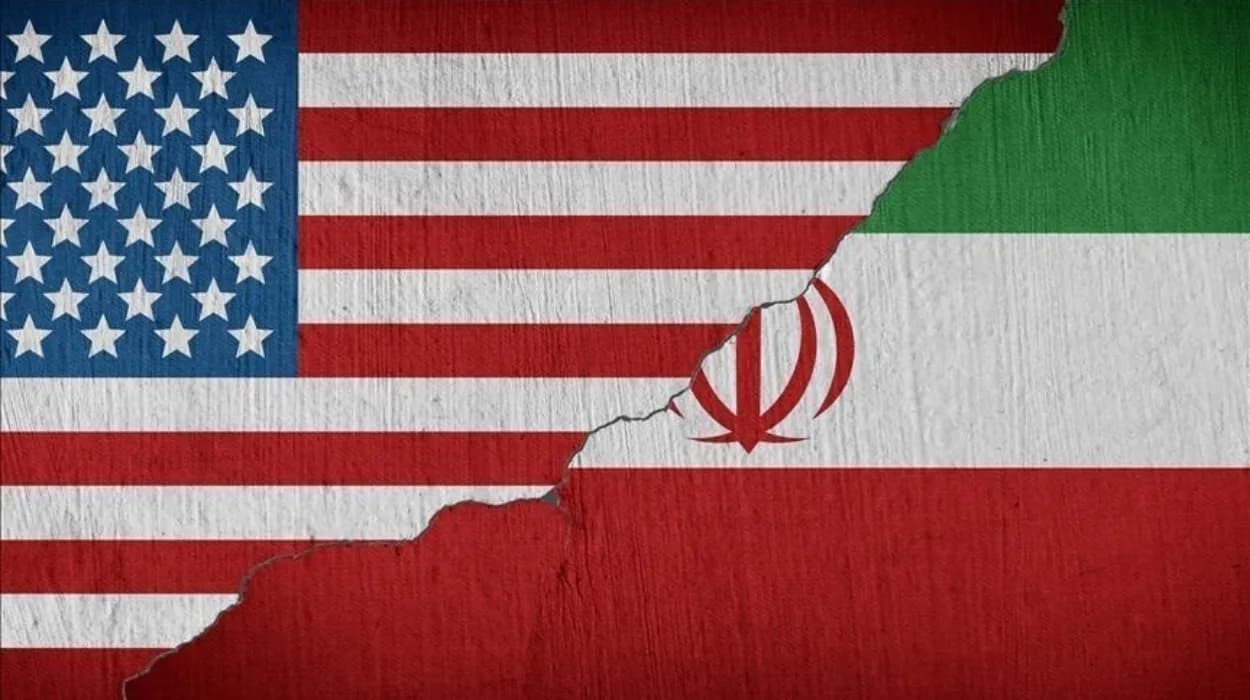
- Venue Shift from Oman to Europe: US-Iran nuclear talks relocated from Muscat, Oman, to Geneva, Switzerland, following two military incidents involving Iranian proxies and US forces.
- Houthi Red Sea Missile Incident: On 31 January 2026, Houthi rebels fired anti-ship missiles at a Greek tanker; US Navy destroyers intercepted most, causing minor vessel damage but no casualties.
- Drone Attack on Al Udeid Base: On 2 February 2026, Iranian drones targeted the US base in Qatar; F-35s and Patriot systems downed all threats with no damage or injuries reported.
- Diplomatic Continuity Assured: US negotiator Robert Malley and Iranian Foreign Minister Abbas Araghchi confirmed commitment to talks, prioritising security while addressing enrichment limits and sanctions relief.
- Broader Regional Tensions: Incidents amid heightened US sanctions, Houthi escalation tied to Gaza, and IAEA monitoring of Iran's 60% uranium stockpile exceeding JCPOA caps.
Washington (Washington Insider Magazine) February 4, 2026 - US-Iran nuclear talks have changed venue following two military incidents involving Iranian proxies and US forces in the Middle East. Negotiations relocated from Oman to a neutral European location after clashes near the Strait of Hormuz and a drone attack on US bases. Diplomats confirmed the shift aims to maintain dialogue continuity amid heightened tensions.
The venue change occurred after Iranian-backed Houthi forces conducted missile strikes on commercial shipping in the Red Sea on 2 February 2026. US naval vessels responded with defensive intercepts, marking the second incident within 48 hours. Iranian officials acknowledged proxy involvement but denied direct state orders.
Senior US negotiator Robert Malley stated the relocation ensures participant safety without derailing progress on nuclear constraints. Iranian Foreign Minister Abbas Araghchi echoed commitment to talks despite external pressures.
What Specific Military Incidents Prompted US-Iran Talks Venue Change?
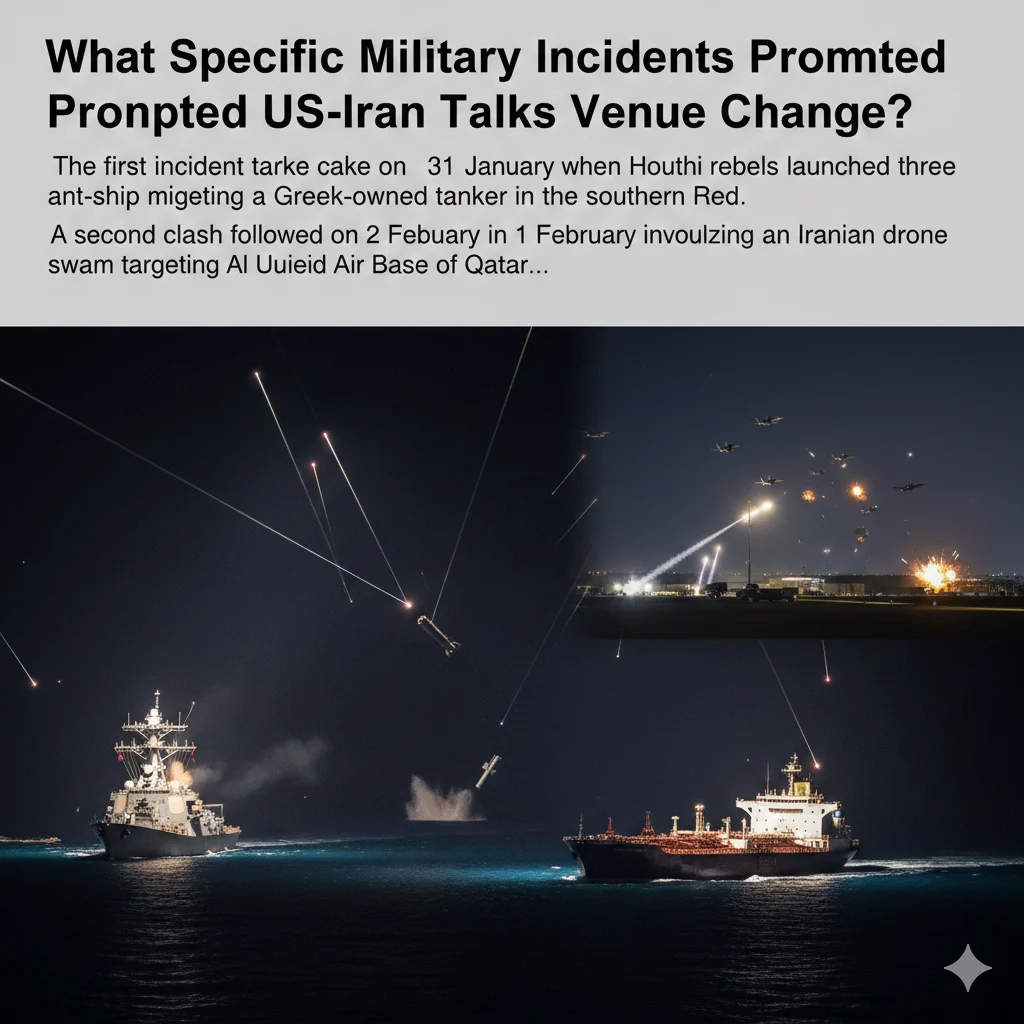
The first incident took place on 31 January 2026 when Houthi rebels launched three anti-ship missiles targeting a Greek-owned tanker in the southern Red Sea. US Navy destroyers USS Laboon and USS Carney intercepted two projectiles, with the third landing in the water, according to US Central Command reports. No casualties occurred, but the tanker sustained minor damage.
A second clash followed on 2 February 2026 involving an Iranian drone swarm targeting Al Udeid Air Base in Qatar, home to US Central Command forward headquarters. US F-35 jets downed six drones, while Patriot systems neutralised two more. Pentagon spokesperson Pat Ryder confirmed all US personnel safe and no base damage.
Iranian state media IRIB attributed actions to regional allies responding to US sanctions. Tehran maintained its negotiators distanced from field operations.
How Did US Officials Justify Relocating Nuclear Negotiations?
State Department spokesperson Matthew Miller announced the venue shift on 3 February 2026, citing security assessments post-incidents. Talks moved from Muscat, Oman, to Geneva, Switzerland, starting 5 February. Miller emphasised: "Security remains paramount, but diplomacy continues uninterrupted."
Omani mediators facilitated the original site but agreed to the change following joint US-Iran requests. Oman Foreign Ministry confirmed no compromise to confidentiality protocols.
US President Donald Trump commented during a White House briefing: "Iran knows the consequences of escalation. Talks proceed because both sides recognise mutual benefits."
What Role Did Iran Play in Addressing the Disruptive Incidents?
Iranian Foreign Ministry spokesperson Nasser Kanaani stated on 3 February 2026 that Tehran communicated with regional actors to de-escalate. He described incidents as "independent responses to aggression" unrelated to nuclear discussions.
Supreme Leader Ali Khamenei's office issued a statement urging restraint among allies while affirming negotiation mandates. Araghchi held virtual calls with EU envoy Enrique Mora to coordinate logistics.
Tehran-based negotiators prepared technical papers on uranium enrichment limits for the Geneva session.
When Were Original US-Iran Talks Scheduled in Oman?
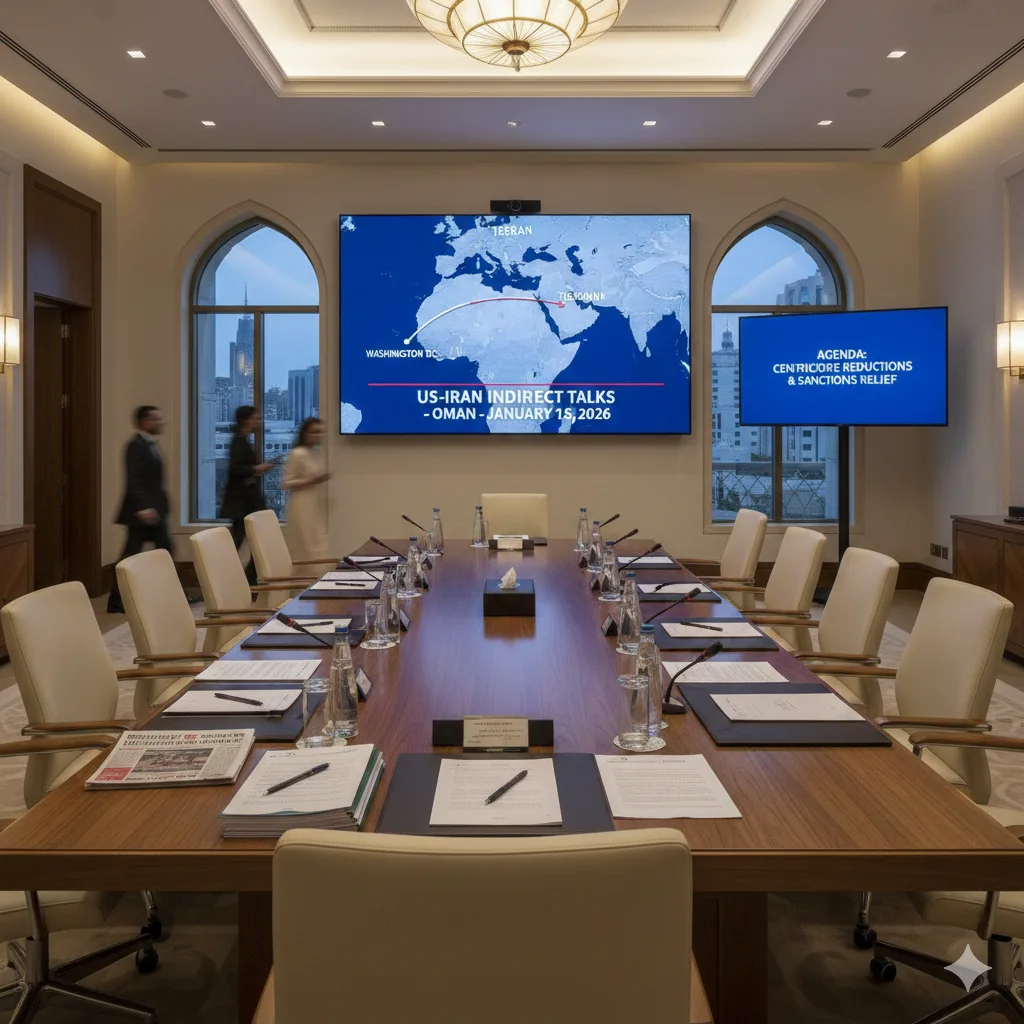
Indirect talks commenced in Oman on 15 January 2026, marking the first since Trump's 2025 inauguration. Five rounds addressed centrifuge reductions at Fordow and Natanz facilities in exchange for sanctions relief on oil exports.
Previous sessions yielded agreements on IAEA monitoring access. Oman hosted due to its neutrality and prior JCPOA facilitation role.
Incidents disrupted a sixth round planned for 4 February, prompting immediate relocation.
Which Key Figures Lead US and Iranian Delegations?
US team includes Special Envoy Robert Malley, Undersecretary for Arms Control Bonnie Jenkins, and NSC Senior Director for Middle East Jon Finer. Malley led 2015 JCPOA negotiations.
Iranian delegation comprises Foreign Minister Abbas Araghchi, Vice Foreign Minister Majid Takht-Ravanchi, and Atomic Energy Organisation head Mohammad Eslami. Araghchi served as lead negotiator in Vienna talks.
EU coordinates as JCPOA facilitator, with Mora chairing sessions.
What Background Exists on Recent US-Iran Military Tensions?
Tensions escalated after US reimposed maximum pressure sanctions in November 2025. Iran increased 60% enriched uranium stockpiles to 142kg by IAEA December 2025 report.
Houthi attacks intensified post-October 2025 US strikes on Sanaa radar sites. US-led Prosperity Guardian coalition intercepted 78 Houthi drones since inception.
Iran conducted naval drills near Hormuz in December 2025, prompting US carrier group deployments.
How Have Allies Responded to Venue Change and Incidents?
UK Foreign Secretary David Lammy affirmed support for Geneva talks during a 3 February House of Commons statement. France and Germany recommitted to E3 format participation.
Oman reaffirmed mediation availability post-relocation. Saudi Arabia urged de-escalation via Gulf Cooperation Council channels.
UN Secretary-General António Guterres welcomed continuity, calling incidents "counterproductive distractions."
What Technical Issues Remain Central to US-Iran Discussions?
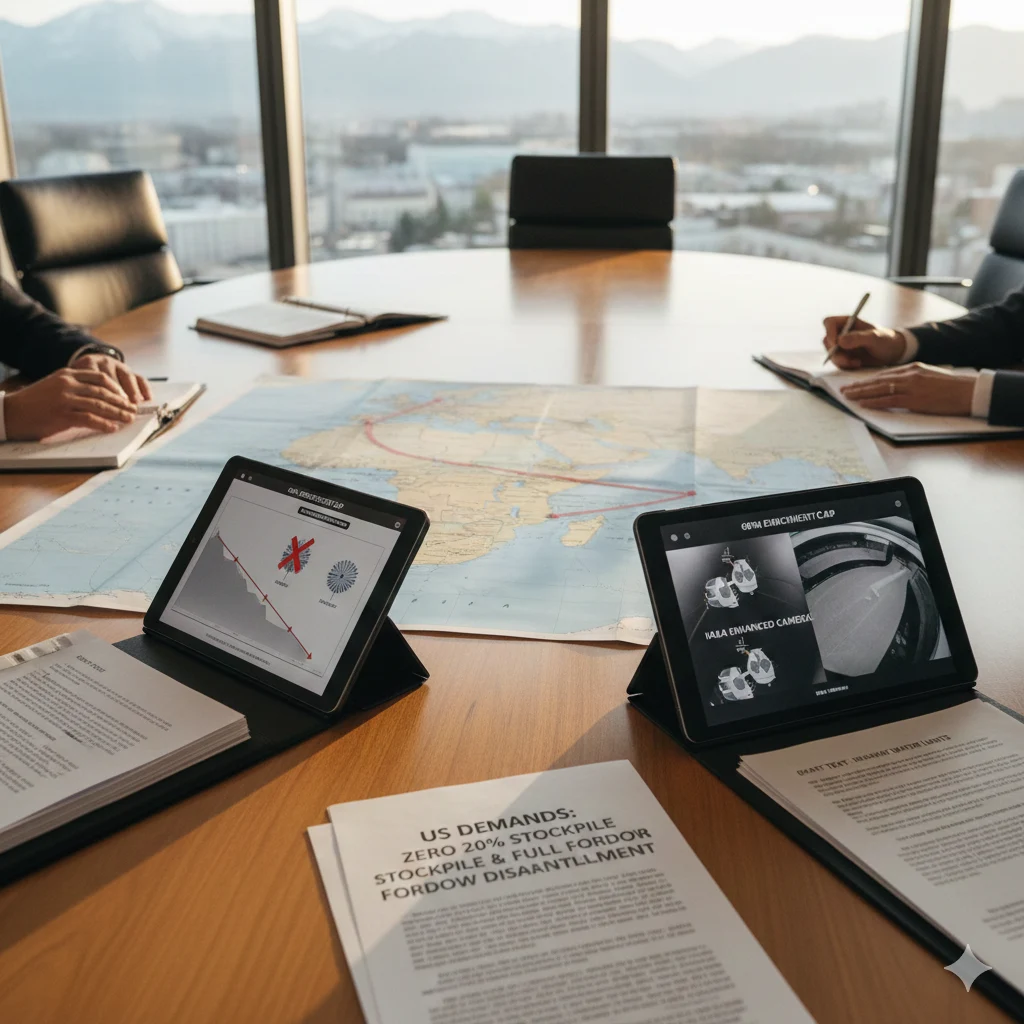
Negotiations focus on capping 60% enrichment, removing advanced centrifuges, and enhanced IAEA cameras at enrichment sites. Iran seeks release of $10 billion in frozen assets and civil nuclear cooperation revival.
US demands zero 20% stockpile and full Fordow dismantlement. Working groups tabled draft texts on heavy water limits.
Geneva sessions include side expert meetings on ballistic missile ranges.
Where Does IAEA Monitoring Fit in Relocated Negotiations?
IAEA Director General Rafael Grossi briefed negotiators remotely on 3 February regarding Fordow compliance. February snapshot verified no diversion to weapons-grade levels.
Iran granted provisional access to two kariz tunnels post-January talks. Grossi scheduled on-site inspection for 10 February.
US insists on quarterly reports during transition period.
Which Regional Actors Influence US-Iran Dialogue Progress?
Houthi leadership issued statements tying Red Sea actions to Gaza ceasefire demands. Hezbollah paused northern border operations following US-Israel understandings.
Iraq hosted Araghchi-Blinken side meeting in January on militia stand-downs. Turkish mediation offers emerged amid Syria stabilisation talks.
Ongoing incidents underscore proxy dynamics complicating direct bilateral channels.
US-Iran teams finalised Geneva protocols on 4 February morning. First plenary convenes at Palais des Nations under enhanced security.
Delegations exchanged opening statements reiterating red lines while identifying potential confidence-building measures.