

- Congress moves to limit Pentagon troop withdrawals.
- Focus on Europe and South Korea forces.
- Aims to reassure key US allies.
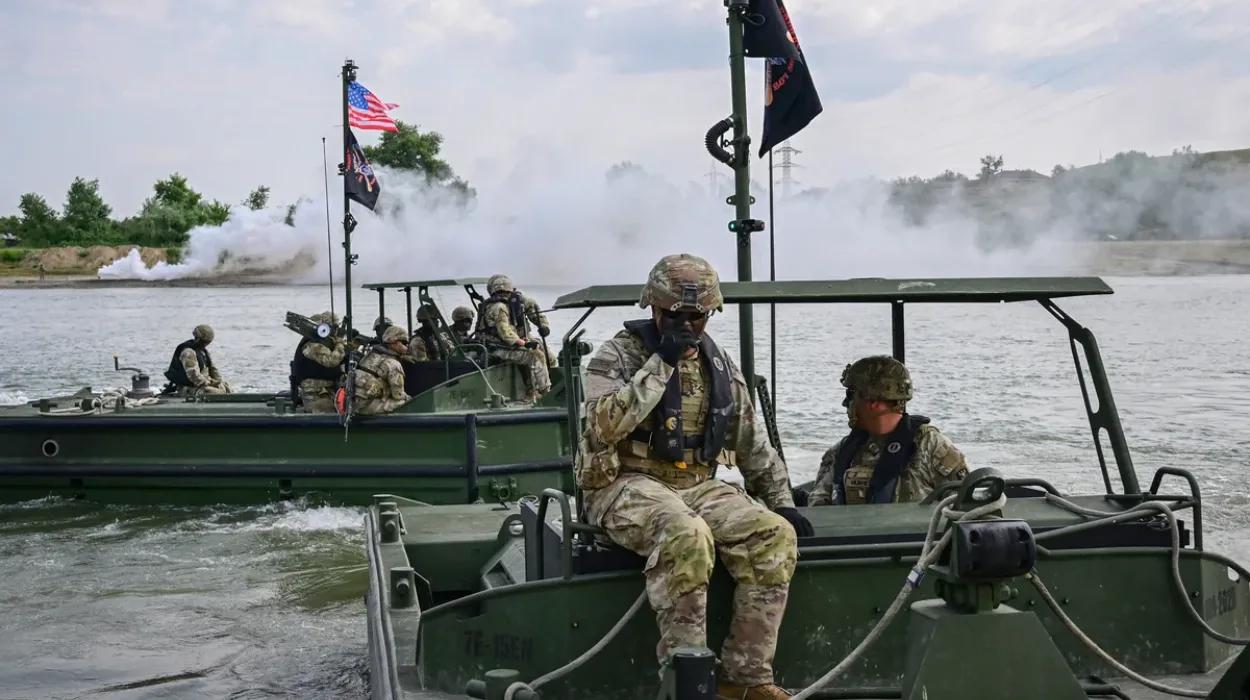
The 2026 National Defense Authorization Act, which was approved by Senate and House negotiators and made public on Sunday night, maintains both regions’ current levels of force participation. It stipulates that the United States must submit an evaluation and attest to Congress that reducing its forces in Europe below 76,000 will not jeopardize the security interests of the United States or NATO.
Reductions below 28,500 in South Korea are restricted by the bill. In the event of a drawdown, the Pentagon would have to guarantee Congress that deterrence against North Korea would not be compromised, verify that allies were consulted, and offer an evaluation of the regional impact in addition to a national security rationale.
The law also mandates that the United States maintain its top military position in NATO, Supreme Allied Commander Europe (SACEUR), which has always been filled by an American general.
These restrictions come after it was revealed that the Pentagon had contemplated cutting back on forces in South Korea and Europe, as well as perhaps giving up the SACEUR role. U.S. leaders have recently indicated they are pulling back from such actions even in the absence of congressional limits, regardless of whether those ideas represented actual planning or were meant to put pressure on allies to increase their own defense spending.
In a conference with European leaders last week, U.S. national security officials informed their colleagues that by 2027, Europe must be ready to shoulder the majority of NATO’s defense obligations.
According to officials, the U.S. intends to keep the SACEUR job while offering several other key NATO military positions to European countries. Additionally, they pointed out that Washington has no immediate intentions to reduce the number of troops in Europe.
“We’ve been very clear in the need for Europeans to lead in the conventional defense of Europe. We are committed to working through NATO coordination mechanisms to strengthen the alliance and ensure its long-term viability as European allies increasing take on responsibility for conventional deterrence and defense in Europe,”
Pentagon press secretary Kingsley Wilson said in response.
The Army withdrew a rotating brigade that was primarily based in Romania earlier this year, raising concerns among European allies about whether this could be the start of more extensive U.S. force reductions on NATO’s eastern flank.
This week’s House vote on the NDAA, the annual must-pass legislation that outlines the Pentagon’s spending and policy priorities, is anticipated to proceed quickly. Before Christmas, Congress hopes to have the law on the president’s desk.
The bill also includes $400 million for the Ukraine Security Assistance Initiative over a two-year period, as well as an amendment that limits the Pentagon’s ability to reclaim equipment that has been purchased for Ukraine but has not yet been delivered to situations in which it is critically needed for an ongoing or impending U.S. contingency operation and its non-use could result in fatalities or the failure of a vital mission.
This clause comes after the Pentagon decided earlier this year to stop supplying Ukraine with some U.S.-funded military hardware.
War Secretary Pete Hegseth referred to South Korea and a number of European countries over the weekend as “model allies.”
“Model allies that step up, like Israel, South Korea, Poland, increasingly Germany, the Baltics and others, will receive our special favor,”
he said at the Reagan National Defense Forum.
“Allies that still fail to do their part for collective defense will face consequences.”
How would the bill affect NATO deterrence plans in Europe?
The 2026 NDAA bill strengthens NATO deterrence plans in Europe by calling congressional instruments for any US troop reductions below 76,000 taking threat assessments, NATO consultations, and SACEUR (Supreme Allied Commander Europe) countersign to ensure cuts don’t undermine collaborative defense or eastern hand stability amid Russian pitfalls.
Provisions lock in current US posture( e.g., V Corps forward HQ in Poland, enhanced battlegroups in Baltics/ Romania), precluding unilateral drawdowns that could gesture weakness; codifies confederated consolation via sustained rotational deployments and exercises like Steadfast Defender, bolstering Composition 5 credibility without new backing.
Abettors like Germany/ Poland gain pungency for their 2 spending ramps and host- nation support; bill counters Trump- period reviews (e.g., previous Romania withdrawal), enabling NATO’s indigenous plans for multidomain operations, ISR emulsion, and rapid-fire underpinning against cold-blooded aggression.