
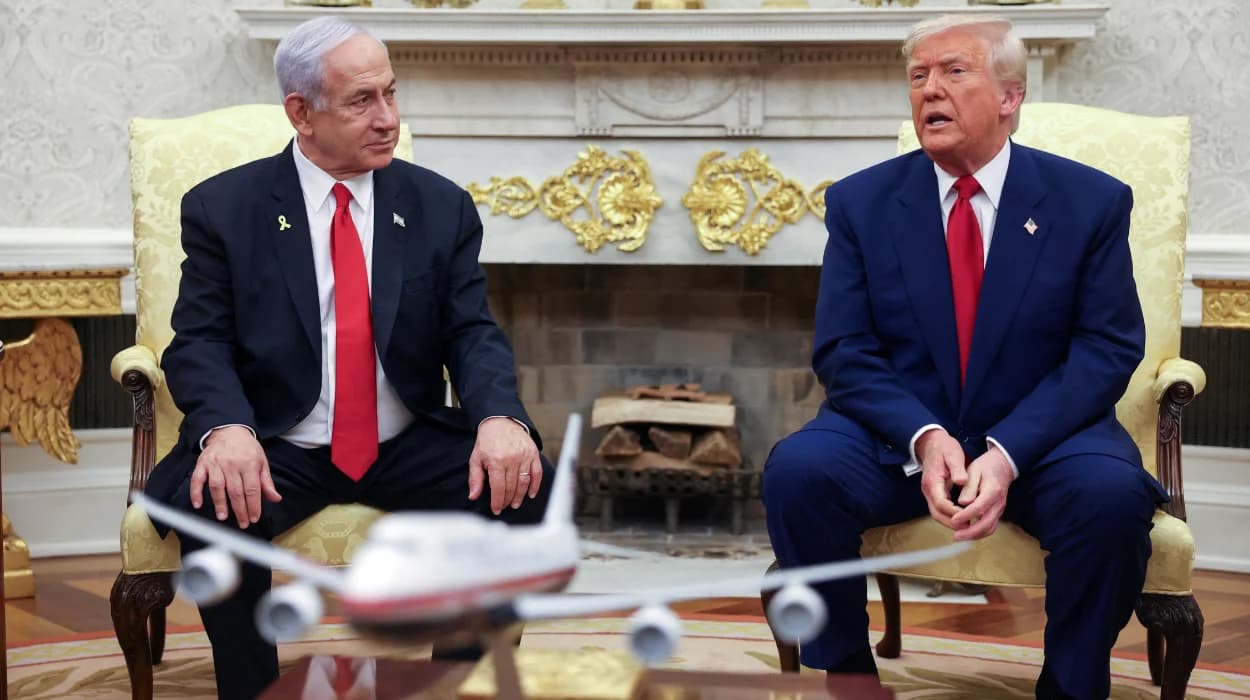
- Iran's FM urges Trump to defy Netanyahu.
- Oppose Israeli stance on Iran nuclear talks.
- Push forward with diplomatic negotiations instead.
Araghchi was writing the day after Netanyahu met with Trump in the US, where the Gaza peace proposal and Israel's demands to consider further assaults on Iran were discussed.
After combined Israeli-US attacks on Iran in June seriously destroyed its important nuclear sites, Netanyahu says Iran might be looking to restore its nuclear program. Additionally, Netanyahu has been voicing increasing alarm about the threat that the neighboring nation's missile development poses to Israel. Reports of protests in the Tehran market continuing into a third day over the country's declining currency and growing inflation will give him more confidence.
On Monday, speaking alongside Netanyahu in Florida, Trump said:
“I hope they’re not trying to build up again because, if they are, we’re going to have no choice but very quickly to eradicate that buildup.”
However, Araghchi directly urges Trump to disregard Israeli cautions and acknowledge that there is a limited window of opportunity to resume talks with Iran. It is one of his most direct pleas to Washington to resume negotiations and include Iran in a Middle East that has been recalibrated.
He maintains that Iran is still amenable to negotiations as long as a surrender is not necessary and asserts that talks can prevent an unneeded crisis.
He says he
"has been made aware that there is an unprecedented willingness amongst mutual friends of Iran and the US to facilitate dialogue and underwrite the full and verifiable implementation of any negotiated outcome,"
without mentioning any particular nation.
Araghchi makes no indication that Iran is willing to compromise on its insistence on its right to enrich uranium domestically for civilian use, the subject that plagued US-Iran negotiations. However, his words suggest that Gulf governments would be willing to offer guarantees concerning any future nuclear program. He contends that access to every facet of a peaceful nuclear program is a right shared by all parties to the nuclear non-proliferation treaty.
According to Araghchi, any future negotiations might occur in a more favorable setting because the June attacks on Iran altered diplomatic ties throughout the Middle East, demonstrating Iran's strategic strength to oppose Israel while US animosity for Israeli brinkmanship is intensifying.
He writes:
“The shifts in our region can enable implementation of understandings in a whole new way. For those willing to go where no one has gone before, there is a brief window of opportunity. Fortune favours the brave and it takes a lot more guts to break an evil cycle than to simply perpetuate it.”
Those in Israel and Washington who believe Iran is weaker than Araghchi claims will point to a persistent crackdown on dissent, sporadic protests, spiraling executions, and an inability to escape the cage of US economic sanctions.
However, Araghchi claims that Israel has repeatedly misled Washington "into believing that Iran was nearing collapse, that the 2015 nuclear deal was a lifeline for us, and that abandoning the accord would compel us to quickly concede." These myths encouraged Washington to forgo a functional diplomatic framework in favor of "maximum pressure," which only resulted in "maximum resistance."
What are the counterarguments of the weakness claims?
Iran's Foreign Minister Abbas Araghchi counters narratives from Israel and Washington portraying Iran as weakened by portraying U.S." maximum pressure" warrants as ineffective, fostering" maximum resistance" rather than cession.
Araghchi dismisses Israeli assertions of Iran's imminent collapse citing internal crackdowns, demurrers, and prosecutions as inflated myths that misled the U.S. into scrapping the 2015 JCPOA, believing it propped up Tehran; he argues this strategy boomeranged, strengthening Iran's resoluteness post-sanctions.
He claims Israel falsely induced Washington that abandoning the deal would force quick concessions, ignoring Tehran's domestic uranium enrichment rights under NPT and indigenous alliances, amid ongoing IAEA reports of advanced stashes despite profitable insulation.