
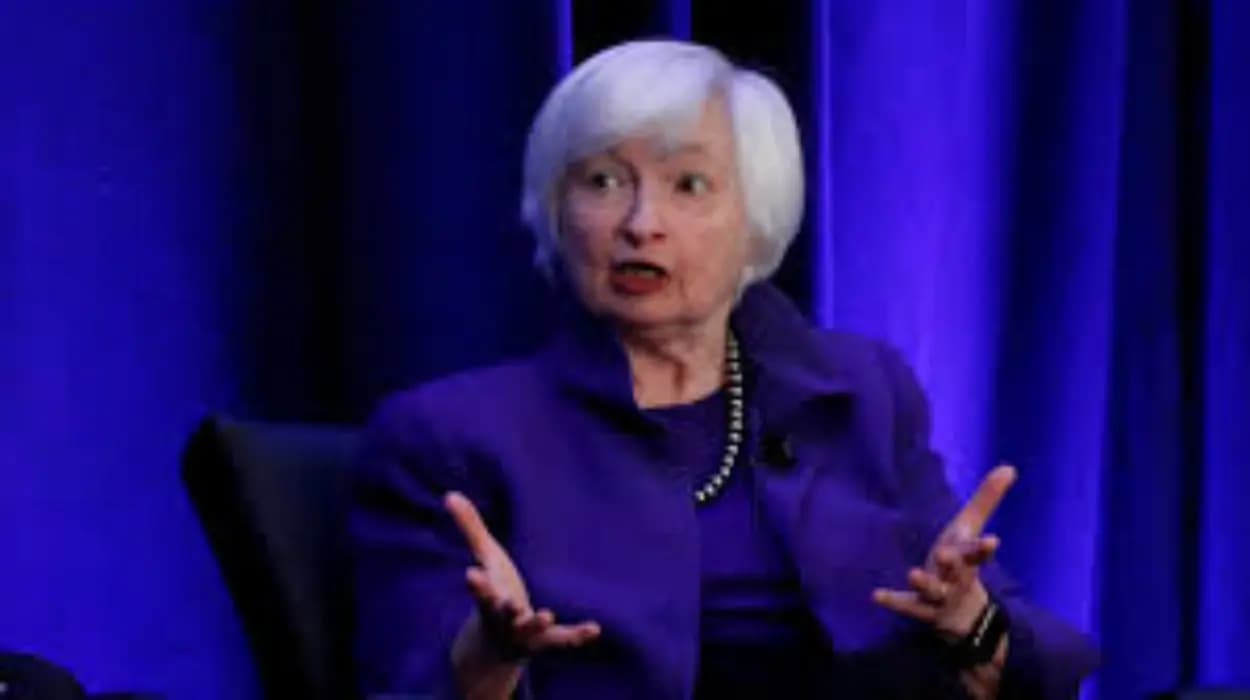
As one of the most influential economists of her generation, Janet Yellen has shaped global financial landscapes through her roles as Treasury Secretary and former Federal Reserve Chair. Her career exemplifies steady leadership amid economic turbulence, blending rigorous analysis with pragmatic solutions. From tackling inflation to fostering financial stability, Yellen's insights continue to guide policymakers navigating complex challenges like inequality and growth slowdowns.
This article explores her journey, key philosophies, and lasting impact, offering timeless lessons for understanding modern economics.
Early Life and Academic Foundations
Janet Yellen grew up in Brooklyn, New York, in a middle class family that valued education and public service. Her father ran a poultry business, while her mother taught, instilling a strong work ethic. Yellen excelled academically, earning a summa cum laude degree in economics from Brown University before pursuing a doctorate at Yale.
At Yale, under Nobel laureate James Tobin, she honed her expertise in labor markets and macroeconomics. Her dissertation examined unemployment dynamics, a theme that echoed throughout her career. Yellen's academic path led to a professorship at the University of California, Berkeley's Haas School of Business, where she became the first woman tenured there in economics.
Her research emphasized how wage rigidities contribute to persistent joblessness. According to the International Labour Organization, such frictions affect billions worldwide, underscoring Yellen's focus on humancentered economics. Collaborating with husband George Akerlof, another Nobel winner, she co authored influential papers on efficiency wages, arguing firms pay above market rates to boost productivity and loyalty.
This foundation blended theory with real world application, setting Yellen apart as an economist who bridged ivory towers and policy arenas.
Rise Through Federal Reserve Ranks
Yellen's public service began in the 1990s under President Bill Clinton, serving as a Fed Board member. She advocated for data driven decisions, analyzing how monetary policy influences employment. The OECD notes that central banks worldwide grapple with balancing growth and price stability, a tension Yellen navigated adeptly.
In 2004, she chaired the Federal Reserve Bank of San
Francisco, gaining regional insights into trade, tech booms, and housing
markets. Her tenure highlighted risks in asset bubbles, prescient amid later
crises. Yellen's clear communication style, often called "Yellenism"
demystified complex issues for the public. As she once put it:
"Communication is absolutely
central to policymaking."
Elevated to Federal Reserve Vice Chair in 2010, she steered through recovery efforts post financial meltdown. By 2014, as the first woman to lead the Fed as Chair, she prioritized maximum employment alongside 2% inflation targets. The IMF highlights that such dual mandates remain central to central banking, with Yellen refining tools like forward guidance to signal policy shifts transparently.
Her Fed leadership emphasized inclusive growth, recognizing how recessions disproportionately harm vulnerable groups. World Bank data reveals that women and low income households often bear the brunt of downturns, aligning with Yellen's push for equitable recovery.
Leadership as Treasury Secretary
Transitioning to Treasury Secretary marked a new chapter, where Yellen championed fiscal tools to complement monetary policy. In this role, she addressed international finance, sanctions, and debt dynamics. The World Economic Forum points out that sovereign debt burdens affect over 60 emerging economies, challenges Yellen tackled through multilateral coordination.
Yellen prioritized climate finance, urging richer nations to mobilize trillions for green transitions. UNESCO data shows environmental degradation exacerbates poverty for 3.6 billion people in vulnerable regions, making her advocacy timely. She pushed for taxing the ultra wealthy to fund social programs, arguing high earners benefit disproportionately from public investments.
On trade, Yellen advocated "friend shoring" allying with trusted partners to secure supply chains. IMF analyses indicate supply disruptions can shave 1-2% off global GDP, validating her strategy. Domestically, she supported infrastructure overhauls, emphasizing roads, broadband, and clean energy to spur jobs.
Her tenure highlighted gender diversity in leadership; as Treasury head, she spotlighted women's underrepresentation in finance. OECD reports confirm women hold just 29% of senior financial roles globally, a gap Yellen worked to narrow through mentorship and policy.
Key Economic Philosophies and Contributions
At her core, Yellen embodies Keynesian principles updated for modern realities. She views recessions as demand shortfalls best met with stimulus, not austerity. The World Bank estimates that fiscal multipliers amplify every dollar spent on infrastructure by 1.5 times in output.
Yellen's "Holistic" approach integrates macroprudential tools like stress tests to prevent bank failures. Post 2008 reforms she championed have bolstered capital buffers, with Basel Committee standards now requiring banks to hold 4.5-7% core equity. This resilience framework influences regulators everywhere.
On inflation, she favors gradualism over shocks. Persistent low rates, per IMF studies, risk asset inflation, but Yellen calibrated hikes to avoid overtightening. Her labor market focus counters the natural rate hypothesis, showing policy can sustain lower unemployment without price spirals. She articulated this vividly:
"The labor market can operate at very low unemployment rates without igniting inflation."
Globally, Yellen stressed IMF quota reforms for fairer voting, as developing nations represent 85% of the world population yet hold minority shares. Her push for digital currencies explored central bank digital currencies (CBDCs) to enhance payments efficiency, a topic the World Economic Forum deems vital for financial inclusion.
Yellen's tenure as Treasury Secretary and former Fed Chair underscores adaptive policymaking. She navigated U.S.-China tensions by decoupling strategically, not completely, recognizing interdependence. Bilateral deals with Europe reinforced transatlantic ties amid geopolitical shifts.
Navigating Crises with Steady Resolve
Economic shocks test leaders, and Yellen's responses reveal her mettle. During the COVID downturn, she backed massive relief, blending loans and grants. The IMF credits such measures with averting deeper global slumps, preserving 150 million jobs. In urging bold action, she stated:
"We must act big, because the stakes are high."
Banking stresses in 2023 echoed Silicon Valley Bank failures, where Yellen mobilized emergency facilities swiftly. Federal Deposit Insurance Corporation data shows uninsured deposits quadrupled pre crisis, prompting her regulatory tweaks for mid sized lenders.
Internationally, she rallied G7 support for Ukraine aid while freezing Russian assets over $300 billion, channeling profits to reconstruction. This innovative financing, endorsed by the IMF, sets precedents for illicit finance recovery.
Yellen's climate strategy integrates risks into financial oversight. The UN Environment Programme warns that unpriced externalities cost $4-6 trillion yearly; she advanced disclosure rules to make firms accountable.
Her equity lens shines in addressing racial wealth gaps. Federal Reserve surveys indicate Black and Hispanic households hold one-tenth the wealth of white counterparts, fueling Yellen's calls for affordable housing and small business credit.
Global Influence and Legacy
Yellen's voice resonates beyond Washington, shaping forums like the G20 and IMF. She elevated U.S. Treasury's role in digital economy standards, from crypto oversight to cross border data flows. The World Trade Organization notes digital trade equals 25% of global flows, areas she helped regulate.
Mentoring women economists, Yellen broke barriers; her Fed appointment inspired surges in female PhDs entering policy. Berkeley colleagues credit her collaborative style, fostering debate without ego.
Critics argue her policies fueled asset booms, widening inequality. Yet IMF research links progressive taxation her favored tool to reduced Gini coefficients by up to 0.05 points.
Yellen's blueprint for central banking endures: transparent, inclusive, forward looking. As economies face automation displacing 800 million jobs (per McKinsey Global Institute, aligned with World Economic Forum projections), her emphasis on reskilling remains prescient.
Policymakers worldwide study her balance of doves and hawks, proving steady hands yield resilient systems.
Janet Yellen's career as Treasury Secretary and former Fed Chair offers enduring wisdom: economics serves people, not abstractions. Her legacy rigorous yet humane, guides future stewards through uncertainty, reminding us that thoughtful policy builds prosperity for all.