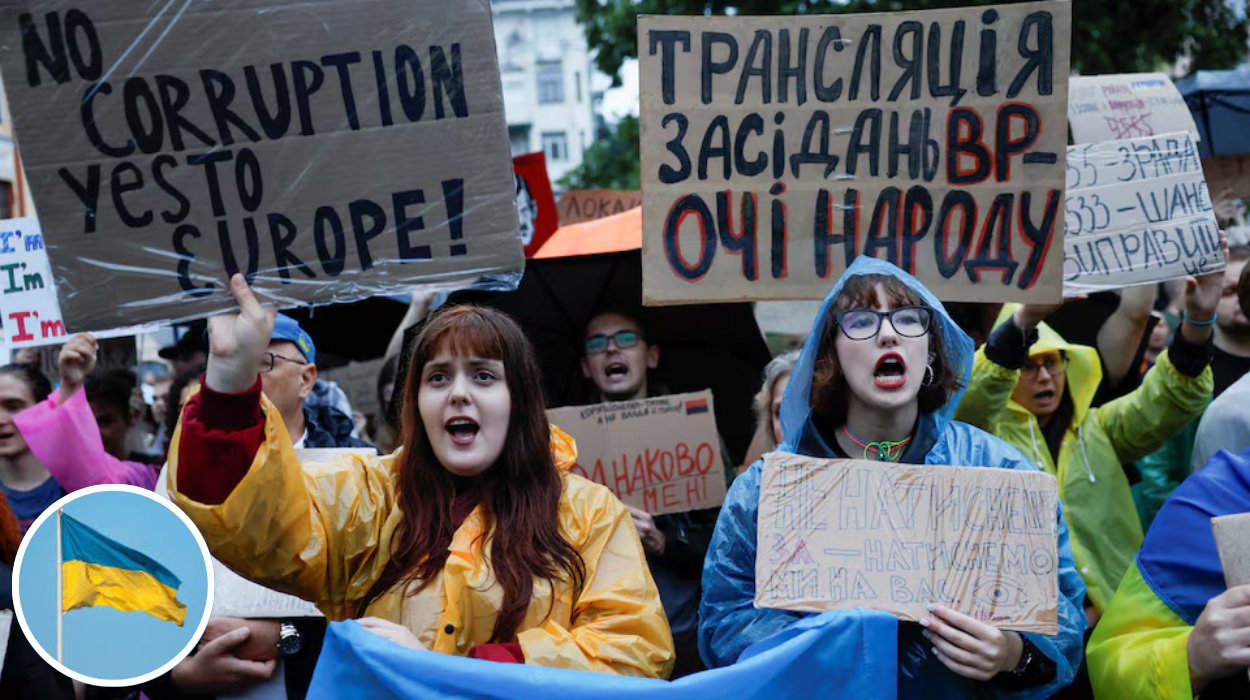

Summary
- Ukraine
is taking significant steps to restore the authority and effectiveness of
its anti-corruption agencies after a period of diminished power. - The
move aims to strengthen the country’s fight against corruption, a critical
issue affecting governance and international support. - Government
officials emphasize that restoring these agencies is essential for
Ukraine’s reform commitments and for maintaining confidence among
international partners. - The
decision follows concerns about weakened anti-graft institutions
potentially undermining Ukraine’s democratic and economic progress. - Ukrainian
leadership highlights that these restorations align with broader legal and
institutional reforms underway in the country. - The
move comes amid ongoing challenges posed by the Russian invasion and
economic pressures on Ukraine.
In a significant development, Ukraine is taking decisive
action to reinvigorate its anti-corruption institutions, reflecting a renewed
commitment to transparency and good governance amid ongoing challenges. These
steps come as part of a broader reform agenda aimed at strengthening the rule
of law and reinforcing Ukraine’s alignment with European standards. The
restoration of powers to key anti-graft agencies is seen as a pivotal move to
regain public trust, secure continued international support, and bolster the
country’s resilience in the face of external aggression and economic pressures.
This article unpacks the details of these reforms, their implications for
Ukraine’s internal governance, and how they fit into the larger context of the
nation’s fight against corruption and ongoing political transformation.
What is Ukraine doing to restore anti-corruption agencies’
powers?
Ukraine is actively moving to restore the powers of its
anti-corruption agencies, which had been curtailed or weakened in recent years.
This restoration is part of a broader effort by the Ukrainian government to
reinforce the institutions responsible for fighting graft and corruption
issues that have long undermined governance and economic development in the
country.
The government’s initiative includes legislative and
executive measures aimed at reinstating the operational independence and
enforcement capabilities of these agencies. This action seeks to reverse
previous setbacks that diminished their effectiveness, as reported by various
Ukrainian officials and multiple news outlets covering the developments.
Why is restoring anti-graft agencies important for Ukraine?
Restoring these agencies is critical for several reasons.
First, corruption has been a persistent hurdle for Ukraine, affecting
everything from public administration to foreign investment. According to
Ukrainian government statements, strengthening these bodies is not only about
domestic governance but also about fulfilling commitments made to international
partners and institutions that provide crucial financial and political support
to Ukraine.
In addition, reliable anti-corruption institutions are seen
as a litmus test for Ukraine’s reform trajectory. As reported by international
observers and analysts, the country’s ongoing efforts to align with European
standards and democratic norms hinge significantly on its ability to combat
corruption effectively.
Who are the key figures involved in this restoration
initiative?
Ukrainian President Volodymyr Zelenskyy and senior
government officials have been vocal about the importance of enhancing
anti-corruption efforts. Ukrainian lawmakers and anti-graft watchdogs have also
played active roles in drafting and promoting legislation aimed at empowering
the relevant agencies.
According to Ukrainian news media and government press
releases, the collaboration between executive and legislative branches
underscores a national consensus on the importance of this move, even as
political debates continue over the best mechanisms to ensure transparency and
accountability.
How does this development affect Ukraine’s relations with
international partners?
Restoring the power of anti-corruption agencies is viewed
favorably by Ukraine’s international partners, including the European Union and
the United States. These partners have consistently tied financial aid and
political backing to Ukraine’s progress on governance reforms, particularly in
the fight against corruption.
For instance, statements from Western diplomats suggest that
Ukraine’s renewed focus on anti-graft measures provides reassurance that the
country remains committed to transparency and rule of law. This restoration is
therefore expected to facilitate continued international assistance, which is
vital given the ongoing conflict with Russia and economic challenges.
What challenges does Ukraine face in this restoration
process?
Despite the positive framing, challenges remain. Political
opposition from vested interests that might lose influence due to stringent
anti-corruption measures could pose obstacles. Implementation of restored
powers requires not just new legislation but also institutional strengthening,
adequate funding, and maintaining the independence of these agencies from
political interference.
Experts and local watchdog groups cited in media coverage
caution that mere restoration of power is not enough; effective enforcement and
public trust are essential for meaningful progress. These difficulties
underscore that the road to fully operational and impactful anti-graft bodies
remains complex.
How does this move fit within Ukraine’s broader reform
agenda?
This restoration is part of a wide-ranging reform agenda
Ukraine has been pursuing to modernize public administration, improve judicial
systems, and align its laws with European standards. As outlined by Ukrainian
officials and reported in various media accounts, the empowerment of
anti-corruption agencies is a cornerstone of these reforms.
This effort also signals Ukraine’s determination to address
internal governance weaknesses, which is crucial to the country’s political
stability and economic recovery efforts amid external pressures.
What is the historical context of anti-corruption efforts in
Ukraine?
Ukraine’s struggle with corruption has deep historical
roots, affecting multiple administrations and slowing the country’s
development. Since gaining independence, Ukraine has faced systemic graft in
politics, law enforcement, and business.
Significant international support has been devoted to
building anti-corruption institutions in Ukraine, including the National
Anti-Corruption Bureau of Ukraine (NABU) and the Specialized Anti-Corruption
Prosecutor’s Office (SAPO). However, political interference and legislative
setbacks in past years have frequently undermined these agencies’ work, leading
to public frustration and international concern.
The current restoration effort thus seeks to reclaim lost
ground and renew momentum in an ongoing battle against corruption.
What have been the reactions from experts and watchdog
organizations?
Anti-corruption experts and local watchdog groups have
cautiously welcomed the restoration moves while urging vigilance. According to
statements in investigative media outlets, these groups stress that success
depends on transparency in appointments, adequate resources, and genuine
independence from political influence. International organizations monitoring Ukraine’s reform
efforts have also noted the potential positive impact if implementation is
thorough and sustained.
What implications does this have for Russia’s aggression and
Ukraine’s future?
While primarily a governance reform, strengthening
anti-graft bodies indirectly supports Ukraine in its resistance against Russian
aggression. Effective anti-corruption measures help ensure that international
aid is properly used and that internal stability is maintained during wartime.
Ukrainian officials have linked good governance with
national resilience, arguing that rooting out corruption is essential for
building a unified, democratic, and prosperous Ukraine with a secure future.
What next steps are anticipated following this restoration?
The government is expected to continue advancing
complementary reforms, including judicial independence and law enforcement
professionalization, to support the anti-corruption framework. Close monitoring by international partners and civil society
will likely accompany the implementation phase to ensure accountability and
efficacy. This comprehensive move to restore the powers of Ukraine’s
anti-corruption agencies marks a critical juncture in the country’s fight
against systemic corruption and its pursuit of democratic reforms, with
significant implications both domestically and internationally.