
- Trump
plans to sell F-35 jets to Saudi Arabia. - Australian
parts essential for the fighter jets. - Experts
warn Australia risks complicity in abuses.
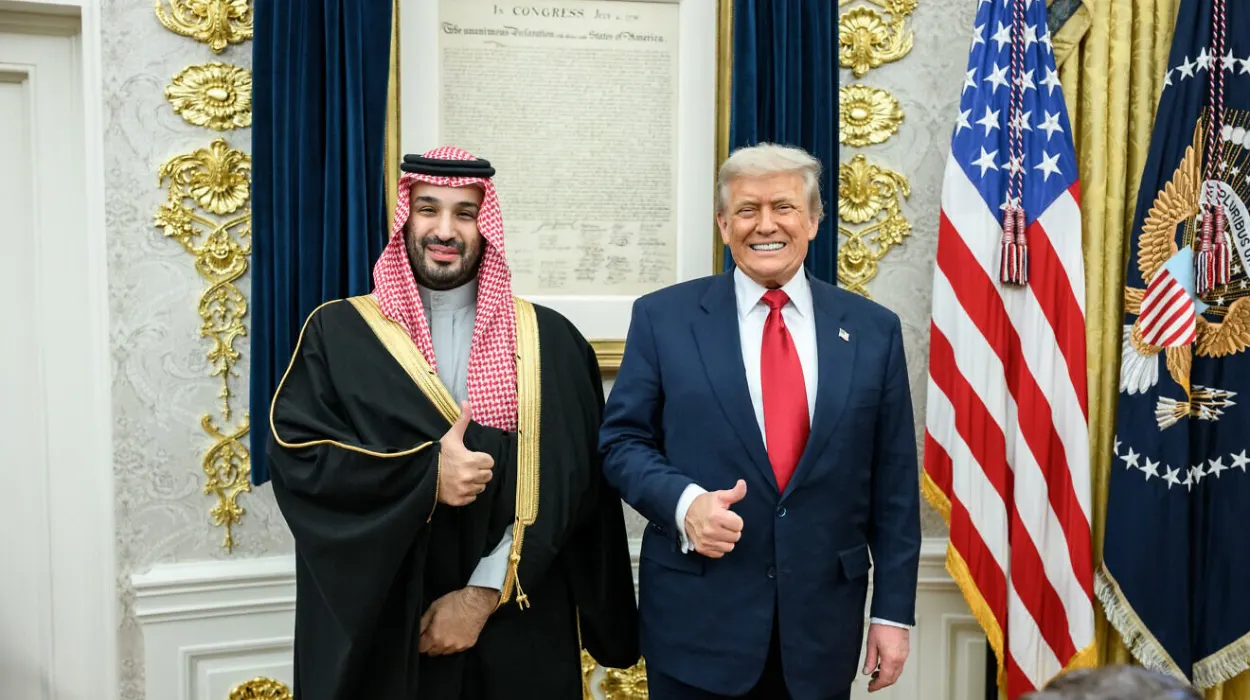
The US president revealed the contract during a meeting with
the Saudi crown prince, Mohammed bin Salman, this week, despite consistent
worries about the Saudi regime’s human rights record including bombing raids on
civilian targets and suspicions it could share the technology with China.
Although Australia participates in the construction of the
F-35, it has no control over the shipping of parts, including those that leave
the country.
The F-35 program has production and sustainment contracts
with over 70 Australian businesses. The state government claims that more than
700 of the fighter jet’s “critical pieces” are produced in Victoria
alone. Additionally, NSW serves as a regional delivery center for F-35 parts in
Australia.
“Every F-35 contains crucial parts made in Australia,”
said Duncan Frewin, the clerk of the pacifist group Quakers Australia, which
researches arms exports.
“Any bomb dropped by these planes can only do so because
the Australian government has written a blank cheque to Lockheed Martin,
selling them Australian-made parts with no human rights restrictions or
monitoring.”
Although Frewin and Wareham promote
peace and disarmament, more hardline defense analysts share their worries that
Australia is losing control over the military it backs.
“We will be supporting the Saudis’ use of the aircraft
however they choose to use it, and the Saudis’ involvement in the Yemeni civil
war in recent years shows this isn’t a hypothetical,”
said Shoebridge.
The sale of up to 48 F-35s to Saudi Arabia raised concerns
for Australia that “we’ve tried desperately to ignore with the
Israelis,” according to Michael Shoebridge, founder of the defense and
security think tank Strategic Analysis Australia.
The intricate F-35 supply chain, according to Shoebridge, a
former senior defense policy official at the Australian embassy in Washington,
enables governments to refuse direct backing for foreign armies.
305 (1.6%) of the 18,143 export authorizations that were
authorized were the subject of targeted scrutiny. Thirty percent of those
examined were deemed “unfavorable,” indicating that there were
discrepancies between the items sent and what the license permitted.
The US Government Accountability Office concluded this year
that measures to prevent US-made weapons from being used in violations of human
rights were insufficient.
Due in part to Saudi-led bombing assaults against Yemeni
targets, the Trump administration’s plan to sell F-35s to Saudi Arabia has
generated controversy around the world.
Additionally, a report from the Pentagon’s US Defense
Intelligence Agency raised fears that Saudi Arabia’s security cooperation with
Beijing might allow China to obtain F-35 technology.
The F-35, which costs between US$80 million and $100 million
(A$123 million to $155) per and has been dubbed the “most lethal”
warplane in the world by Lockheed Martin, is already a contentious platform
that has been linked to a UN commission of inquiry’s conclusion that Israel has
committed genocide in Gaza.
According to Wareham of the Medical Association for
Prevention of War, Australia was prohibited by the arms trade treaty from
shipping “weapons or associated items” if there was a possibility
that they might be used to violate international law.
“There is no doubt at all that such a risk exists in the
case of Saudi Arabia,”
Wareham said.
“This makes Australia complicit in
any crimes in which the F-35s are used.”
Wareham said Australia could have no confidence in US
defence export controls.
“The US economy is so dependent on weapons sales that
there appear to be few constraints. While spruiking democracy, the US in fact
sells weapons to over half the world’s autocracies. It is an industry out of
control.”
Which Australian components are used in the F-35 supply
chain?
Australia is a critical supplier of numerous factors in the
F- 35 Joint Strike Fighter force chain, with further than 70 Australian
companies contributing corridors ranging across the aircraft, including
essential and frequently sole- sourced factors.
The uplock selector system supplied by RUAG Australia, which
is responsible for opening and closing the munitions bay doors snappily and
stealthily, allowing the F- 35 to emplace its cargo efficiently. Over 700
critical pieces are manufactured primarily in Victoria alone, covering flight
control systems.
Australia’s part is significant because some corridors are
sole- sourced locally, making the country an essential link in the global force
chain. This involvement has sparked contestation and human rights enterprises
due to the deployment of F- 35 spurts equipped with Australian factors in
conflict zones.