
Summary
- President
Trump will host Armenian Prime Minister Nikol Pashinyan and Azerbaijani
President Ilham Aliyev at the White House for a peace signing. - The
agreement aims to end nearly 40 years of conflict between Armenia and
Azerbaijan. - A
transit corridor through Armenia will connect Azerbaijan to Turkey,
boosting regional trade. - The
peace deal marks a shift away from Russian influence in the South
Caucasus. - This
summit follows failed peace talks held earlier in the UAE. - The
conflict centers on Nagorno-Karabakh, recently recaptured by Azerbaijan in
2023. - The
U.S. is positioning itself as a key mediator in the region. - Multiple
leaders have nominated Trump for the Nobel Peace Prize for his diplomatic
efforts.
This historic peace signing represents a significant
diplomatic breakthrough, with the United States playing a pivotal role in
brokering an agreement that aims to bring lasting stability to a volatile
region. The initiative not only addresses long-standing territorial disputes
but also opens new economic opportunities through the proposed transit
corridor. By steering Armenia and Azerbaijan toward dialogue and cooperation
under U.S. facilitation, this agreement signals a potential realignment of
regional alliances and a diminished role for traditional powers like Russia and
Iran. The global community is watching closely as this pact could pave the way
for broader peace and prosperity in the South Caucasus.
What Is the Purpose of the White House Meeting Hosted by
President Trump?
As reported by The Washington Post, President Donald Trump
will welcome Armenian Prime Minister Nikol Pashinyan and Azerbaijani President
Ilham Aliyev at the White House for a peace signing ceremony aimed at resolving
the long-standing conflict between the two nations. This meeting is a
continuation of Trump’s broader ambitions to mediate and resolve global
conflicts, enhancing his profile as a global peacemaker. The peace talks at the
White House follow previous unsuccessful negotiations held in the United Arab Emirates in July, where both sides failed to finalize an agreement despite
initial optimism.
How Long Has the Conflict Between Armenia and Azerbaijan
Lasted, and What Are the Key Issues?
According to Euronews, the conflict between Armenia and
Azerbaijan has spanned nearly four decades, primarily revolving around the
Nagorno-Karabakh region. This territory, predominantly inhabited by ethnic
Armenians, declared independence from Azerbaijan during the collapse of the
Soviet Union. Azerbaijan recaptured much of this region in a military operation
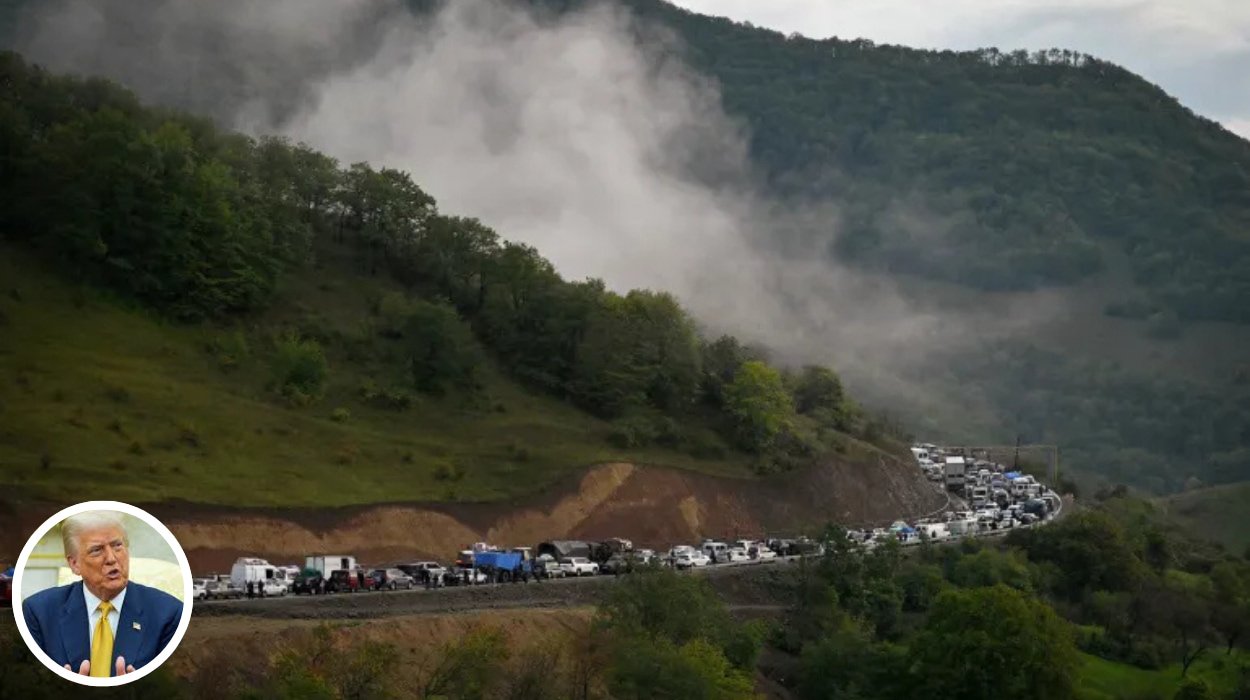
in 2023, which led to the displacement of over 100,000 ethnic Armenians. This
renewed violence has resulted in thousands of deaths over the years, with
numerous failed attempts at peace.
What Does the Peace Agreement Include, and What Is the
Significance of the Transit Corridor?
Axios highlights that the peace agreement being signed
includes a significant economic component. Armenia has agreed to allow a
43.5-kilometer transit corridor proposed to be named the “Trump Route for
International Peace and Prosperity” through its territory to connect
Azerbaijan’s mainland with its enclave on the Turkish border. This corridor
will facilitate the movement of people and goods between Turkey and Azerbaijan,
extending into Central Asia without passing through Iran or Russia. This
development is strategic, as it challenges the regional influence of Russia and
Iran, both of whom have expressed opposition to the project. Turkey, however,
strongly supports the corridor, viewing it as a critical link to its allies.
What Is the Geopolitical Impact of the Peace Talks and the
Role of the U.S.?
Euronews and Deutsche Welle report that the White House
peace summit sends a clear geopolitical message. By hosting this event, the
U.S. underscores its emerging role as a key mediator in the South Caucasus,
historically dominated by Russian influence. Both Armenia and Azerbaijan seem
to be steering their foreign policies away from Moscow and toward a Western
orientation. This realignment not only affects regional dynamics but also
signals a broader shift in alliances.
Have There Been Any International Reactions or Nominations
Related to Trump’s Role?
The Washington Post notes that multiple world leaders have
nominated Trump for the Nobel Peace Prize for his involvement in international
diplomatic efforts. Cambodia’s Deputy Prime Minister and Israeli Prime Minister
Benjamin Netanyahu have both publicly announced their intentions to nominate
Trump, alongside Pakistan’s earlier declaration following his attempts to
mediate peace with India. The Nobel Peace Prize is scheduled to be awarded in
December, and the international community is watching closely.
How Has President Trump Positioned Himself Regarding This
Diplomatic Effort?
According to Deutsche Welle, Trump has described the meeting
as a historic day for Armenia, Azerbaijan, the United States, and the world.
Trump expressed pride in the leaders for their courage to pursue peace, stating
on his Truth Social platform that the nations “have been at war many years
resulting in the deaths of thousands of people” and that “leaders have to end
war, success now.” This peace signing is part of Trump’s ongoing effort to be
recognized as a global peacemaker and includes previous diplomatic
breakthroughs involving countries such as India and Pakistan, Rwanda and the
Democratic Republic of Congo, and Cambodia and Thailand.
What Is the History and Process Behind the U.S.-Brokered
Peace Deal?
Axios revealed behind-the-scenes details about the U.S.
involvement in brokering the deal. The initiative began in March with a
surprise visit by White House special envoy Steve Witkoff to Baku. Following
this, a special government employee, Aryeh Lightstone, took charge of the
diplomatic efforts involving multiple trips to the region for talks. The U.S.
administration convinced Armenian Prime Minister Pashinyan that allowing the
U.S. to develop the transit corridor would secure Washington’s friendship and act
as a buffer against potential Azerbaijani military actions. This approach
represents a new diplomatic tool focused on trade and economic interdependence
rather than strictly political conflict resolution.
What Are the Expectations for the Future of
Armenia-Azerbaijan Relations After the Signing?
The U.S. official behind the deal, as cited by Axios,
expressed optimism that although the peace agreement will initially be between
governments, it has the potential to foster a warmer peace between the peoples
over time. The deal opens Armenia to the world, reducing its reliance on Iran
and other neighbors, while diminishing the influence of Russia, Iran, and China
in the region. The establishment of bilateral agreements with the U.S. aims to
unlock new economic opportunities throughout the Caucasus, signaling a hopeful
path toward normalization and sustained peace.
What Are the Reactions and Comments from the Leaders
Involved?
As covered by Al Jazeera and The New York Times, both
leaders, Nikol Pashinyan and Ilham Aliyev, arrived in Washington for the summit
and prepared to sign the historic peace accord. Trump praised the leaders’
courage and expressed his commitment to supporting peace in the region. The
ceremonial signing at the White House will symbolically mark an end to
hostility and the beginning of renewed cooperation between Armenia and
Azerbaijan, under the auspices of U.S. facilitation.
This historic peace summit hosted by President Trump at the
White House stands as a landmark diplomatic event, with the potential to
reshape the geopolitical and economic landscape of the South Caucasus. It also
reinforces the U.S.’s role in global conflict resolution and highlights Trump’s
ambitions to cement his legacy as a peacemaker on the world stage.