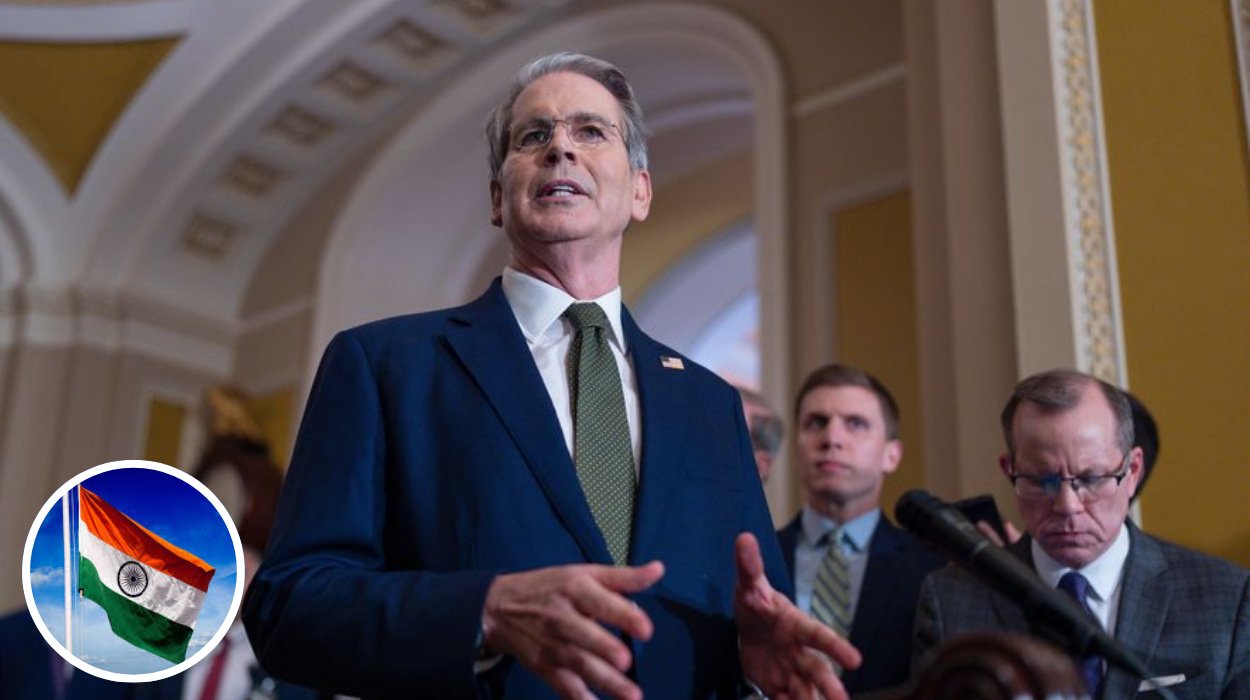

Key Points
- Stanley
Druckenmiller’s former chief investment officer, Scott Bessent, stated the
U.S. is close to finalizing a significant trade deal with India. - The
potential agreement could reshape economic relations between the world’s
largest and most populous democracies. - No
official confirmation or details have been released by U.S. or Indian
government sources as of July 2, 2025. - The
news comes amid shifting global alliances and ongoing U.S.-China trade
tensions. - Analysts
speculate the deal may cover technology, agriculture, and manufacturing
sectors. - The
development is being closely watched by global markets and policymakers.
The United States is reportedly on the verge of
finalizing a major trade agreement with India, according to Scott Bessent,
former chief investment officer for billionaire investor Stanley Druckenmiller.
The potential deal, if confirmed, could mark a pivotal moment in U.S.-India
economic relations and have far-reaching implications for global trade
dynamics.
What Did Scott Bessent Say About the U.S.-India Trade Deal?
As reported by Laura Ingraham on Fox News, Scott Bessent
stated that the U.S. is “nearing a trade deal with India,” suggesting that
negotiations between the two countries have reached an advanced stage. Bessent,
known for his deep connections in financial and policy circles, did not provide
specific details regarding the sectors or terms involved. His remarks have
fueled speculation about the scope and impact of the potential agreement.
How Have U.S. and Indian Officials Responded?
As of the latest reports, neither the U.S. Trade
Representative’s office nor the Indian Ministry of Commerce has issued an
official statement confirming Bessent’s claims. CBS Evening News did not
include any direct comment from government spokespeople regarding the status of
trade talks with India in its July 1, 2025, broadcast. The lack of
official confirmation has led to caution among analysts and market
participants, who are awaiting further details.
What Could Be Included in the Potential Trade Deal?
According to commentary on Fox News, the deal is expected to
address key areas of mutual interest, including:
- Technology
transfer and digital trade - Agricultural
exports and market access - Manufacturing
collaboration and supply chain resilience
Analysts appearing on Fox News, including Jesse Watters and
Sean Hannity, noted that both countries have strong incentives to deepen
economic ties as they seek to reduce reliance on China and diversify critical
supply chains. While no concrete terms have been disclosed, experts
believe the agreement could facilitate greater investment flows and ease
regulatory barriers.
Why Is This Trade Deal Significant for the U.S. and India?
The U.S. and India are the world’s largest and most populous
democracies, respectively, and their economic partnership has grown steadily in
recent years. As reported by CBS Evening News, the Biden administration has
prioritized strengthening alliances in the Indo-Pacific region, particularly in
light of ongoing tensions with China. A comprehensive trade deal with
India could:
- Enhance
U.S. access to India’s rapidly growing consumer market - Support
American exporters and farmers - Promote
technology cooperation and innovation - Bolster
geopolitical alignment in the region
Economists interviewed by Fox News highlighted that such a
deal would be a “strategic win” for both nations, positioning them to better
compete in the global economy.
What Are the Global Implications of a U.S.-India Trade
Agreement?
International observers, as noted in the Sky News Press
Preview, are closely monitoring the negotiations, given their potential to
shift global trade patterns. With the U.S. and China locked in a
protracted trade dispute, a closer U.S.-India partnership could:
- Reduce
global supply chain vulnerabilities - Encourage
other democracies to pursue similar agreements - Increase
pressure on China to reform its trade practices
Market analysts cited by Fox News said that the announcement
of a deal could trigger positive reactions in global stock markets,
particularly in sectors such as technology and agriculture.
What Are the Next Steps in the Negotiation Process?
According to Caitlyn Huey Burns of CBS Evening News, any
major trade agreement negotiated by the executive branch must be reviewed and
approved by Congress before it can take effect. Key Republican leaders in
the House have expressed skepticism about recent trade initiatives, signaling
that the path to ratification could be contentious. As reported by CBS, a vote
on related trade legislation is expected soon, and the outcome will likely
influence the final shape of any U.S.-India deal.
How Are Markets and Businesses Reacting?
Business leaders and investors are reacting with cautious
optimism. On Fox News, Greg Gutfeld noted that American companies operating in
India are hopeful that the deal will address longstanding barriers such as
tariffs and regulatory red tape. Indian industry groups have also
expressed support, emphasizing the potential for increased exports and job
creation.
What Are the Main Challenges to Finalizing the Deal?
Despite the optimism, several hurdles remain:
- Political
opposition in the U.S. Congress - Sensitive
sectors such as agriculture and intellectual property - Balancing
domestic interests with international commitments
As highlighted by CBS Evening News, recent legislative
debates in Washington have revealed deep divisions over trade policy, with some
lawmakers concerned about the impact on American workers and industries.
What Are the Broader Geopolitical Stakes?
The timing of the reported deal is significant, coming as
the U.S. seeks to strengthen alliances in Asia and counter China’s growing
influence. Fox News commentators underscored that a robust U.S.-India
partnership could serve as a “counterweight” to Beijing’s economic and
strategic ambitions. The agreement is also seen as a test of the Biden
administration’s ability to deliver on its promise of “friend-shoring” critical
supply chains.
What Happens Next?
With Scott Bessent’s comments drawing attention to the
advanced state of negotiations, all eyes are now on official channels for
confirmation and details. The outcome of congressional deliberations and
further statements from U.S. and Indian officials will determine whether this
historic trade deal becomes a reality.