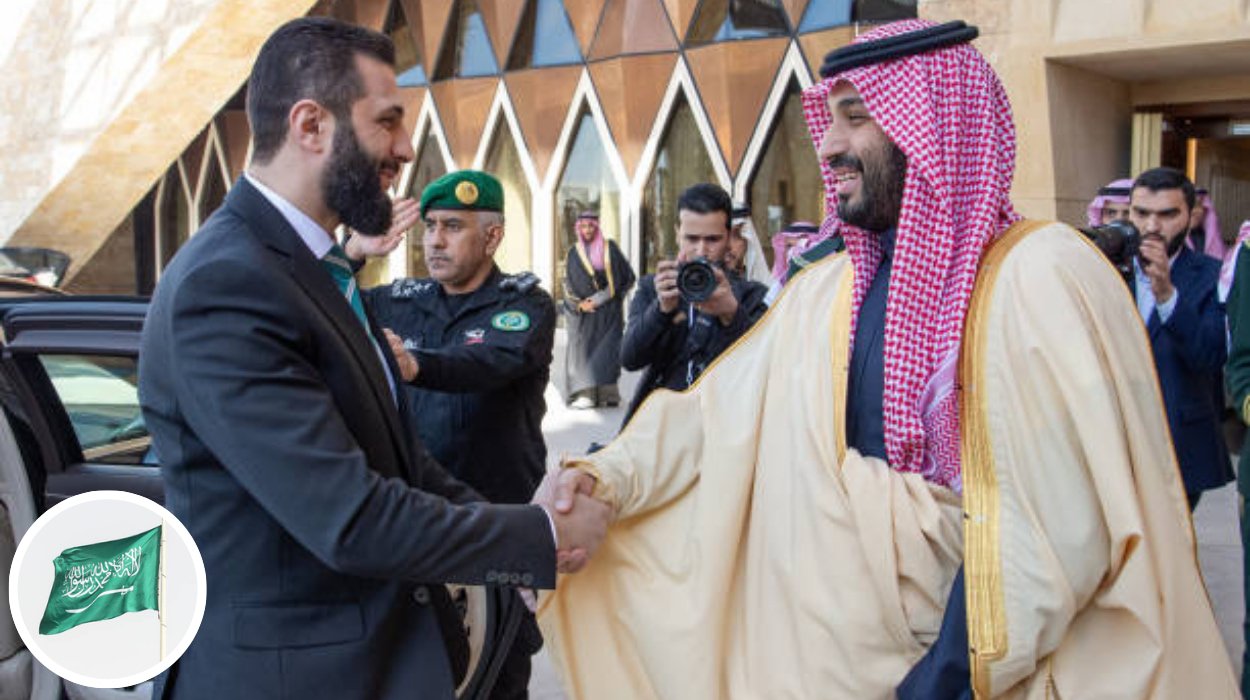

Summary
- Saudi
Arabia has dispatched a high-level delegation to Syria to engage in
economic discussions. - The
visit is part of a broader move by Saudi Arabia to enhance diplomatic and
economic ties with Syria. - Discussions
focus on potential economic cooperation and rebuilding efforts in Syria. - The
delegation includes senior officials and business leaders, signaling the
importance Riyadh places on the talks. - This
move aligns with ongoing regional shifts where Gulf countries are
re-engaging with Syria after years of diplomatic isolation. - No
detailed outcomes have yet been publicly disclosed. - The
development marks a notable change in Saudi Arabia’s approach to Syria
amid complex regional dynamics and international sanctions. - The
visit comes amid wider efforts involving regional actors to restore
stability and economic activity in Syria.
The development marks a notable shift in Saudi Arabia’s policy toward Syria, signaling a renewed interest in economic collaboration and regional engagement after a prolonged period of diplomatic distance. The high-profile nature of the delegation underscores Riyadh’s commitment to exploring opportunities for Syria’s reconstruction and economic revival, while also reflecting broader geopolitical recalibrations in the Middle East. As Gulf countries increasingly move towards normalization with Damascus, Saudi Arabia’s outreach could have significant implications for the future stability and economic development of Syria.
What is the significance of the Saudi delegation’s visit
to Syria?
According to media outlets, Saudi Arabia’s decision to send
a high-profile delegation to Syria represents a significant diplomatic pivot
toward reviving economic and political relations with Damascus. This
development marks a sharp turnaround from previous years during which Saudi
Arabia and other Gulf states had distanced themselves from the Syrian
government following the onset of Syria’s civil war in 2011.
The delegation tasked with economic talks comprises senior
government officials and prominent business figures, indicating Riyadh’s intent
to explore practical avenues for engagement and support Syria’s reconstruction
efforts. The visit sends a clear message that Saudi Arabia is interested in
re-establishing its influence within Syria and the broader Levant region
through economic cooperation rather than just political gestures.
Who is in the Saudi delegation, and what are their
objectives?
While the full roster of the delegation members has not been
publicly disclosed, reports from regional news sources describe it as a
“high-profile” group led by top-ranking Saudi officials. The
delegation aims to discuss potential areas of economic collaboration including
infrastructure rebuilding, trade facilitation, and investment opportunities in
Syria’s war-ravaged economy.
Syria has endured widespread destruction of its industrial
and service sectors. Therefore, Saudi Arabia’s economic overture could play a
pivotal role in jumpstarting reconstruction and attracting international
business. However, the delegation must navigate issues such as international
sanctions on Syria and concerns of various regional stakeholders.
What does this mean for regional geopolitics?
The Saudi delegation’s visit is emblematic of a broader
regional reconciliation trend. Gulf states like the United Arab Emirates and
Bahrain have already normalized ties with Syria, breaking years of diplomatic
isolation. Saudi Arabia’s move suggests it will follow a similar path, driven
by strategic calculations aimed at stabilizing the region and countering
influences from rival powers such as Iran and Turkey.
This approach also reflects Riyadh’s recognition that
Syria’s economic revival is a critical component of achieving lasting peace and
influence. The economic talks could pave the way for more comprehensive
agreements that go beyond economics and encompass security and political
cooperation.
What challenges does the Saudi delegation face in Syria?
Despite the optimism surrounding the talks, significant
challenges remain. Syria’s ongoing conflict-related political instability,
humanitarian crises, and deep divisions within its society complicate any
economic engagement. Additionally, international sanctions imposed by Western
countries restrict the scope of legal and financial interactions with the
Syrian regime.
Saudi Arabia will need to balance its interests with these
pragmatic realities, ensuring that economic cooperation does not provoke
backlash from its allies in the West or exacerbate regional tensions. Analysts
highlight that meaningful economic partnership will likely require phased
approaches and strong international coordination.
What have the official statements said about the visit?
As of the current updates, official statements from Saudi or
Syrian authorities have been limited. However, multiple regional news outlets
confirm the delegation’s presence and emphasize the economic nature of the
visit rather than explicit political negotiations.
Experts quoted in media highlight that this discreet
approach enables Saudi Arabia to test the waters in Damascus without
immediately committing to broader political normalization, preserving
diplomatic flexibility.
What is the background context to Saudi Arabia’s evolving
stance on Syria?
Saudi Arabia had severed ties with Syria shortly after the
Syrian civil war erupted in 2011, supporting opposition factions against the
Assad regime. Over the years, with the war protracting and regional alliances
shifting, Riyadh recalibrated its policy, increasingly advocating engagement
rather than isolation.
Reports indicate Riyadh’s reassessment is influenced by
factors including the waning influence of opposition groups, the normalization
initiatives by neighboring Gulf countries, and a desire to counterbalance
Iranian entrenchment in Syria through economic and diplomatic means.
This news story is sourced from multiple regional news
reports and official confirmation is awaited for further details on the
outcomes of the Saudi delegation’s economic talks in Syria. The visit
symbolizes a potentially transformative phase for Gulf-Syria relations amid
complex geopolitical shifts in the Middle East. The evolving scenario merits
close monitoring for its implications on regional stability and reconstruction
efforts.