
Key Points
- U.S.
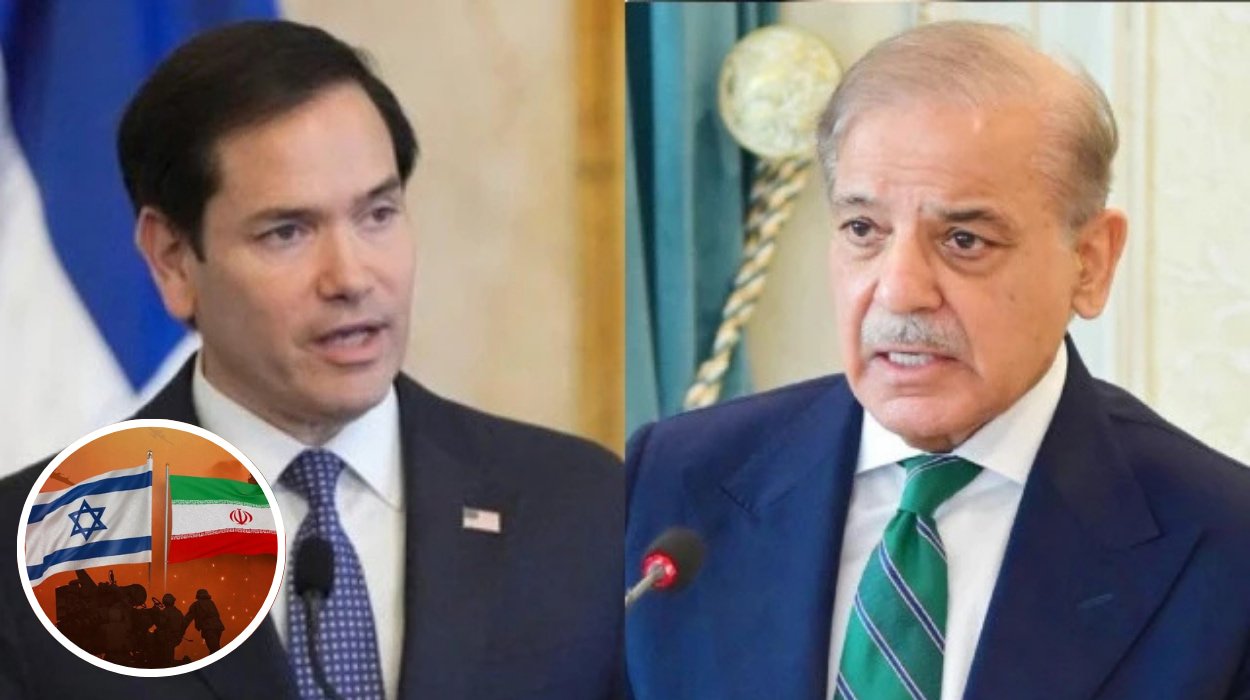
Secretary of State Marco Rubio and Pakistan Prime Minister Shehbaz Sharif
held a phone call emphasizing the need for lasting peace between Israel
and Iran. - Both
leaders agreed on the importance of diplomatic efforts to prevent further
escalation in the Middle East. - Rubio
stressed that Iran must never be allowed to develop or acquire nuclear
weapons. - Shehbaz
Sharif praised U.S. efforts, particularly those of President Donald Trump,
in brokering ceasefires in the region. - The
discussion occurred amid ongoing hostilities following Israel’s offensive
against Iran and subsequent retaliations. - Pakistan
reaffirmed its commitment to playing a constructive role in promoting
peace in the Middle East. - The
U.S. and Pakistan agreed to strengthen bilateral ties, including trade and
economic cooperation. - The
call reflects growing U.S. engagement with Pakistan as part of broader
efforts to stabilize the region.
U.S. Secretary of State Marco Rubio and Pakistan Prime
Minister Shehbaz Sharif spoke on June 26, 2025, underscoring the critical need
to promote durable peace between Israel and Iran amid ongoing regional
tensions. Their dialogue highlighted a shared commitment to diplomacy,
non-proliferation, and regional stability, as reported by the U.S. State
Department and multiple international news outlets.
What Did Secretary Rubio Say About the Israel-Iran Conflict?
As reported by Reuters and the U.S. State Department,
Secretary Rubio emphasized that Iran must never be permitted to develop or
acquire nuclear weapons. Rubio stated during the call that the two leaders
recognized the importance of working together to promote a lasting peace
between Israel and Iran. The statement from the U.S. State Department
spokesperson Tammy Bruce said, “Secretary Rubio emphasized that Iran can never
develop or acquire a nuclear weapon,” and highlighted the shared goal of
maintaining regional stability.
Rubio’s remarks come in the context of recent U.S. military
actions targeting Iranian nuclear facilities and ongoing concerns about Iran’s
nuclear ambitions. The U.S. remains committed to supporting Israel’s security
while seeking to prevent further escalation in the region.
How Did Prime Minister Shehbaz Sharif Respond to the
Situation?
According to Geo News and Dawn, Prime Minister Shehbaz
Sharif lauded the United States, particularly President Donald Trump’s role, in
brokering ceasefires between Israel and Iran and between Pakistan and India.
Sharif expressed gratitude for U.S. efforts that contributed to regional
stability and reiterated Pakistan’s commitment to playing a constructive role
in promoting peace across the Middle East.
Shehbaz Sharif emphasized the need for dialogue and
diplomacy to resolve the escalating conflict and called for restraint from all
parties involved. He also highlighted the importance of strengthening
Pakistan-U.S. relations, focusing on expanding trade and economic cooperation
during the call with Rubio.
Why Is Promoting Durable Peace Between Israel and Iran
Important?
The ongoing conflict between Israel and Iran has
significantly heightened tensions in the Middle East, a region already
destabilized by Israel’s military campaign in Gaza since October 2023. The
recent offensive by Israel against Iranian nuclear and military targets,
followed by Iranian missile strikes, has raised fears of a wider regional war.
Both leaders recognize that durable peace is essential to
prevent further escalation that could disrupt global energy markets, threaten
international security, and exacerbate humanitarian crises. The dialogue
between Rubio and Shehbaz reflects a broader international consensus that
diplomacy, rather than military confrontation, offers the most viable path to
lasting stability.
What Are the Broader Implications for Regional and Global
Security?
The Israel-Iran conflict affects not only the immediate
region but also global security and economic stability. Israel is widely
regarded as the only Middle Eastern country possessing nuclear weapons, while
Iran, a signatory to the Nuclear Non-Proliferation Treaty, is suspected of
pursuing nuclear capabilities.
The conflict’s escalation threatens key shipping routes and
energy supplies, potentially impacting global markets. The U.S. and Pakistan’s
shared commitment to peace aims to mitigate these risks and foster an
environment conducive to diplomatic solutions.
How Are Other International Actors Engaged?
Beyond the U.S. and Pakistan, international actors including
the United Nations and European Union have called for restraint and renewed
diplomatic efforts to de-escalate tensions. The Biden administration is
reportedly exploring new diplomatic initiatives with Tehran, signaling
increased engagement to resolve the crisis.
Pakistan’s role is particularly notable given its geographic
proximity and historical ties to both Iran and the U.S., positioning it as a
potential mediator in regional conflicts.
What Steps Are Being Taken to Facilitate Dialogue?
Recent high-level meetings, including President Trump’s
engagement with Pakistan’s army chief Field Marshal Asim Munir, have focused on
Iran and regional stability. These efforts complement the diplomatic dialogue
between Rubio and Shehbaz and underscore a coordinated approach to conflict
resolution.
The two leaders also agreed to continue strengthening
bilateral relations, with an emphasis on trade and economic cooperation, which
may contribute to broader regional stability.
What Challenges Remain in Achieving Lasting Peace?
Despite these diplomatic efforts, significant challenges
persist. Deep mistrust between Israel and Iran, Iran’s nuclear ambitions, and
proxy conflicts in Syria, Lebanon, and Gaza complicate peace prospects. Both
Rubio and Shehbaz acknowledged these difficulties but emphasized the importance
of sustained engagement and cooperation.
In summary, the conversation between U.S. Secretary of State
Marco Rubio and Pakistan Prime Minister Shehbaz Sharif highlights a shared
commitment to fostering durable peace between Israel and Iran. Their dialogue
reflects broader international efforts to stabilize a volatile region through
diplomacy, non-proliferation, and strengthened bilateral ties.