
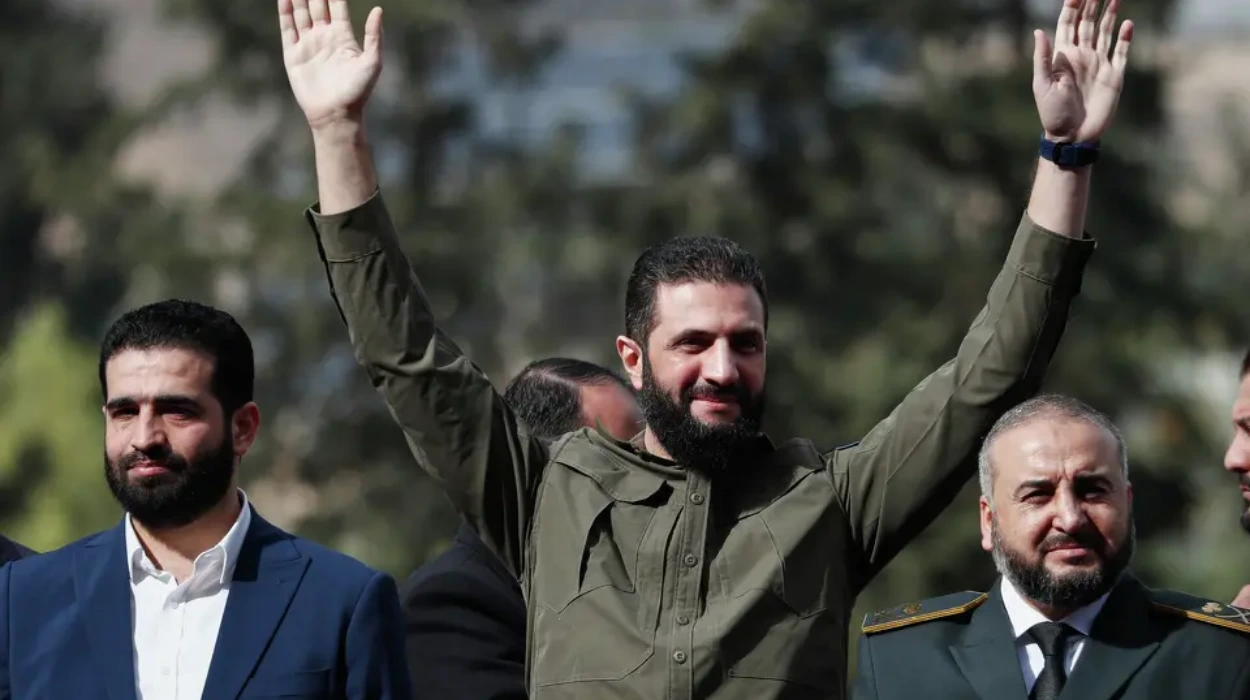

Syria (Washington Insider) – Syria welcomed the full U.S. Caesar Act repeal in December 2025, aiding reconstruction. Trump, Central Bank Governor Husrieh, interim President Ahmad al-Sharaa, and allies, Turkey, Saudi Arabia, Qatar, were involved; the UK imposed new sanctions.
As The Telegraph News reported, Syria and its allies welcomed the full removal of the Caesar Act sanctions on Friday, Dec 19, 2025. Syria’s foreign ministry thanked the United States and invited Syrian businesspeople and international investors to explore reconstruction opportunities. It said that it will
“contribute to alleviating the burdens on the Syrian people and open the way for a new phase of recovery and stability.”
What the Caesar Act repeal means for Syria’s recovery and new sanctions
The World Bank estimates rebuilding the country could cost up to $216 billion. Experts say the sanctions’ removal could attract foreign funds, speed up economic recovery, and help restore public services and infrastructure destroyed in the war.
Challenges remain, including political and security risks, but the move is seen as an important step toward reintegrating Syria into the global economy. Analysts note that international investment could help rebuild cities, industries, and essential services.
Central Bank Governor Abdulkader Husrieh said the repeal of the Caesar Act sanctions will help Syria rejoin the international financial system. He said the move allows Syria to seek a sovereign credit rating.
Turkey, Saudi Arabia, and Qatar, allies of the new Syrian government led by interim President Ahmad al-Sharaa, welcomed the decision. U.S. President Donald Trump said he acted after consultations with Saudi Crown Prince Mohammed bin Salman and Turkish President Recep Tayyip Erdogan.
The new government came to power after Bashar al-Assad was ousted in December 2024. Analysts say lifting the sanctions could open the door for investors and international institutions to help rebuild Syria’s economy and infrastructure.
At the same time, the United Kingdom imposed new sanctions on individuals and organisations it said were “involved in violence against civilians” in Syria. The targets include 4 people linked to Assad’s former government in military or financial roles. They also include 2 individuals and 3 armed groups connected to the new Syrian government’s security forces, accused of attacking civilians.
The sanctions follow sectarian clashes in March, when Assad loyalists attacked security forces. The violence quickly escalated into revenge killings. Sunni militants, some connected to the new government, targeted Alawites regardless of their involvement in the attacks. Hundreds of civilians were killed.
In 2019, the U.S. Congress enacted sanctions against Bashar al-Assad’s Syrian government due to Assad’s violation of human rights during the civil war that lasted nearly 14 years. After Assad was overthrown during a quick rebel attack in December 2024, many organisations, including some that had previously supported the sanctions, began to advocate for their removal. Critics of the sanctions have cited that the sanctions hinder international investment, limit the ability to invest in rehabilitating Syria, and hamper overall reconstruction efforts.
After previously providing limited exceptions via Executive Order, U.S. President Donald Trump signed a final repeal at the same time Congress passed its Annual Defence Appropriations Bill. Some members of Congress wished to include conditions in their repeal, asking that the new Sunni-controlled government support and protect the religious minorities and enact reforms. Ultimately, the lawmakers’ support for lifting the sanctions on democracy in Iran was given unconditionally.