- Iranian officials strongly react to Trump's protest threat.
- Trump warns of US intervention in Iran unrest.
- Protests erupt amid Iran's worsening economic conditions.
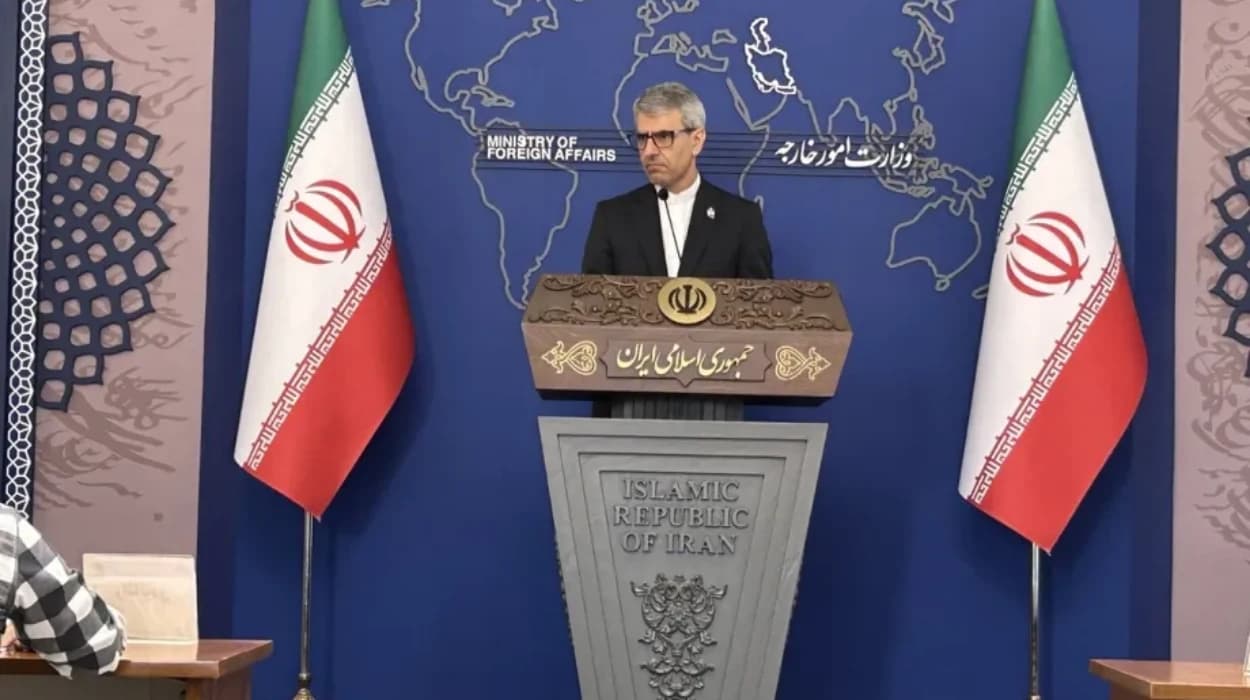
Iranians will not tolerate foreign meddling and will find solutions "through dialogue and engagement," according to a statement released by Iran's Foreign Ministry spokesperson Esmaeil Baghaei on Friday.
“It is enough to review the long record of actions by American politicians undertaken in the name of ‘saving the Iranian people’ to grasp the depth of America’s so-called ‘empathy’ with the Iranian nation,”
he said.
The 1953 coup against former prime minister Mohammad Mossadegh, the 1988 shooting down of an Iranian civilian airliner, US assistance for former dictator Saddam Hussein during the Iran-Iraq conflict, and support for Israel during last year's attacks on Iran were all listed by Baghaei as instances.
“And today, once again, there are threats of an attack on Iran under the pretext of concern for Iranians, in blatant violation of the most fundamental principle of international law,”
he noted.
Trump declared early on Friday that the US would "come to the rescue" of Iranian demonstrators who have taken to the streets in recent days due to the country's worsening economic conditions and the sharp decline in the value of the rial.
“If Iran shoots and violently kills peaceful protesters, which is their custom, the United States of America will come to their rescue. We are locked and loaded and ready to go,”
he said.
Trump's comments were also criticized by Ali Shamkhani, a former head of Iran's top security council and senior advisor to Ayatollah Ali Khamenei.
The secretary of Iran's Supreme National Security Council, Ali Larijani, also cautioned that US meddling in Iran will destroy US interests and destabilize the Middle East.
“With the statements by Israeli officials and Trump, what has been going on behind the scenes is now clear,”
he posted on X.
He warned that US meddling in what he called an internal issue would "destabilize the entire region and destroy America's interests," adding that Iran makes a distinction between the position of its "protesting shopkeepers and the actions of disruptive actors."
“The American people should know — Trump started this adventurism. They should be mindful of their soldiers’ safety,”
he added.
Shopkeepers in Tehran's Grand Bazaar, the center of tiny local shops, started the protests last week. Since then, they have progressively extended to other regions of the nation as a result of the unstable economic situation.
The protests have become violent in certain places, and there have also been reports of fatalities.
The Iranian administration has charged that "external forces" are inciting nonviolent demonstrators to commit violent crimes.
Local companies have suffered greatly as a result of the rial's sharp decline, which saw it plummet to 135,000.0 against the US dollar.
How has the US justified potential intervention in Iran?
President Trump justified implicit US intervention in Iran's demurrers as a philanthropic response to cover peaceful demonstrators from governance violence, framing it as" coming to their deliverance" amid profitable uneasiness. Fairly, the administration cites tone- defense against Iranian pitfalls to US interests and collaborative defense of abettors like Israel, per precedents like the 2020 Soleimani strike.
Claims Iranian repression poses pitfalls to US labor force and indigenous stability, allowing preemptive action under Composition II powers. Rhetoric invokes moral duty, echoing Reagan- period support for dissentients, though not formal legal base.
Congressional approval needed for sustained operations under War Powers Resolution; once conduct reckoned on 2001/2002 AUMFs for terrorism links. Critics argue no imminent attack exists, risking UN Charter violations.