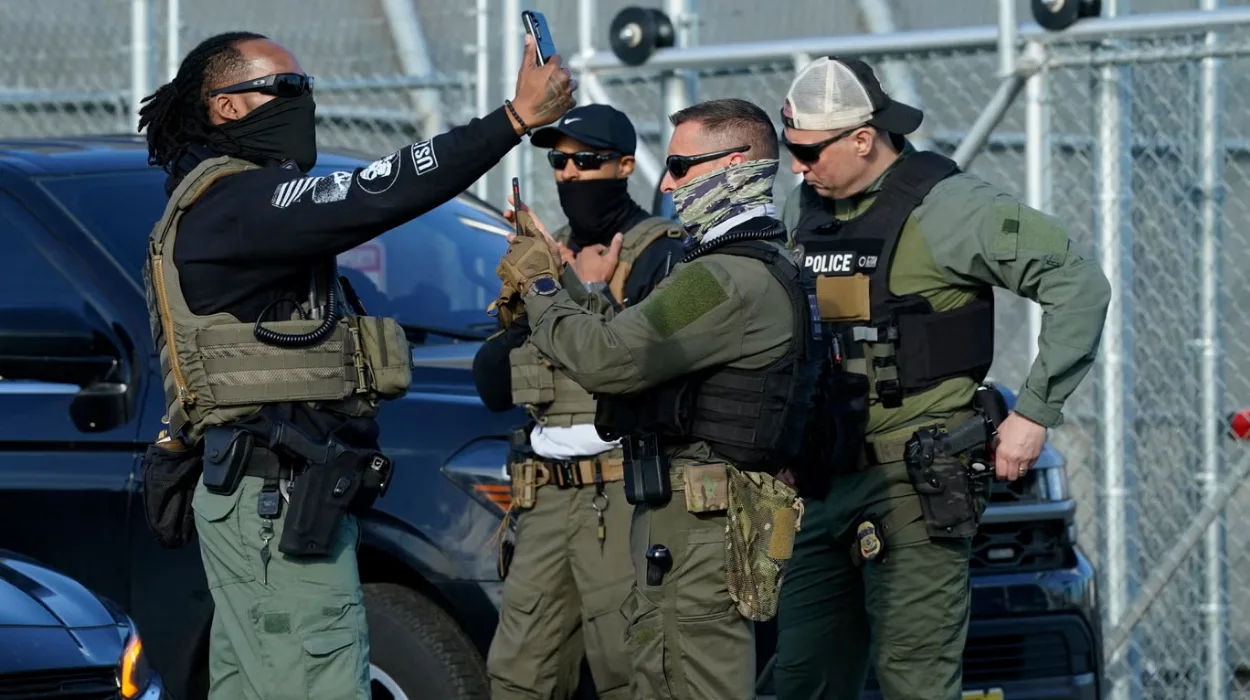

- ICE
deploys mobile facial recognition tech. - Speeds
up arrests in Trump crackdown. - Targets
immigration enforcement operations nationwide.
ICE officers have been using Mobile Fortify, a
government-developed software, to identify possible detainees in recent months.
While Democratic lawmakers and privacy advocates have
criticized it as an example of unbridled government overreach, administration
officials have praised it as a potent new tool.
Using the software, investigators may swiftly retrieve a
suspect’s identity, location, social media history, and occasionally their
immigration status by taking a picture of their face using their phone.
“Mobile Fortify is a lawful law-enforcement tool
developed under the Trump Administration to support accurate identity and
immigration-status verification during enforcement operations,” a
spokeswoman for the Department of Homeland Security, ICE’s
parent agency, said
in a statement.
According to agency authorities, the app has been used more
than 100,000 times thus far, speeding up arrests and reducing the number of
detentions of those with legal status.
During President Joe Biden’s administration, U.S. Customs
and Border Protection created Mobile Fortify by modifying technology that was
already in use at U.S. ports of entry. Only Border Patrol agents working close
to the southern border used it at first.
However, since Trump promised to implement the biggest
deportation effort in American history, its use has increased. Additionally,
ICE has the capacity to test and widely adopt new technologies now that
Congress has given it an extra $75 billion, making it the most well-funded law
enforcement organization in the country.
Two Guatemalan males who had been stopped by a state trooper
were photographed by ICE authorities. One of the males had received a notice to
appear in court, according to Mobile Fortify.
“The Mobile Fortify program represents a dangerous
expansion in the government use of face recognition in American life and would
fundamentally reorient the relationship between the authorities and individuals
in this country if it is allowed to continue,”
Jay Stanley, an ACLU senior policy analyst wrote in November.
“It must not be.”
In response, a DHS representative asserted that the app is
“lawfully used nationwide in accordance with all applicable legal
authorities.”
ICE’s deployment of Mobile Fortify has also drawn criticism
from Democratic members of Congress. Senators Ed Markey, Chris Van Hollen,
Bernie Sanders, and Adam Schiff called on the government to cease using the app
in November, saying it “creates serious privacy and civil liberties
risks.”
Similar tools have also caused controversy in the past.
During Biden’s administration, immigrants who wanted to
enter the nation legally were required to schedule appointments via the CBP One
app, which required them to upload a self-portrait.
ICE’s deployment of Mobile Fortify has also drawn criticism
from Democratic members of Congress. Senators Ed Markey, Chris Van Hollen,
Bernie Sanders, and Adam Schiff called on the government to cease using the app
in November, saying it “creates serious privacy and civil liberties
risks.”
Similar tools have also caused controversy in the past.
During Biden’s administration, immigrants who wanted to
enter the nation legally were required to schedule appointments via the CBP One
app, which required them to upload a self-portrait.
The software frequently failed to identify people with
darker skin tones, including Haitian migrants, according to complaints from
immigration advocates and some lawyers.
A December AP-NORC survey found that 38% of Americans now
support Trump’s immigration policies, down from 49% in March.
What privacy safeguards govern ICE facial recognition use?
ICE’s use of mobile facial recognition technology, like the
Mobile Fortify app, operates under minimum formal sequestration safeguards,
primarily internal agency programs rather than comprehensive statutory
protections.
HSI policy requires agents to exhaust traditional
identification styles( e.g., database queries, open- source checks) before
biometric reviews and limits data submission to” essential” images
only; matches bear mortal verification, with U.S. citizens theoretically
suitable to conclude out via verbal turndown or evidence of status, though
field reports indicate agents frequently stamp expostulations.
No congressional authorization authorizations concurrence
fornon-border reviews, enabling warrantless use against citizens despite
conceded error pitfalls; sequestration groups punctuate absent independent
checkups, data retention limits, bias testing, or public translucency, with
FOIA suits revealing DHS withholding oversight details amid plans for
marketable data broker integration.