Belarus (Washington Insider) - Belarus released 123 political prisoners, including Maria Kolesnikova and Ales Bialiatski, after US envoy John Coale negotiated with the US lifting potash sanctions; prisoners sent to Ukraine, Poland, and Lithuania.
As BBC News reported, Belarus has released 123 political prisoners, including opposition leader Maria Kolesnikova and Nobel Peace Prize winner Ales Bialiatski. The release follows talks with the United States, which agreed to lift some sanctions on Belarus’s potash industry, a major source of income and a key ingredient in fertiliser.
Coale said:
"As relations between the two countries normalise, more and more sanctions will be lifted."
What does Belarus releasing 123 prisoners mean as US lifts sanctions?
Kolesnikova, a prominent figure in the 2020 pro-democracy protests, spent more than 3 years in prison, including long periods in isolation. She was handed over to Ukraine along with other prisoners. Her sister, Tatiana Khomich, confirmed the news through a video call and spoke about the relief of finally being able to contact her.
"She is free, she looks fine, she looks good,"
said Khomich, who said she was looking forward to hugging her sibling.
The transfer took place after meetings in Minsk with John Coale, the U.S. President’s special envoy for Belarus. Ukrainian authorities said the prisoners would first receive medical care in Ukraine and then be moved to Poland and Lithuania.
Belarus remains closely aligned with Russia, and the European Union does not recognise President Alexander Lukashenko. The release of Kolesnikova and other political prisoners is a major development in Belarus.
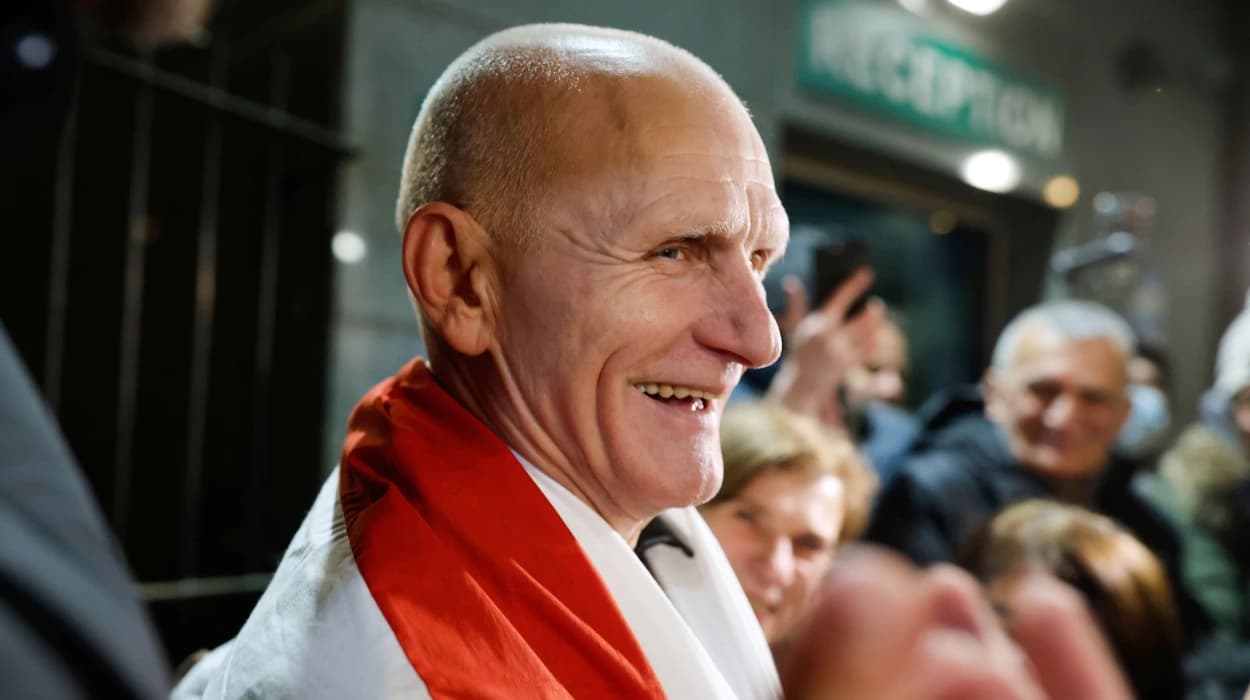
After embracing Tikhanovskaya, Bialiatski said:
"Thousands of people have been and continue to be imprisoned...so our struggle continues."
Svetlana Tikhanovskaya, the exiled Belarusian opposition leader, was waiting outside the US embassy in Vilnius when she spoke about the release of political prisoners. She said the decision to send them to Ukraine was unexpected and had been made by President Alexander Lukashenko. A smaller group of prisoners, including Nobel laureate Ales Bialiatski, was sent to Vilnius, Lithuania.
Officials mentioned that the deal is seen as a major political success for Lukashenko. He is also likely to welcome the United States lifting some of his international isolation. John Coale, the US special envoy for Belarus, told Belarusian state media that sanctions on potash exports would be lifted immediately. He also said he spoke with Lukashenko about Belarus’s role in Ukraine and how Minsk could assist in talks with Russian President Vladimir Putin.
While Europe is focused on isolating and sanctioning others, the United States has chosen to engage economically in order to promote political objectives. Recently freed from prison were Maria Kolesnikova, Viktor Babaryko, and Marina Zolotova, the editor of independent news outlet, Tut.by. Neither the EU nor the US recognises Lukašenko as president after massive protests followed the elections 5 years ago, when he took power through election fraud.
The protests were met with violent repression by law enforcement; many individuals were arrested, including Kolesnikova. Since then, political repression has continued. Tikhanovskaya stated that “sanctions are leverage for getting dictators to act,” indicating that Belarus’ actions are influenced by economic pressure imposed by international actors.
She said:
"Lukashenko will not release people because he somehow became humane, he wants to sell people as expensive as possible.”
"Of course, it is the price. But we understand that American sanctions are rather flexible.”
"They can lift them tomorrow if some deals are not fulfilled."