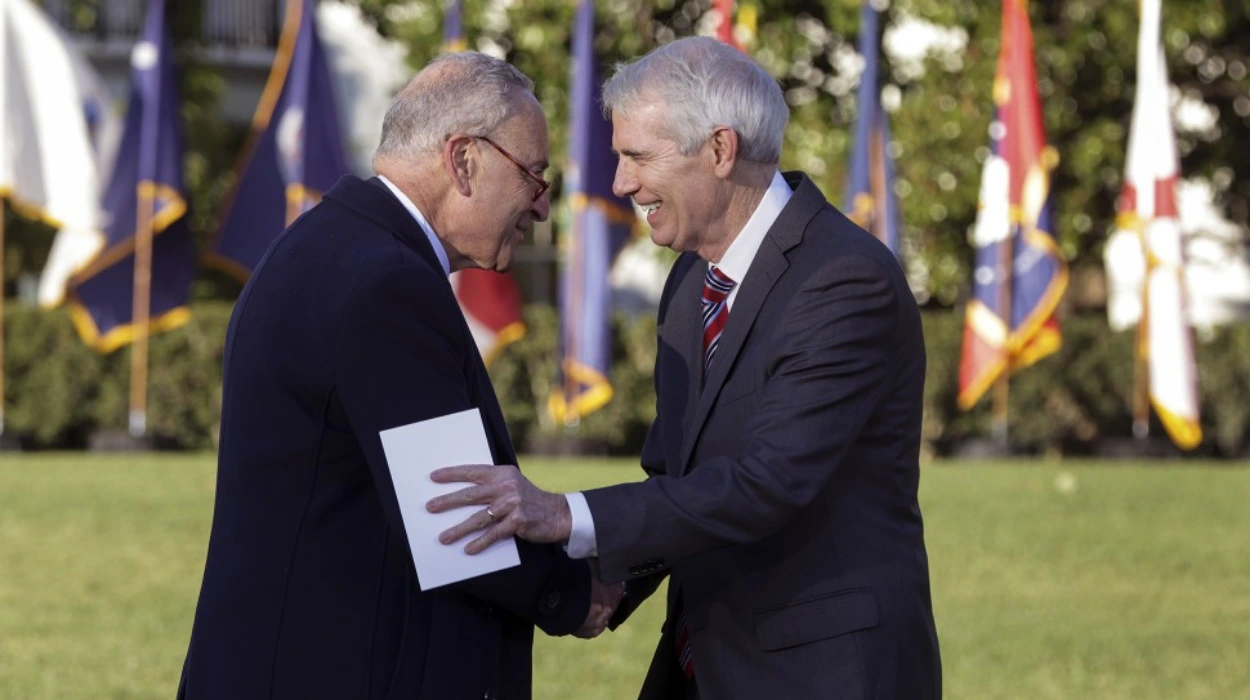

Washington (Washington Insider Megazine) January 27, 2026
– Bipartisanship in the United States Congress refers to cooperation between
Democrats and Republicans on legislation, appointments, or other official
actions in a two‑party system. While long‑term data show that bipartisan
collaboration has declined compared with the late 1980s, it continues to shape
key laws that reach the president’s desk. Recent sessions of Congress have
produced a series of cross‑party measures, including consumer protection,
technology, broadband, and supply chain bills backed by members from both
parties. Researchers also report that individual lawmakers who consistently
attract support from the opposite party tend to be more successful in advancing
their bills through the legislative process.
Bipartisanship in Congress generally describes legislation
or actions supported by members of both major parties, in contrast with
strictly partisan initiatives backed only by one side. In the contemporary US
context, the term is applied when Republicans and Democrats cooperate on
drafting, co‑sponsoring, or voting for bills, as well as in negotiations over
budgets, nominations, and emergency measures.
What Bipartisanship in Congress Means
In a two‑party system such as that of the United States,
bipartisanship is defined as
“relating to or
involving members of two political parties,”
and in practice it is used for actions where both Republicans
and Democrats reach agreement. Political reference works describe it as
collaboration between parties to create mutually acceptable public policy,
usually involving compromise on key provisions so that both sides can support
the final text. This can include joint work on the language of bills, shared
sponsorship, and coordinated efforts to move legislation through committee and
floor stages.
Bipartisan legislation in Congress is often associated with
relatively moderate measures or with responses to pressing circumstances, such
as economic difficulties or other national challenges that encourage cross‑party
cooperation. Outside formal votes, bipartisan practices may also appear in
informal working groups, caucuses that include members of both parties, and
cross‑party negotiations over appropriations or reauthorisation packages.
Long-Term Trends in Bipartisan Activity
Analyses of congressional activity over recent decades
indicate that bipartisan collaboration has declined compared with earlier periods,
though it remains a regular feature of lawmaking. One study of House and Senate
behaviour from the 93rd to the 114th Congresses (covering 1973–2016) found that
the share of co‑sponsors drawn from the opposite party on individual members’
bills has decreased over time, even as it continues to represent a significant
portion of overall bill support.
Separate data compiled by legislative analytics firm Quorum
show that the proportion of bills introduced with bipartisan support fell by
around 30 percent between 1989 and 2017. According to that analysis, nearly 35
percent of bills introduced in 1989 had sponsors or co‑sponsors from both
parties, compared with 21 percent in 2011, with the figure stabilising at
roughly 24 percent in 2017.
The same dataset records that 7,162 bills were introduced in
the first session of the 115th Congress in 2017, with 97 enacted that year,
placing that Congress among the least productive of the past fourteen in terms
of laws signed.
Bipartisanship and Legislative Effectiveness

Academic research into congressional lawmaking has examined
whether cross‑party cooperation benefits individual members. A working paper
from Northwestern University’s Institute for Policy Research covering both
chambers from 1973 to 2016 reports a strong positive relationship between the
proportion of a legislator’s co‑sponsors who come from the opposite party and
measures of that legislator’s effectiveness.
In this study, lawmakers who consistently secured greater
support from the other party were more likely to move their bills out of
committee, onto the floor, and towards final passage.
The research highlights that, although the share of
bipartisan co‑sponsorship has declined since the 1970s, a substantial fraction
of co‑sponsors on bills in both the House and Senate still come from the other
party. For representatives, roughly 20 percent of co‑sponsors were drawn from
the opposing party in recent Congresses in the period studied, down from around
40 percent in earlier decades, while in the Senate the comparable share
declined to about 30 percent.
These findings indicate that bipartisan engagement continues
to operate as a practical route for lawmakers seeking to improve the prospects
of their legislative proposals.
Examples from Recent Bipartisan Legislation
Although polarisation is widely documented, cross‑party
initiatives continue to appear in recent Congresses, including in the 118th
Congress (2023–2024). In December 2024, the Further Continuing Appropriations
and Disaster Relief Supplemental Appropriations Act of 2025 incorporated
several bipartisan bills that had been introduced or supported by senators from
both parties.
These included the TAKE IT DOWN Act, the TICKET Act, and the
Informing Consumers About Smart Devices Act, all of which attracted co‑operation
from Republicans and Democrats on the Senate Commerce Committee.
The TICKET Act, moving in the House as H.R. 3950 and
previously introduced in the Senate as S. 1303, aims to require event ticket
sellers to display the total price, including all mandatory fees, upfront in
advertising and marketing materials. The House text also adds rules against
speculative ticketing, new transparency requirements for resold tickets, and
provisions on refunds and replacement of tickets.
This measure has been advanced by both parties, with
Republican and Democratic sponsors and co‑sponsors in each chamber.
Bipartisan Measures Embedded in Spending Legislation
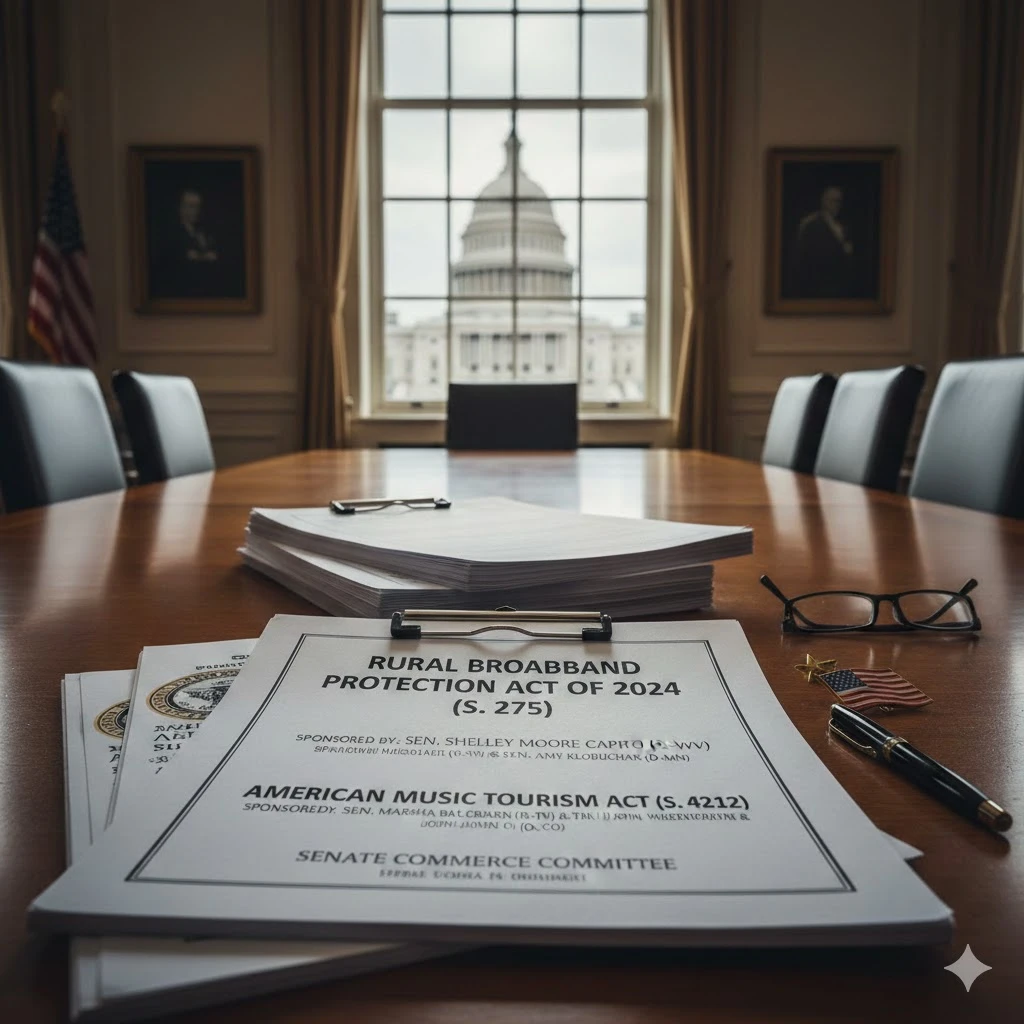
The same appropriations package carried a series of
additional bipartisan bills from members of the Senate Commerce Committee and
others. These included the Rural Broadband Protection Act of 2024 (S. 275),
sponsored by Republican Senator Shelley Moore Capito of West Virginia and
Democratic Senator Amy Klobuchar of Minnesota, which aims to provide safeguards
around broadband funding for rural areas. The American Music Tourism Act of
2024 (S. 4212), led by Republican Senator Marsha Blackburn of Tennessee and
Democratic Senator John Hickenlooper of Colorado, was also attached as a
bipartisan initiative.
Other cross‑party provisions incorporated into the same
vehicle included the Removing Our Unsecure Technologies to Ensure Reliability
and Security (ROUTERS) Act (H.R. 7589 and its Senate counterpart S. 4572),
introduced with Republican and Democratic sponsors, and the Promoting Resilient
Supply Chains Act of 2024 (S. 4375), backed by Democratic Senator Maria
Cantwell of Washington and Republican Senator Marsha Blackburn.
The Hotel Fees Transparency Act of 2024 (S. 2498), authored
by Senator Klobuchar and Republican Senator Jerry Moran of Kansas, the Youth
Poisoning Prevention Act (S. 2233), sponsored by Democratic Senator Tammy
Duckworth of Illinois and Republican Senator J.D.
Vance of Ohio, and the Securing Semiconductor Supply Chains
Act of 2023 (S. 229), introduced by Senator Gary Peters, Senator Rick Scott,
and Senator Blackburn, likewise moved forward on a bipartisan basis. Companion
measures in the House were led by members from both parties, including
representatives Maria Elvira Salazar and Madeleine Dean on one of the
semiconductor‑related efforts.
Bipartisanship in Cosponsorship and Co-operation Patterns
Beyond headline laws, bipartisanship in Congress often
manifests through patterns of co‑sponsorship and committee work. Legislative
databases tracking all bills in each Congress show that a significant share of
measures still receive at least one co‑sponsor from the opposite party, even if
the proportion has declined compared with earlier decades. Such co‑sponsorship
can indicate willingness to collaborate across party lines on more specific
policy areas, including infrastructure, veterans’ affairs, and certain
regulatory issues.
Data from the period 1973–2016 suggest that members who
invest effort in building bipartisan coalitions tend to experience higher
success rates in advancing their proposals, particularly in getting bills
reported from committee and considered on the floor. According to this
research, bipartisanship in co‑sponsorship can help lawmakers navigate
institutional hurdles, even when overall partisan tensions remain high. These
patterns are observable in both chambers, though the exact levels of cross‑party
involvement differ between the House and Senate.
Bipartisanship in a Polarised Environment
Political reference sources emphasise that bipartisanship
remains less common than strictly partisan behaviour in the contemporary UnitedStates, given the ideological distance between the main party bases. In this
environment, bipartisan policy‑making is described as an “unusual occurrence,”
with party leaders often aligned closely with either liberal or conservative
constituencies that expect firm partisan positions.
Nonetheless, the same sources note that moderate or rank‑and‑file
legislators can still drive cross‑party initiatives, particularly on technical,
regulatory, or locally focused issues where common interests are easier to
identify.
General surveys of congressional activity in the 2010s and
early 2020s record persistent reports of polarisation and gridlock, including a
low number of bills enacted in certain sessions relative to historical averages.
At the same time, the presence of cross‑party co‑sponsorship on thousands of
measures, and the passage of packages combining multiple bipartisan bills,
indicate that cooperation continues to play a role alongside partisan conflict
in the day‑to‑day functioning of Congress.
Context of Bipartisanship Within the US System
Within the broader US constitutional framework,
bipartisanship interacts with the separation of powers and the frequent
occurrence of divided government, when the presidency and one or both chambers
of Congress are controlled by different parties. Educational overviews note
that such arrangements can require negotiation between branches and parties to
enact legislation, particularly on appropriations and major policy changes.
In these settings, agreements that secure support from
members of both parties can be necessary to move key measures, including budget
deals and reauthorisations, through both chambers and onto the president’s
desk.
Where consensus is not reached, observers have documented
periods of legislative standstill and, in some cases, short‑term federal
government shutdowns linked to funding disputes. Against this backdrop, formal
studies and descriptive accounts alike show that bipartisanship—measured
through co‑sponsorship, cross‑party coalitions, or jointly negotiated
packages—remains one of the mechanisms by which Congress continues to produce
laws in a highly competitive two‑party environment.