
- Model
Ally Designation: Trump administration labelled Israel a “model U.S.
ally” ahead of talks on major military aid packages, praising
strategic partnership and defence contributions. - Aid
Negotiations Focus: Discussions centre on $3.8 billion annual Foreign
Military Financing plus supplements for Iron Dome, F-35s, David’s Sling
and hypersonic research to maintain qualitative military edge. - Senior
Officials’ Remarks: White House NSA Jake Strenburg, Secretary Rubio and
Pentagon’s Pat Ryder highlighted intelligence sharing, tech transfers and
joint exercises as exemplary alliance benefits. - Bipartisan
Congressional Backing: Senate’s Jim Risch and Chuck Schumer affirmed
ironclad U.S. commitment; recent NDAA authorised base aid with
supplementals post-Hezbollah clashes. - Strategic
Context: Aid counters Iran proxies; Israel provides U.S. innovations like
Trophy APS, drones; talks build on 2019-2028 MOU amid Middle East security
challenges.
Washington (Washington Insider Magazine) January 30, 2026
– The Trump administration designated Israel as a “model U.S. ally”
in remarks ahead of scheduled talks on substantial military assistance
packages. Senior officials highlighted Israel’s strategic partnership and
defence contributions as central to the upcoming negotiations. The label underscores
long-standing bilateral ties amid regional security challenges in the Middle
East. Discussions focus on enhancing Israel’s qualitative military edge through
advanced weaponry and joint defence initiatives.
Senior White House advisors made the comments during a press
briefing on Thursday, framing Israel as exemplary in intelligence sharing,
counter-terrorism cooperation and regional stability efforts. The designation
precedes high-level meetings next week involving U.S. and Israeli defence
officials to finalise aid allocations for fiscal year 2026.
Context of Upcoming Military Aid Negotiations
Negotiations cover a proposed $3.8 billion in annual Foreign
Military Financing, plus supplemental packages for systems like Iron Dome
interceptors and precision-guided munitions. U.S. officials confirmed the talks
build on memoranda of understanding committing funds through 2028.
The administration’s praise aligns with President Trump’s
repeated endorsements of Israel as America’s strongest Middle East partner.
Statements emphasise mutual benefits from joint exercises, technology transfers
and intelligence exchanges that enhance U.S. capabilities.
Israel receives the largest share of U.S. military aid,
supporting its defence posture against threats from Iran, Hezbollah and Hamas.
Funds enable purchases of F-35 jets, missile defence batteries and other
U.S.-made equipment.
Historical U.S.-Israel Military Partnership
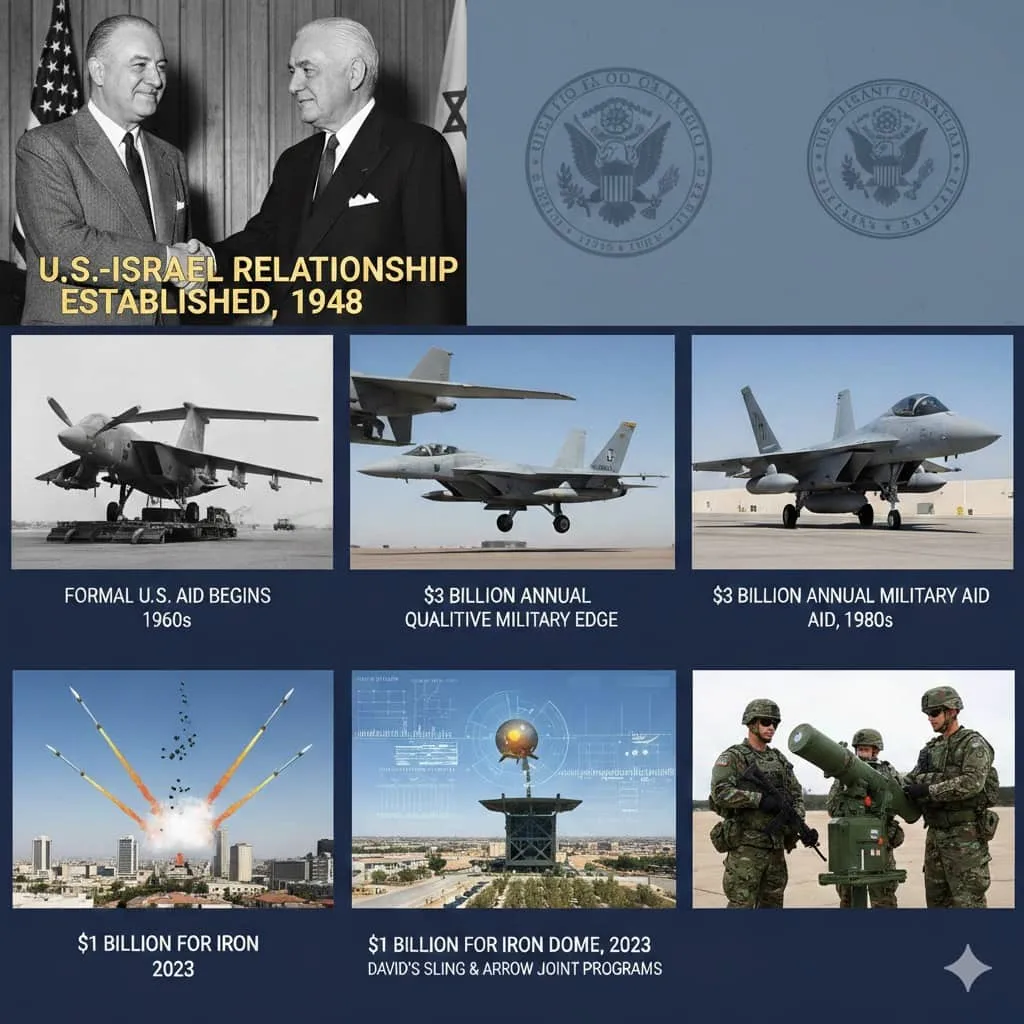
The U.S.-Israel relationship dates to Israel’s founding in
1948, with formal aid beginning in the 1960s. Annual assistance reached $3
billion by the 1980s under a memorandum ensuring Israel’s military superiority.
Congressional appropriations mandate maintaining Israel’s
qualitative military edge, defined as technological and doctrinal advantages
over adversaries. Recent packages included $1 billion for Iron Dome after 2023
escalations.
Joint programmes like David’s Sling and Arrow integrate U.S.
funding with Israeli innovation, yielding technologies adopted by American
forces.
Recent Regional Developments Prompting Aid Talks
Aid discussions follow October 2025 clashes along Israel’s
northern border with Hezbollah, prompting U.S. resupplies of artillery shells
and munitions. Officials noted Israel’s restraint preserved ceasefire terms
while demonstrating defensive resolve.
Iran’s proxy activities in Yemen, Syria and Gaza factor into
assessments of Israel’s forward positioning. U.S. briefers cited shared
intelligence preventing attacks on American assets.
The label “model ally” reflects Israel’s
compliance with aid conditions, including end-use monitoring and human rights
reporting required under U.S. law.
Statements from Trump Administration Officials
White House National Security Advisor Jake Strenburg called
Israel “the gold standard for alliance partnerships, delivering unmatched
value to American security.” He highlighted real-time intelligence on
Iranian drones shared during Red Sea operations.
Secretary of State Marco Rubio echoed the praise, stating
Israel “punches far above its weight, exporting battle-tested innovations
that save American lives.” Rubio previewed talks on co-production of
missile interceptors to reduce U.S. supply chain strains.
Pentagon spokesperson Major General Pat Ryder affirmed,
“Israel’s proven interoperability in exercises like Juniper Cobra sets the
benchmark for allies worldwide.”
Congressional Support for Continued Assistance
Bipartisan majorities back Israel aid, with Senate Foreign
Relations Committee Chair Jim Risch stating, “Israel remains our
indispensable partner against radical Islamism.” House Appropriations
Defense Subcommittee members approved $500 million supplemental in December
2025.
Democrats like Senate Majority Leader Chuck Schumer
affirmed,
“U.S. commitment to Israel’s security is ironclad, transcending
administrations.”
Progressive objections focused on conditions rather than
amounts.
The 2024 National Defense Authorization Act authorised $3.3
billion base aid plus $500 million for cooperative development.
Strategic Importance in Middle East Landscape
U.S. strategy positions Israel as counterweight to Iranian
expansionism, with aid enabling preemptive capabilities. Joint special
operations and cyber defence frameworks underpin cooperation.
Israel’s intelligence penetration of Hezbollah and Hamas
provides U.S. policymakers unique insights unavailable elsewhere. Shared
satellite imagery and signals intelligence support operations from Syria to
Somalia.
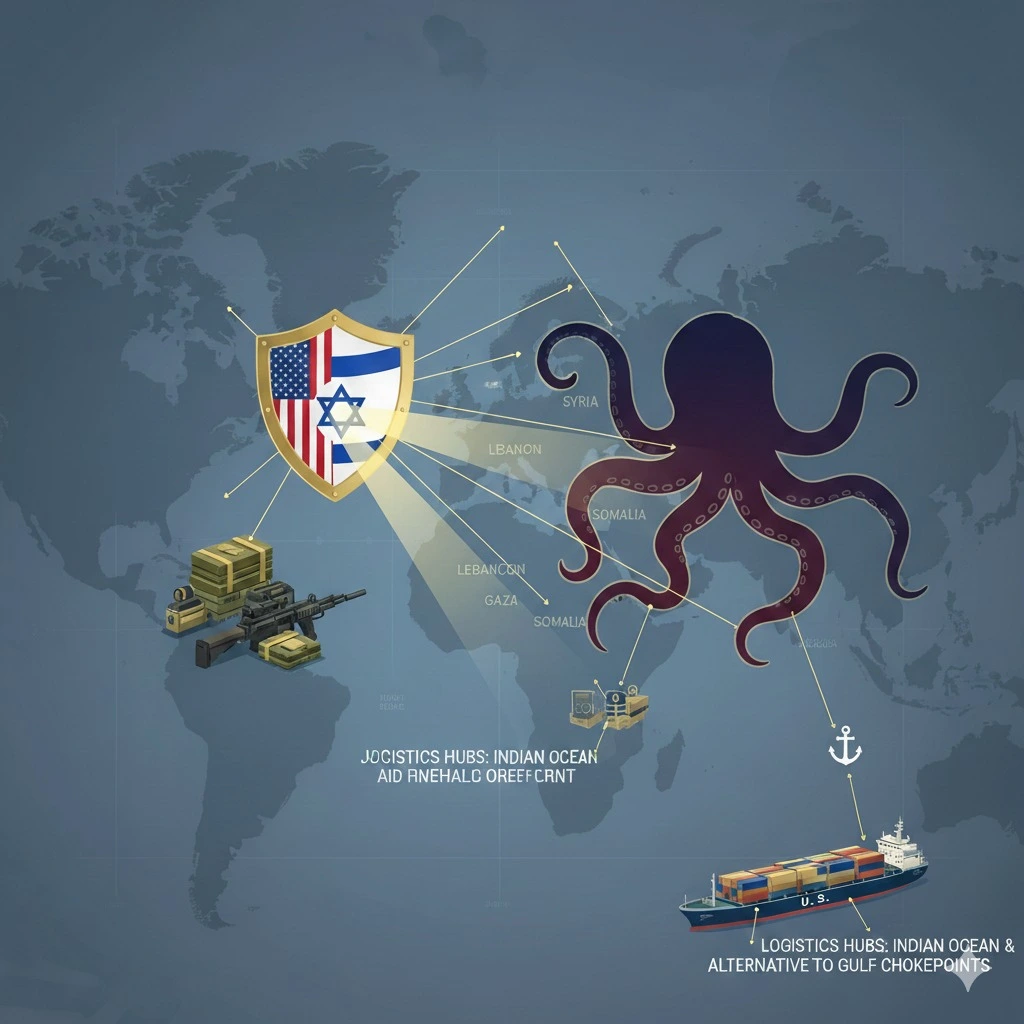
Amid great power competition, Israel’s Indian Ocean and
Mediterranean facilities offer U.S. forces logistics alternatives to vulnerable
Gulf chokepoints.
Details of Proposed Aid Package Components
Talks encompass:
- $1.2
billion for Iron Dome Tamir interceptors - $800
million for David’s Sling and Arrow-3 systems - $600
million for F-35 sustainment and munitions - $400
million for joint hypersonic defence research - $300
million for border security technologies
Funding draws from Foreign Military Sales credits and direct
commercial contracts with U.S. firms like Lockheed Martin and Raytheon.
Israel’s Contributions to U.S. Defence Innovation
Israel supplies components for U.S. systems, including
Trophy active protection for Abrams tanks and litening pods for F-16s. Rafael’s
Spike missiles equip American special forces.
Over 700 Israeli firms operate in the U.S., employing 25,000
in defence sectors. Binational Industrial Research and Development Foundation
funds yielded Iron Dome technology transfers.
U.S. Central Command credits Israeli drones with
reconnaissance roles in counter-ISIS campaigns.
Framework for Aid Delivery and Oversight
Aid flows through Letters of Offer and Acceptance, with
quarterly compliance reports. U.S. security assistance end-use monitors verify
equipment locations.
Congress receives
annual justification documents detailing threat assessments and qualitative
edge certifications.
Supplemental appropriations bypass standard timelines during
escalations, as invoked post-2023 Hamas attacks.
Regional Allies’ Perspectives on Partnership
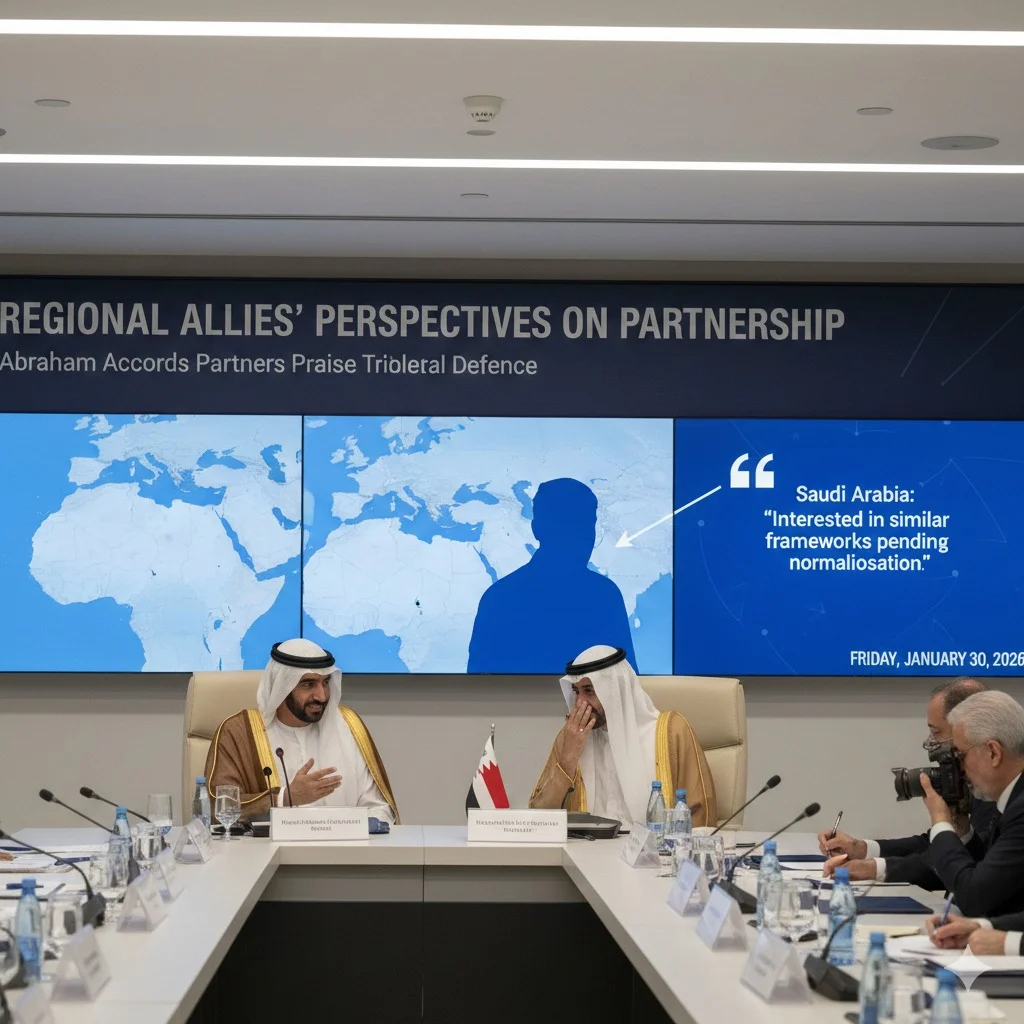
Abraham Accords partners UAE and Bahrain praise trilateral
exercises enhancing collective defence. Saudi Arabia signalled interest in
similar frameworks pending normalisation.
Egypt and Jordan receive parallel U.S. aid supporting peace
treaty obligations, with Israel coordination preventing flashpoints.
Long-Term Memorandum of Understanding Terms
The 2019-2028 MOU commits $38 billion total, with $33
billion FMF and $5 billion for missile defence. Extensions discussions begin in
2027.
MOU implementation reports confirm 100% disbursement rates
and on-schedule deliveries.