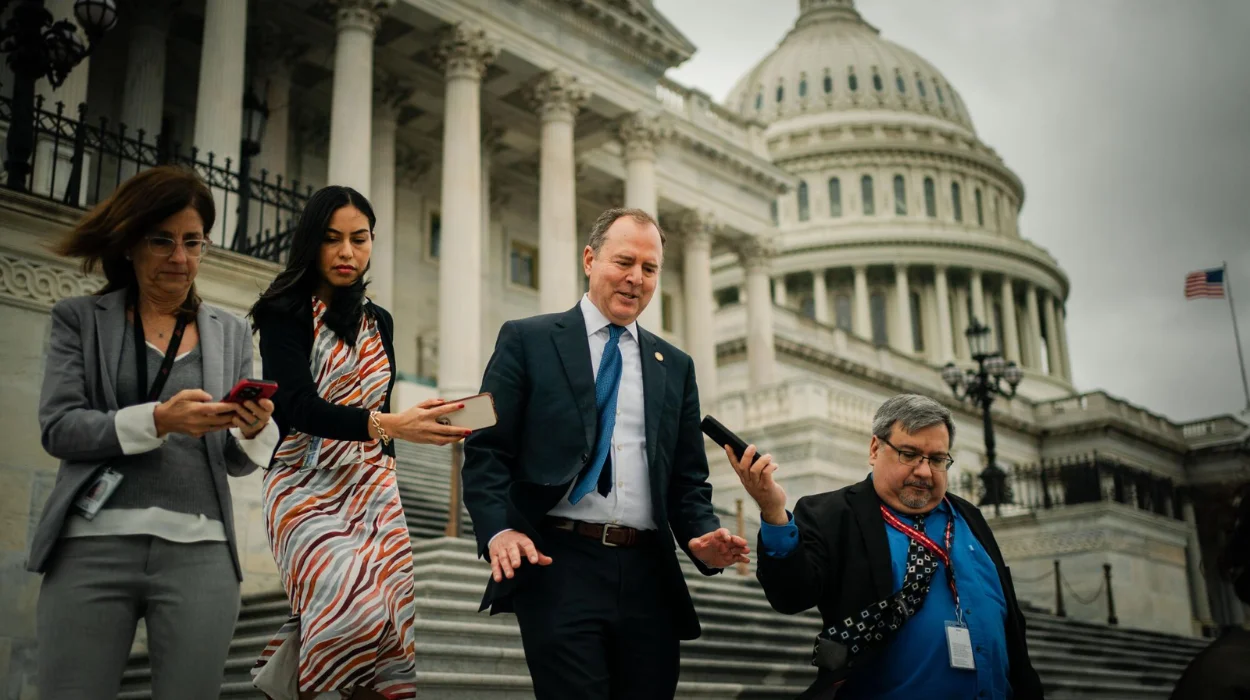

In the high stakes arena of American politics, few figures
have navigated the turbulent waters of congressional oversight with the
precision and persistence of Adam Schiff, the seasoned representative from
California. Known for his central role in pivotal accountability efforts
against former President Donald Trump, Schiff embodies the archetype of a
principled lawmaker who bridges legal acumen with public service. His journey
from a federal prosecutor to a key voice in national debates offers timeless lessons
on integrity, bipartisanship, and the checks and balances that define U.S.
democracy. This article explores his career trajectory, legislative priorities,
and lasting impact, drawing on his prominence during landmark impeachment
proceedings to illuminate broader themes in governance.
Early Life and Path to Politics
Adam Schiff grew up in a middle class family in
Massachusetts before moving to California during his formative years. He
pursued higher education at Stanford University, earning a bachelor’s degree,
followed by a law degree from Harvard Law School. These institutions, renowned
for producing influential leaders, shaped his analytical mindset.
Schiff’s professional foundation lies in public prosecution.
As a U.S. Attorney in the Central District of California, he tackled complex
cases involving fraud and corruption. One notable achievement involved
dismantling a major health care scam ring, recovering millions in taxpayer
funds. This experience honed his skills in evidence based argumentation, a
trait that would later define his congressional tenure.
Transitioning to elected office, Schiff won a seat in the
California State Senate in 1996, where he championed criminal justice reforms.
His 2000 election to the U.S. House of Representatives for California’s 28th
District encompassing parts of Los Angeles marked the start of a federal career
spanning over two decades. Representing a diverse constituency, he has
consistently prioritized issues resonating with urban Californians, from
environmental protection to technological innovation.
Rise in Congress and Key Committee Roles
Upon arriving in Washington, Schiff quickly ascended through
House leadership. He secured a spot on the Intelligence Committee early on,
eventually becoming its ranking member and later chair. This perch provided
oversight of national security matters, including cybersecurity threats and
foreign intelligence operations.
His tenure coincided with escalating global challenges.
According to the World Economic Forum, cyber risks rank among the top threats
to stability, a concern Schiff addressed through bipartisan legislation
strengthening defenses against state sponsored hacks. He coauthored bills
enhancing data privacy and election security, reflecting California’s tech
forward economy.
Schiff’s gavel wielding role extended to the January 6th
Select Committee, where he dissected threats to democratic institutions.
Drawing from reputable sources like the OECD, which notes that trust in
government correlates with economic resilience, his work underscored the need
for transparent governance amid polarization.
Prominence in Impeachment Proceedings
Adam Schiff’s national profile surged during the impeachment
inquiries into former President Trump. As House Intelligence Committee chair,
he led the first inquiry in 2019, presenting a meticulous case centered on
abuse of power and obstruction related to Ukraine aid. His opening statement,
delivered with prosecutorial clarity, framed the proceedings as a defense of
constitutional norms rather than partisan warfare.
Schiff argued that soliciting foreign interference
undermined electoral integrity, a timeless principle rooted in the Founders’
vision. He navigated a divided chamber, securing evidence from witnesses and
rebutting defenses with forensic detail. Media outlets dubbed him the
“face” of the effort, highlighting his ability to distill complex
legalities into accessible narratives.
In the second impeachment in 2021, tied to the Capitol
events, Schiff again played a pivotal role as a House manager. He wove together
timelines and testimonies, emphasizing accountability. These moments elevated
California’s representative to a household name, symbolizing principled
opposition without descending into rhetoric. His approach fact driven and
measured offers a model for future oversight in an era of deepening divides.
Legislative Achievements and Policy Priorities
Beyond high profile probes, Schiff’s record brims with
substantive lawmaking. He spearheaded the Schiff Amendment, mandating sanctions
on Russian election meddlers, a proactive step amid rising hybrid threats. The
IMF highlights how geopolitical tensions disrupt global trade; Schiff’s
measures aimed to safeguard U.S. interests.
On domestic fronts, he advocates for infrastructure
resilience. California’s vulnerability to wildfires and earthquakes informs his
push for federal funding. UNESCO data on disaster risk underscores the urgency,
with natural calamities displacing millions annually worldwide issues Schiff
links to climate adaptation bills.
Healthcare access remains a cornerstone. Schiff co sponsored
expansions under the Affordable Care Act, addressing gaps in underserved
communities. The World Health Organization reports that equitable care reduces
mortality rates by up to 20% in vulnerable populations, aligning with his
initiatives for mental health parity and opioid crisis response.
Technology policy defines much of his agenda. Representing
Silicon Valley’s orbit, Schiff champions AI ethics and antitrust measures
against Big Tech. He introduced the Protecting Our Democracy Act, a sweeping
reform package curbing executive overreach, including emoluments clause
enforcement. These efforts transcend partisanship, earning endorsements from
groups like the Brennan Center for Justice.
Stances on National Security and Foreign Policy
Schiff’s worldview balances
hawkish realism with diplomatic nuance. A vocal critic of authoritarian
regimes, he has pushed for robust support of allies facing aggression. The
United Nations notes that conflicts displace over 100 million people globally;
Schiff’s advocacy for Ukraine aid exemplifies preemptive deterrence.
Domestically, he warns of internal threats. Post
impeachment, he emphasized declassification reforms to prevent intelligence
politicization. His book, Midnight in Washington, chronicles these
battles, offering insights into institutional fragility.
On civil liberties, Schiff defends surveillance reforms
while countering extremism. He supports the USA Freedom Act’s renewal, ensuring
oversight amid privacy debates. OECD analyses link digital rights to
innovation; Schiff’s framework fosters trust in emerging technologies.
California’s 28th District thrives under Schiff’s
stewardship. Pasadena’s aerospace hub benefits from his NASA funding boosts,
while Glendale’s Armenian community appreciates his genocide recognition
resolution. Economically, his trade policies bolster exports, vital as the
state’s GDP rivals nations like Russia.
Broader influence ripples nationally. Schiff’s media savvy
opeds in major papers and TV appearances shapes public discourse. He models
civil debate, urging colleagues toward evidence over emotion.
Challenges persist. Critics decry perceived partisanship,
yet his reelection margins exceed 70%, per FEC data patterns. Bipartisan wins,
like VAWA reauthorization, counter this narrative.
Navigating a Polarized Landscape
In an age of gridlock, Schiff exemplifies bridge building.
He collaborates across aisles on issues like conservation, securing funds for
the San Gabriel Mountains. The World Bank emphasizes sustainable development’s
role in poverty alleviation; Schiff’s green infrastructure ties into this.
Future oriented, he eyes AI governance. With UNESCO
projecting tech’s transformative power, Schiff pushes ethical frameworks to
mitigate biases.
His 2024 Senate bid against Steve Garvey spotlighted
California’s competitiveness. Though outcomes evolve, Schiff’s resilience
endures.
Adam Schiff’s career from California’s prosecutor to
impeachment architect illuminates the vitality of accountable leadership. His
fact-based tenacity amid turmoil reinforces democracy’s foundations, inspiring
lawmakers to prioritize evidence and unity. As challenges like cybersecurity
and equity persist, figures like Schiff remind us that principled governance
remains essential for progress.