
Summary
- The
U.S.-brokered Armenia-Azerbaijan peace deal includes a transit corridor
linking Azerbaijan with its exclave through Armenia. - The
corridor is known as the “Trump Route for International Peace and
Prosperity” with U.S. development rights. - Iran
strongly opposes the corridor, citing threats to regional stability and
national security. - Senior
Iranian officials vow to block the corridor, calling it an “impossible
notion.” - Iran
supports the overall peace deal but warns against foreign interference
near its borders. - The
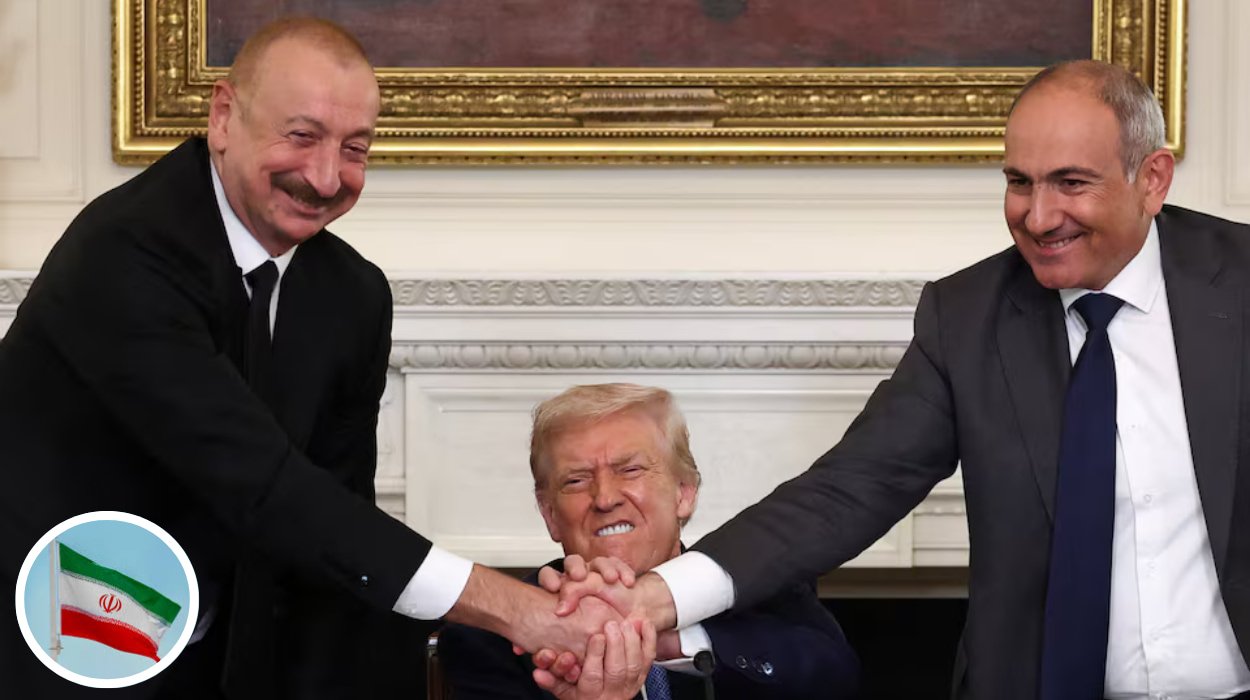
deal was signed at the White House by Armenia’s and Azerbaijan’s leaders,
facilitated by President Trump. - The
corridor risks disrupting regional transport initiatives and geopolitical
balances. - Questions
remain about the corridor’s administration, legal framework, and
operational details.
This landmark peace agreement, while heralded as a
significant step towards resolving a long-standing conflict, has sparked
serious concerns from Iran, which views the proposed transit corridor as a
destabilizing factor that could upset the delicate balance of power in the
South Caucasus. As the U.S. asserts a new strategic role through exclusive
development rights over the corridor, Tehran’s vocal opposition and readiness
to act independently highlight the complex interplay of regional interests that
could complicate the corridor’s implementation and the broader pursuit of
lasting peace in the area.
What Is the Trump-Brokered Armenia-Azerbaijan Peace Deal?
As reported by Parisa Hafezi and Andrew Osborn of Reuters,
on August 8, 2025, Armenian Prime Minister Nikol Pashinyan and Azerbaijani
President Ilham Aliyev signed a landmark peace agreement at the White House,
brokered by U.S. President Donald Trump. The deal aims to end decades of
conflict between the two nations over the Nagorno-Karabakh region and establish
conditions for lasting peace, including opening diplomatic ties and enhancing
economic cooperation. Central to the agreement is the creation of a transit
corridor running through southern Armenia to connect Azerbaijan’s mainland with
its exclave of Nakhchivan. This corridor, officially called the “Trump
Route for International Peace and Prosperity,” grants the United States
exclusive development rights, marking a major U.S. role in regional affairs.
Why Does Iran Oppose the Trump Corridor?
According to multiple reports including from Tasnim News
Agency and Channel News Asia, Iran has expressed strong opposition to the
transit corridor, warning it will threaten the security and stability of the
South Caucasus region. Ali Akbar Velayati, senior adviser on international
affairs to Iran’s Supreme Leader Ayatollah Ali Khamenei, called the corridor
proposal “an impossible notion” and affirmed Iran’s intention to
block it “with or without Russia.” Velayati characterized the corridor
as a plot that could turn the area into “a graveyard for Trump’s
mercenaries,” underscoring Tehran’s readiness to defend its interests
powerfully, including through military exercises near the border.
Iran fears the corridor, also known as the Zangezur
corridor, would sever its overland connection to Armenia and the wider Caucasus
region and bring a foreign military and commercial presence close to its
borders. Iranian officials argue that such foreign intervention, especially
near shared borders, risks undermining regional security and could lead to the
disintegration of Armenian sovereignty in the affected area.
How Has Iran Officially Responded to the Peace Deal?
While Iran has welcomed the finalization of the peace
agreement as a significant step toward regional stability, its foreign ministry
issued cautious statements warning against any foreign interference that could
disrupt lasting peace. Spokespersons emphasized that transport corridors and
connectivity infrastructure contribute positively only when aligned with mutual
interests and respect for sovereignty without foreign involvement. Iran’s
foreign ministry reiterated its commitment to cooperate constructively with
both Armenia and Azerbaijan on peace, security, and economic development
through bilateral and regional formats such as the 3+3 mechanism, which
includes Russia, Turkey, Azerbaijan, Armenia, Iran, and Georgia.
What Are the Geopolitical Implications?
Experts note that the corridor represents a major shift in
regional power dynamics. As analyzed by Newsweek, the corridor challenges
Russian and Iranian influence in the South Caucasus, as the U.S. gains a
foothold via exclusive developmental rights. Azerbaijan, which has strengthened
ties with Turkey, views the corridor as strategically vital to connect its
exclave to the mainland and expand access to European markets, especially for
its energy exports. Meanwhile, Armenia grapples with internal political risks
concerning constitutional compatibility and the sovereignty issues linked to
the corridor’s administration.
Iran and Russia are expected to view this corridor with
suspicion, as it may disrupt prior regional transportation initiatives like the
International North-South Transport Corridor, potentially undermining Moscow
and Tehran’s strategic interests. The corridor shows the broader geopolitical
contest between U.S., Russian, and Iranian influence in the Caucasus region.
What Challenges Remain for the Peace Deal and Corridor?
Despite the historic nature of the deal, numerous
operational details remain unclear. Azerbaijani diplomats noted that the
timeline for the corridor’s development depends on ongoing U.S.-Armenian
collaboration. Issues such as customs management, security arrangements, and
the legal governance of the corridor upheld under Armenian law raise questions
and concerns from Azerbaijan. The lack of details on reciprocal arrangements
and security oversight presents hurdles to the corridor’s smooth implementation
and sustainability.
How Are the Leaders of Armenia, Azerbaijan, and the U.S.
Framing the Deal?
President Trump hailed the agreement as a breakthrough,
declaring it ended a “35-year war” and optimistic that Armenia and
Azerbaijan “are going to be friends a long time.” Aliyev called the
deal “a miracle,” and Pashinyan termed it a “significant
milestone.” A White House official described the United States as an
“enormous strategic commercial partner” for the region, signaling
U.S. ambitions to establish lasting influence through this corridor project.
However, critics and analysts note that the deal also alienates key regional
powers like Russia, China, and Iran.
The U.S.-brokered Armenia-Azerbaijan peace deal is a
watershed moment, ending decades of conflict and promising economic integration
and stability in the South Caucasus. Nonetheless, Iran’s vigorous opposition
and willingness to militarily resist the “Trump corridor” indicate
ongoing risks of regional instability. The corridor’s precise implementation
and geopolitical fallout remain to be seen, with cautious diplomacy and
comprehensive legal frameworks needed to sustain peace in this volatile region.