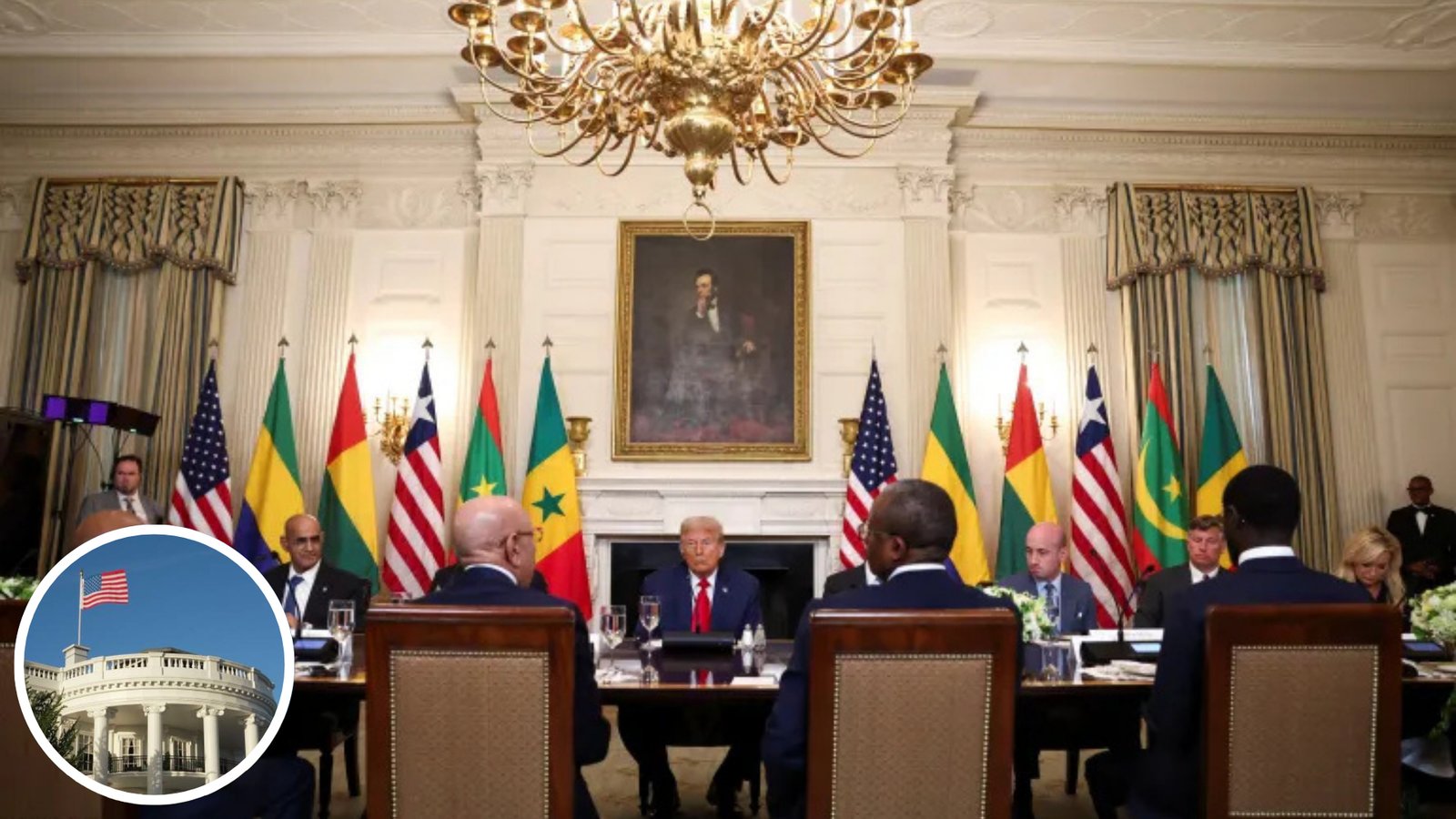

Key Points:
- President
Donald Trump hosted African leaders at the White House, emphasizing a
policy shift from “aid to trade.” - Trump’s
meeting comes amid ongoing global crises, including catastrophic floods in
Texas and New Mexico and escalating conflict in Ukraine. - Trump’s
remarks signal a new approach in U.S.-Africa relations, focusing on
economic partnerships instead of traditional aid. - The
meeting follows recent U.S. policy moves, including resumed arms shipments
to Ukraine and controversial domestic decisions. - Trump’s
statements on Russia and President Vladimir Putin mark a notable shift in
tone, with Trump criticizing Putin and pledging more support for Ukraine. - The
event was covered by multiple major news outlets, each highlighting
different aspects of the meeting and its global context.
President Donald Trump, in a high-profile White House
meeting with African leaders, announced a major shift in U.S. policy, moving
from a traditional aid-based approach to one centered on trade and economic
partnership. The meeting, held against the backdrop of international crises and
domestic challenges, marks a significant moment in U.S.-Africa relations.
What Did President Trump Announce at the White House Meeting
with African Leaders?
President Donald Trump convened African leaders at the White
House on Tuesday, July 8, 2025, to unveil a new U.S. policy direction described
as a shift from “aid to trade.” As reported by Democracy Now! on
July 9, Trump used the occasion to emphasize a move away from the longstanding
model of providing direct aid to African nations, instead advocating for
increased economic engagement and trade partnerships.
Trump’s remarks come at a time when the United States is
reassessing its foreign policy priorities. The President told assembled
leaders,
“We get a lot of bullshit thrown at us by Putin, if you want to know
the truth. He’s very nice all the time, but it turns out to be meaningless.”
This statement, cited by Democracy Now!, was part of a broader
critique of Russian President Vladimir Putin and a signal of renewed U.S.
engagement on the global stage.
How Are Global Crises Shaping U.S. Foreign Policy?
The White House meeting occurred amid a series of
international emergencies. As highlighted by Matt Gutman of ABC World
News Tonight, catastrophic floods in New Mexico and Texas have left at
least three dead in Ruidoso, New Mexico—including two children—and over 170
people missing in Texas, with the death toll climbing to at least 110. These
disasters have placed additional pressure on the administration to demonstrate
effective leadership both domestically and abroad.
Meanwhile, Ukraine experienced its largest aerial assault
since the start of Russia’s full-scale invasion in 2022. According to Rachel
Scott of ABC World News Tonight, Russia launched a record 741
drones and missiles, primarily targeting the city of Lutsk in western Ukraine.
The attack prompted Poland to activate its air defenses and scramble fighter
jets. Trump’s criticism of Putin and his announcement that the U.S. would
send additional weapons to Ukraine reflect a significant policy reversal,
coming just days after the Pentagon halted arms shipments—a decision Trump
claimed to be unaware of.
Why Is the ‘Aid to Trade’ Shift Significant for U.S.-Africa
Relations?
The pivot from aid to trade represents a fundamental change
in how the U.S. engages with African nations. By prioritizing economic
partnerships, the Trump administration aims to foster sustainable growth and
reduce dependency on foreign assistance. This approach aligns with broader
efforts to counter the influence of rival powers such as China and Russia, who
have expanded their economic and political ties across the continent in recent
years.
As reported by Democracy Now!, Trump’s meeting
with African leaders is intended to “reset” the relationship and position the
U.S. as a preferred partner for investment and commerce. While specific
trade deals or initiatives were not detailed in the immediate aftermath of the
meeting, administration officials indicated that further announcements would
follow in the coming weeks.
What Has Been the Reaction from African Leaders and the
International Community?
Coverage from multiple outlets, including CNN and Democracy
Now!, suggests that African leaders welcomed the opportunity for dialogue
but expressed caution about the practical implications of the policy shift. Some
leaders voiced concerns that a rapid reduction in aid could undermine critical
health and development programs, especially in countries still grappling with
poverty and instability.
International observers noted that the U.S. move comes as
other global powers are deepening their economic engagement with Africa. The
European Union, China, and Russia have all announced new investments and trade
agreements in recent months, raising questions about how the U.S. strategy will
compete on the world stage.
How Does This Meeting Fit into Trump’s Broader Foreign and
Domestic Policy Agenda?
The White House event is part of a series of high-profile
moves by the Trump administration to reshape both foreign and domestic policy.
As reported by Democracy Now! on July 7, Trump recently signed
a bill to cut taxes for the wealthy, reduce social programs, and accelerate
mass deportations. These domestic decisions have sparked controversy and
protests, including a major strike by 9,000 city workers in Philadelphia
demanding fair wages.
Internationally, Trump’s evolving stance on Russia and Ukraine has drawn particular attention. As noted by The New York Times and ABC
World News Tonight, Trump’s recent criticism of Putin and his pledge to
send more weapons to Ukraine represent a marked departure from his earlier,
more conciliatory tone. This shift is seen as an attempt to reassure
allies and assert U.S. leadership amid growing instability in Europe.
What Are the Next Steps for U.S.-Africa Economic Engagement?
While the White House meeting set the stage for a new era in
U.S.-Africa relations, the specifics of the “aid to trade” policy remain to be
seen. Administration officials have indicated that upcoming trade missions,
investment forums, and bilateral agreements will flesh out the details of the
new approach. African leaders are expected to push for concrete commitments on
market access, technology transfer, and infrastructure development.
Observers will be watching closely to see how the Trump
administration balances its new economic focus with ongoing humanitarian needs
on the continent. The success of the policy shift will likely depend on the
ability of both sides to translate rhetoric into results.
What Are the Broader Implications for U.S. Foreign Policy?
The White House meeting with African leaders, combined with
Trump’s evolving positions on Russia, Ukraine, and domestic policy, signals a
period of significant change in U.S. strategy. As reported by CNN and ABC
World News Tonight, the administration faces mounting challenges at home
and abroad, from natural disasters to geopolitical crises. How Trump
navigates these issues—and whether the shift from aid to trade delivers
tangible benefits—will shape his legacy and the future of U.S. engagement with
the world.