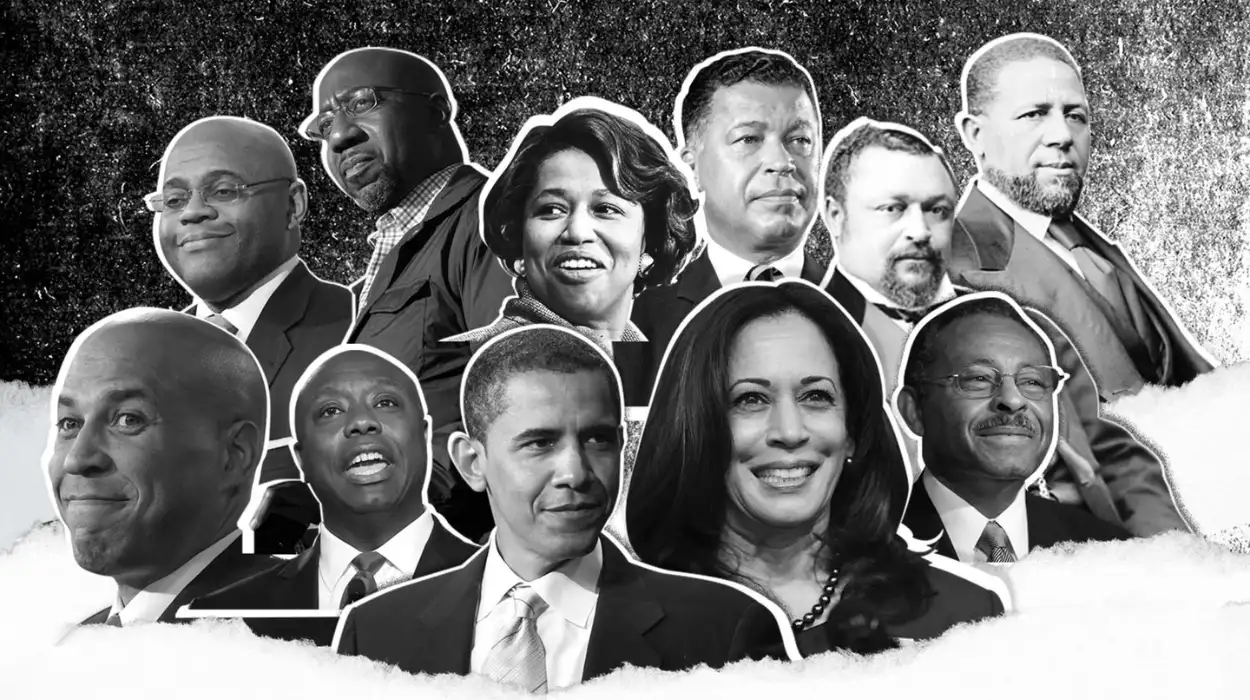

The United States Senate, as the upper chamber of Congress, has
played a pivotal role in shaping the nation’s legislative and political
landscape. The participation of African Americans in this esteemed body
reflects key struggles and milestones in American history. From the
groundbreaking election of Hiram Rhodes Revels during Reconstruction to the
present day, black senators have marked historic firsts, broken barriers, and
contributed to the advancement of civil rights, social justice, and national
policy.
Introduction: The Importance of Representation in the US Senate
Representation in the US Senate is critical as it shapes laws and
policies that affect every American. African American senators hold a unique
place in this political institution, symbolizing progress toward racial
equality and democracy. Over the course of American history, despite systemic
obstacles such as slavery, segregation, and voter suppression, African
Americans have taken key seats in the Senate, influencing debates and
legislation on civil rights, economic justice, and voting rights.
According to data from the United States Census Bureau and the
Congressional Research Service, African Americans constitute a vital demographic
voice in the country, and their inclusion in the Senate continues to evolve as
reflective of broader social changes.
Historical Background: From Reconstruction to the 20th Century
The first African American to serve in the US Senate was Hiram
Rhodes Revels, elected in 1870 during the Reconstruction era shortly after
the Civil War. Representing Mississippi, Revels’ election was a landmark
moment, made possible by the readmission of Southern states into the Union with
new governments committed to civil rights protections. However, Revels’ tenure
was brief, and opposition rooted in racial prejudice was widespread.
Following Revels, Blanche Bruce was elected in 1875,
becoming the first African American to serve a full six-year term. Bruce, also
from Mississippi, was notable for being the only formerly enslaved person to
serve in the Senate. The Reconstruction period saw two African American
senators, but their presence was cut short as discriminatory laws
disenfranchised black voters by the 1890s, virtually ending black
representation in Congress for decades.
The tumultuous Jim Crow era maintained systemic racial barriers
that effectively excluded African Americans from federal elective office until
the civil rights advances of the mid-20th century.
Breaking Barriers in the 20th Century
African American representation re-emerged in the Senate with Edward
Brooke of Massachusetts, who served from 1967 to 1979. Brooke was the first
black senator elected by popular vote, following the ratification of the Seventeenth
Amendment which reformed senatorial elections. A Republican, he was the first
African American to serve two full terms in the Senate and played a notable
role in civil rights legislation.
Despite Brooke’s success, there was a hiatus from 1979 until 1993
when Carol Moseley Braun was elected Senator from Illinois. She made
history as the first African American woman to serve in the Senate and the
first African American Democrat to hold such a position. Her tenure set the
stage for future diverse representation in the chamber.
The Obama Era and Beyond: Expanding Representation
Illinois showcased a unique political trajectory with three
African American senators holding the same Senate seat at various times: Carol
Moseley Braun, Barack Obama, and Roland Burris. Obama’s election to
the Senate in 2005 marked a key moment before his groundbreaking election as
the first African American President of the United States in 2008.
Following Obama’s presidency, the number of black senators
increased, highlighting growing political opportunities. Tim Scott of
South Carolina became the first African American senator from the southern US
since Reconstruction and, in 2025, became the longest-serving black senator
ever, also the first African American to chair a full Senate committee.
Cory Booker of
New Jersey was the first black senator elected by popular vote from that state
in 2013. Booker brought renewed attention to urban policy and criminal justice
reform. Similarly, Kamala Harris of California served as the second
African American woman in the Senate and later became the first African
American Vice President, broadening the horizon for black political leadership
at the national level.
More recently, Raphael Warnock of Georgia became the first
African American Democrat to represent a former Confederate state in the
Senate, representing ongoing shifts in political demographics. The appointment
of Laphonza Butler, the first openly LGBT African American senator,
reflects increasing diversity within black representation in the Senate.
Current African American US Senators and Their Contributions
As of 2025, five African American senators serve concurrently:
- Tim
Scott (South Carolina), a
Republican, known for his work on economic opportunity and police reform. - Cory Booker (New Jersey), a Democrat, active in social justice,
criminal justice reform, and urban development. - Raphael Warnock (Georgia), a Democrat, focusing on voting rights,
healthcare, and economic equity. - Lisa Blunt Rochester (Delaware), a Democrat, representing her state with an
emphasis on infrastructure and social programs. - Angela Alsobrooks
(Maryland), a Democrat and the first African American senator from
Maryland, recognized for her advocacy on justice reform and public safety.
These leaders exemplify the diverse political perspectives and
legislative agendas held by black senators. Their presence underscores the
Senate’s evolving inclusivity and the broadening scope of African American
political power.
What Makes African American Senators Vital to US Democracy?
The presence of African American senators enhances democratic
legitimacy by ensuring that the interests of a significant population segment
are represented in policymaking. Their legislative priorities often focus on
civil rights, criminal justice reform, healthcare access, education equity, and
economic justice issues that resonate not only within their communities but
across the nation.
Their historic firsts and ongoing service inspire younger
generations and contribute to broader cultural and political narratives about
race, equality, and leadership in America.
Challenges and Progress: The Road Ahead for Black Senators
While progress in representation has been significant, challenges
remain. African American senators often face unique scrutiny and pressure owing
to their racial identity. Structural barriers, including gerrymandering and
voter suppression affecting African American communities, impact electoral
opportunities.
The rise in black senators signals a positive trend, but
continuing efforts to ensure equitable representation and combat systemic
inequality remain essential.
Celebrating the Legacy and Future of US Black Senators
The journey of African Americans in the US Senate from Hiram Rhodes Revels’
pioneering service during Reconstruction to today’s diverse cohort reflects the
broader American struggle and hope for racial justice and political inclusion.
Black senators have shaped American history with resilience and vision,
breaking barriers and advancing progress.
Their legacy celebrates decades of courage, leadership, and
advocacy, and their growing numbers herald a future where the Senate more fully
represents the nation’s rich diversity. Understanding this history and current
landscape helps appreciate the significant role African American senators play
in shaping modern America.