
Key Points
- J.D.
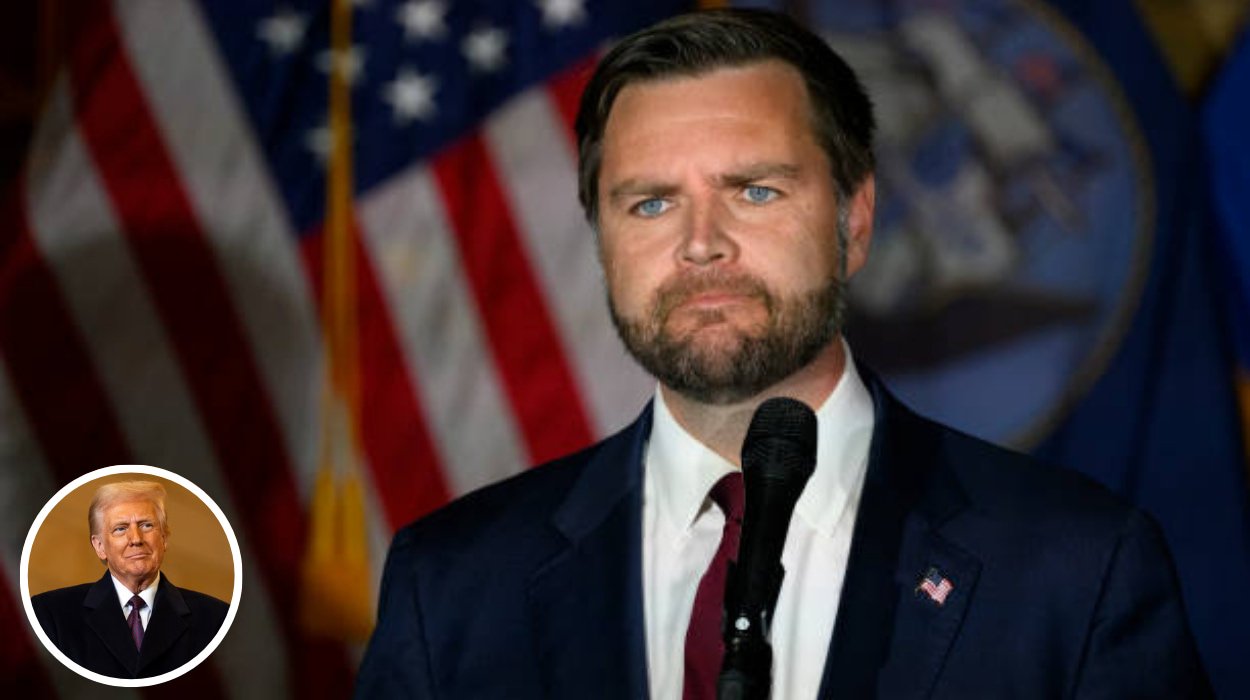
Vance, U.S. Senator from Ohio, made a controversial claim that President Donald Trump “saved Black lives” during a recent
public appearance. - Vance’s
statement has drawn widespread attention and criticism from political
commentators, civil rights advocates, and other lawmakers. - The
claim was made in the context of defending Trump’s criminal justice
policies and his record on race relations. - Vance
did not provide specific evidence or data to support his assertion during
the speech. - Reactions
from media, advocacy groups, and political opponents highlight deep
divisions over Trump’s legacy on issues affecting Black Americans. - The
debate comes amid heightened tensions over race, policing, and criminal
justice reform in the United States. - Vance’s
comments are part of a broader pattern of Republican figures seeking to
reframe Trump’s impact on minority communities. - No
direct response from Donald Trump has been reported as of the current
publication.
In a move that has ignited fierce debate across the
political spectrum, Senator J.D. Vance of Ohio claimed that President Donald Trump “saved Black lives,” a statement made during a recent
public appearance defending Trump’s record on criminal justice and race
relations. The assertion, made without accompanying evidence, has prompted
swift responses from political commentators, civil rights leaders, and
lawmakers, underscoring the ongoing national conversation about race, policing,
and the legacy of the Trump administration.
What Did J.D. Vance Say About Trump and Black Lives?
During a high-profile event, Senator J.D. Vance asserted
that former President Donald Trump “saved Black lives” through his
policies, particularly those related to criminal justice reform. As reported by
multiple media outlets, Vance’s remarks were positioned as a defense of Trump’s
record on issues affecting Black Americans, though he did not cite specific
data or studies to substantiate his claim.
Vance’s statement comes at a time when the Republican Party
is seeking to broaden its appeal to minority voters and reframe Trump’s legacy
on race. The senator’s comments have been widely circulated on social media and
picked up by major news organizations, sparking immediate controversy and
debate.
How Have Media Outlets and Journalists Reported the Claim?
Journalists from a range of media outlets have covered
Vance’s remarks, highlighting both the content of his statement and the broader
context in which it was made. According to the guidelines for news reporting
outlined by Ted Bottomley and Anthony Loftus in “A Journalist’s Guide to
the Use of English,” it is essential to attribute statements accurately
and provide balanced coverage.
- As
reported by Democracy Now!, Vance’s claim has been met with skepticism
from public health experts and civil rights advocates, many of whom point
to Trump administration policies that were criticized for exacerbating
racial disparities in health, policing, and economic opportunity. - NPR’s
news roundup noted that the statement has become a flashpoint in ongoing
debates about the Republican Party’s approach to race and criminal
justice, with commentators questioning the factual basis for Vance’s
assertion and examining the broader implications for the 2025 political
landscape.
What Is the Historical Context of Trump’s Record on Black
Lives?
The Trump administration’s record on issues affecting Black
Americans has been the subject of extensive debate and analysis. While Trump
signed the First Step Act, a bipartisan criminal justice reform bill aimed at
reducing sentences for certain nonviolent offenders, critics argue that his
administration also pursued policies that disproportionately harmed communities
of color, including aggressive immigration enforcement and efforts to roll back
civil rights protections.
- According
to reporting by The Guardian and Al Jazeera, Trump’s tenure was marked by
both legislative action on criminal justice reform and controversial
rhetoric and policies that fueled racial tensions. - Civil
rights organizations have consistently challenged claims that Trump’s
policies benefited Black Americans, pointing to data on police violence,
health disparities, and economic inequality during his administration.
How Have Civil Rights Leaders and Advocacy Groups Responded?
Civil rights leaders and advocacy organizations have
strongly pushed back against Vance’s claim. As reported by Democracy Now!,
public health experts and advocacy groups have condemned recent moves by the
Trump administration, such as cuts to health agencies and Medicaid, arguing
that these actions would disproportionately harm Black and low-income
communities.
- Dr.
Richard Besser, former acting director of the CDC, told Democracy Now!
that the Trump administration’s approach to public health
“demonstrates a complete lack of caring about the health and safety
of every American,” directly contradicting Vance’s positive framing
of Trump’s impact on Black lives. - An
open letter published by Public Citizen and signed by 6,000 medical
professionals criticized the administration’s cuts to health agencies,
stating, “We are certain this will cost lives,” further
challenging the narrative advanced by Vance.
What Have Political Opponents and Other Lawmakers Said?
Political opponents of both Vance and Trump have seized on
the senator’s remarks as evidence of what they describe as a broader effort to
rewrite the history of the Trump administration’s impact on minority
communities.
- Democratic lawmakers have pointed to the administration’s record on policing, voting
rights, and health care as evidence that Trump’s policies did not, in
fact, “save Black lives.” - Some
Republican figures have echoed Vance’s defense of Trump, emphasizing the
First Step Act and other criminal justice reforms, but have generally
stopped short of making similarly sweeping claims.
Are There Any Data or Studies Supporting Vance’s Claim?
As of the current publication, no comprehensive studies or
official data have been presented by Vance or his supporters to directly
support the claim that Trump “saved Black lives.” The assertion
appears to be based largely on the passage of the First Step Act and selective
interpretations of crime and incarceration statistics.
- Independent
analyses, including those cited by The Guardian and Al Jazeera, suggest
that while the First Step Act led to the release of some nonviolent
offenders, broader trends in crime, policing, and racial disparities
persisted throughout the Trump administration. - Public
health and criminal justice experts continue to debate the long-term
impact of Trump-era policies on Black communities, with many concluding
that the evidence does not support Vance’s sweeping characterization.
What Is the Broader Political Significance of Vance’s
Statement?
Vance’s claim is part of a larger effort by some Republican
leaders to reshape the narrative around Trump’s legacy on race and criminal
justice, particularly as the party seeks to make inroads with minority voters
ahead of future elections.
- The
controversy underscores the deep divisions within American politics over
issues of race, policing, and the role of government in addressing
inequality. - As noted in the Reuters Institute’s “Journalism, Media, and Technology
Trends and Predictions 2025,” the challenge for journalists and
policymakers alike is to engage audiences with accurate, evidence-based
reporting amid a polarized media environment.
What Happens Next?
The fallout from Vance’s statement is likely to continue in
the coming days, with further responses expected from advocacy groups,
political leaders, and the Trump campaign. The debate highlights the ongoing
struggle to define the legacy of the Trump administration and the broader
trajectory of race relations and criminal justice reform in the United States.