
- Zohran
Mamdani elected NYC mayor Thursday. - Assumes
America’s toughest political job. - Now
nation’s most-watched politician.
Just after midnight, Mamdani, a Democrat, took the oath of
office as the city’s first Muslim mayor at a closed subway station beneath City
Hall, placing his hand on a Quran.
One of the mayor’s political idols, U.S. Sen. Bernie
Sanders, was scheduled to administer the oath for a second time at a larger
public inauguration on Thursday at noon. Mamdani had worked part of the night
at his new office before returning to City Hall in a taxi.
New Yorkers flocked to the “Canyon of Heroes,” a
section of Broadway noted for its ticker-tape parades, south of City Hall for
an inauguration viewing party in the bitter weather.
“It is the people of New York who have chosen historic,
ambitious leadership in response to untenable and unprecedented times. New
York, we have chosen courage over fear. We have chosen prosperity for the many
over spoils for the few,”
she said.
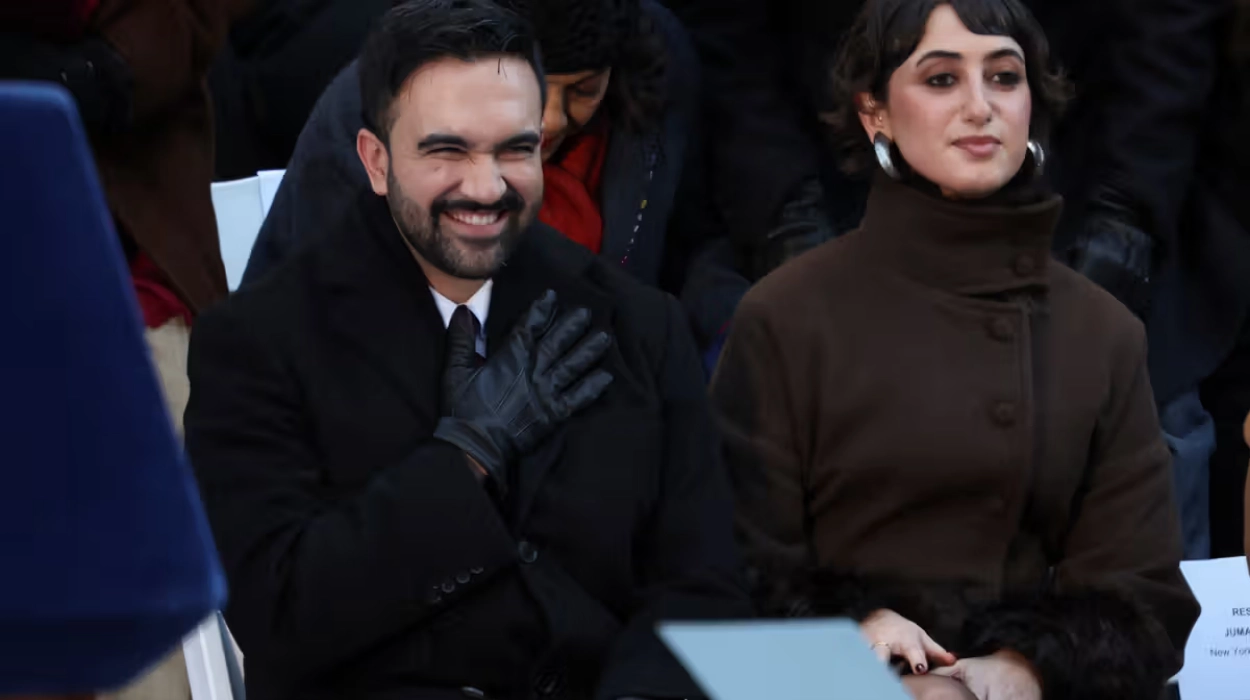
Rama Duwaji, Mamdani’s wife, joined him on stage. Eric
Adams, the former mayor, was present and seated next to Bill de Blasio, another
former mayor.
Mamdani is not only the first Muslim mayor of the city, but
also the first South Asian and African-born. Mamdani, at 34, is the youngest
mayor in the city’s history.
The democratic socialist pledged to bring about
revolutionary change with policies meant to reduce the cost of living in one of
the most expensive cities in the world during a campaign that helped
“affordability” become a catchphrase across the political spectrum.
Free child care, free transportation, a rent freeze for around a million homes,
and a trial of city-run food stores were all part of his campaign.
Before running for public office, he assisted Democratic candidates
in the city with their campaigns. In 2020, he was elected to a state Assembly
seat to represent a portion of Queens.
Mamdani and his spouse, Rama Duwaji, will move into the
magnificent mayoral house in Manhattan from their one-bedroom, rent-stabilized
flat in the outer borough.
After years of a sluggish recovery from the COVID-19
pandemic, Mamdani inherited a city on the rise. Pre-pandemic levels of violent
crime have been reached. Travelers have returned. Additionally, unemployment
has returned to pre-COVID levels after skyrocketing during the pandemic years.
However, there are still serious worries regarding the
city’s exorbitant costs and growing rent.
“I want him to do a great job and will help him do a
great job,”
Trump said.
However, given their strong policy differences, especially
with regard to immigration, tensions between the two leaders are almost
expected to reappear.
Due to his criticism of Israel’s leadership, Mamdani also
encounters resistance and suspicion from some members of the city’s Jewish
population.
In the weeks following his election victory, the new mayor
and his team have been getting ready for the change, surrounding Mamdani with
seasoned professionals who have worked for or with the local government.
This included convincing Jessica Tisch, the city’s police
commissioner, to stay in her role. This helped allay concerns in the business
community that the government would be preparing drastic changes to policing
tactics.
How might Mamdani’s agenda affect New York City budget
plans?
Mamdani’s flagship plans of universal childcare, free MTA
motorcars, rent freezes, and$ 30 minimal pay envelope could add $7 – 9 billion
annually to NYC’s $116 billion budget, exceeding the police department’s
backing.
He proposes raising income levies on those earning $1
million by 2 chance points( adding 20,000 for $1M earners) and commercial
levies from 7.25 to 11.5 to match New Jersey, projecting$ 5 – 9 billion in new
profit, plus $1 billion from better duty checkups and forfeitures.
Childcare alone might bring $5 billion monthly; chow-free
motorcars $1 billion in lost MTA profit; these bear state approval from Gov.
Hochul, who’s skeptical of high- income levies amid her 2026 reelection and
faces a Democratic chairman withholding $18 billion in civil conveyance
finances.