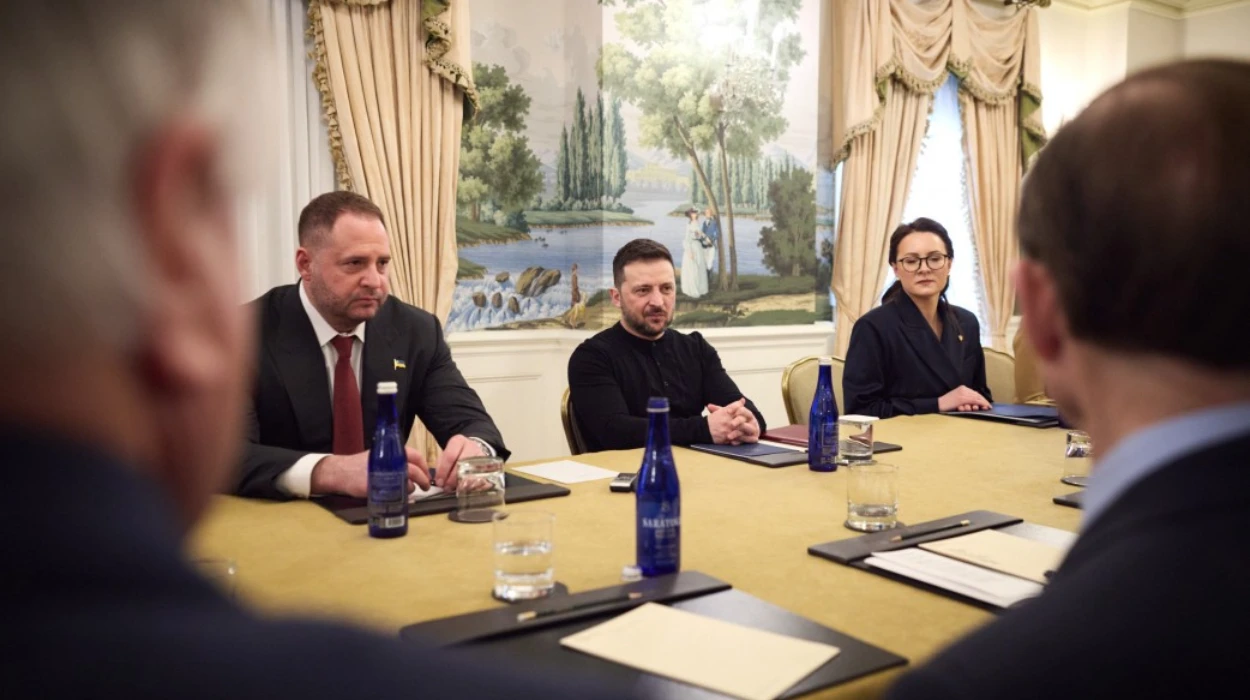

In recent years, the strategic meetings between Ukrainian
President Volodymyr Zelenskyy and U.S. senators have become pivotal for
Ukraine’s ongoing conflict with Russia and its quest for support on the global
stage. These encounters serve to solidify bipartisan American support, discuss
legislative actions regarding sanctions on Russia, and deliberate on military
and humanitarian assistance.
Background: The Context of U.S.-Ukraine
Relations
Since Russia’s full-scale invasion of Ukraine, the U.S. has
emerged as one of Ukraine’s most steadfast allies, providing extensive
military, financial, and humanitarian aid. The U.S. Congress plays a critical
role in shaping America’s policy toward Ukraine, balancing bipartisan
imperatives to support Ukraine’s sovereignty with domestic political
considerations.
Ukrainian President Zelenskyy’s visits to the U.S. and meetings
with senators are vital for maintaining momentum in aid packages and sanctions
regimes. These meetings typically aim to update U.S. lawmakers on the battlefield
situation, advocate for enhanced support, and reinforce the urgency of peace
negotiations and sanctions pressure on Moscow.
Overview of Recent Zelenskyy and U.S. Senators Meetings
Bipartisan Engagement in Support of Ukraine
In May 2025, President Zelenskyy met with a bipartisan pair of
U.S. senators, Lindsey Graham (Republican, South Carolina) and Richard
Blumenthal (Democrat, Connecticut), in Kyiv. The senators strongly urged for
intensified sanctions against Russia amidst Russia’s largest aerial assault on
Ukraine since the conflict began. Discussions focused on legislative action to
impose harsher tariffs on Russian imports and building sustainable pressure on
Moscow to halt its aggression.
Earlier in 2024, Zelenskyy met with a bipartisan U.S. Senate
delegation in Washington, D.C., including Senate Majority Leader Chuck Schumer
and Minority Leader Mitch McConnell. This engagement underscored the
cross-party commitment to Ukraine’s defense, with leaders deliberating on joint
strategies, bilateral security
agreements, and support for
Ukraine’s sovereignty.
Legislative Initiatives and Sanctions Against
Russia
One prominent legislative effort co-sponsored by Senators Graham
and Blumenthal proposed a bill to impose a 500% tariff on goods imported from
countries purchasing Russian oil, gas, and minerals. Supported by a bipartisan
majority, the bill underscored Congress’s determination to escalate economic
pressure on Russia to compel its withdrawal from Ukraine.
Despite this legislative momentum, former President Donald Trump
exhibited ambivalence regarding the imposition of new sanctions. His stance
reflected broader debates on balancing diplomatic engagement with Russia
against punitive measures.
Zelenskyy’s Advocacy for Military Aid and Peace Negotiations
Beyond sanctions, Zelenskyy’s meetings often highlight the need
for expanded military assistance, especially advanced long-range weaponry
capable of targeting strategic locations inside Russia. This is part of
Ukraine’s broader strategy to counterbalance Russian military capabilities and
strengthen its defense posture.
Zelenskyy has also pushed for progress in peace negotiations,
advocating for meaningful dialogue with Russia under international mediation,
and has suggested potential multilateral talks involving the United States,
Russia, Turkey, and Ukraine to facilitate a durable resolution.
Challenges and Uncertainty Over Peace Talks
Despite high-level engagement, skepticism surrounds prospective
peace negotiations. Ukraine has voiced concerns over Russia’s failure to submit
negotiation proposals ahead of scheduled talks. Zelenskyy and Turkish President
Erdogan have emphasized the necessity of clear agendas and genuine preparation
for discussions to be productive.
The geopolitical dynamic remains volatile, with ongoing Russian
missile attacks and political posturing complicating diplomatic efforts. The
largest prisoner exchange since the conflict’s start occurred alongside
escalations in conflict, underscoring the fragility of ceasefires and the deep
entrenchment of hostilities.
Impact of Zelenskyy-US Senators Meetings
Strengthening Bipartisan Support
Zelenskyy’s direct engagements with U.S. senators facilitate
crucial bipartisan consensus, ensuring stable and sustained American support
that transcends political divisions. This bipartisan backing influences the
passage and implementation of aid legislation, sanctions, and diplomatic initiatives.
Shaping U.S. Policy and Public Opinion
Meetings with senators help shape U.S. policy by providing
lawmakers firsthand insights into the realities on the ground in Ukraine,
leading to increased backing for aid and sanctions. Additionally, high-profile
visits garner media attention, shaping public opinion in favor of supporting
Ukraine’s sovereignty and democracy.
Bolstering Ukraine’s Diplomatic Standing
Zelenskyy’s interactions with U.S. senators cement the partnership
between the two countries and elevate Ukraine’s diplomatic profile globally.
This support provides Ukraine with leverage in international forums and
negotiations, emphasizing the crucial role of U.S. leadership in resolving the
conflict.
Zelenskyy’s meetings with U.S. senators have been instrumental in securing
bipartisan American support amid Ukraine’s ongoing conflict with Russia. Through these
high-level discussions, bipartisan legislation imposing tougher sanctions on
Russia has gained traction, additional military aid has been advocated, and
diplomatic dialogues have been reinforced. Although peace negotiations remain
uncertain and complicated by continued hostilities, Zelenskyy’s persistent
engagement with the U.S. Senate underlines the strategic partnership between
Kyiv and Washington. This partnership plays a vital role in shaping
international policies aimed at ending the conflict and supporting Ukraine’s
sovereignty.