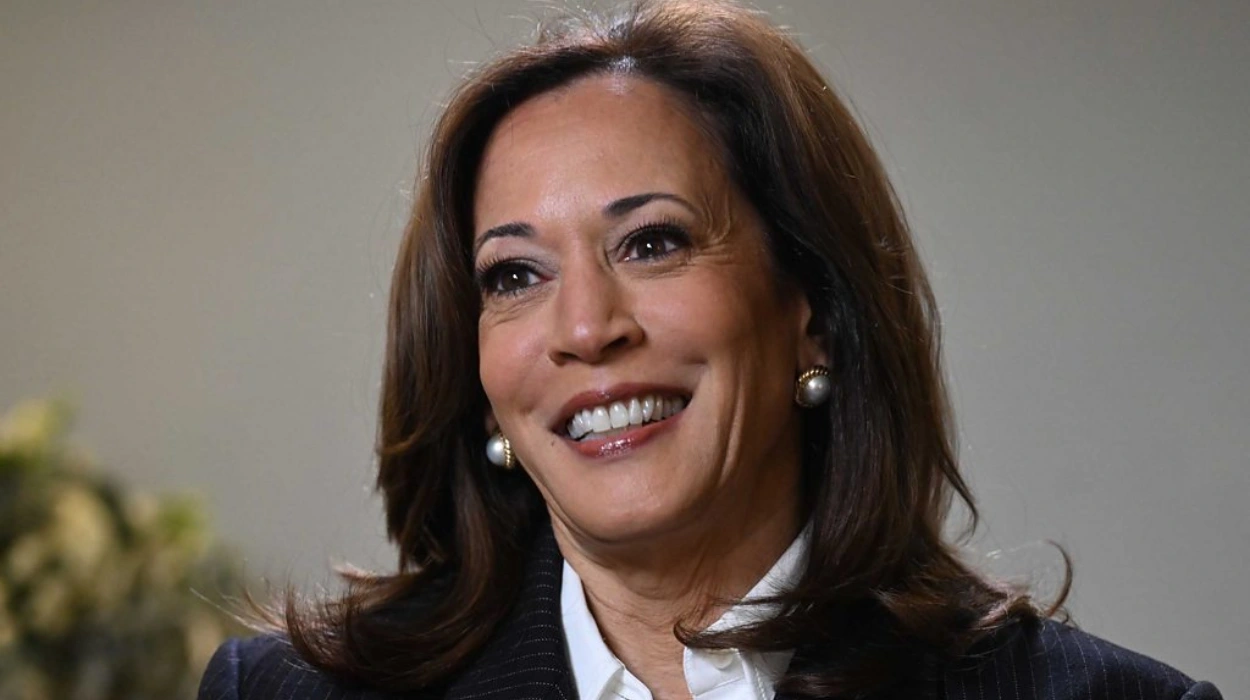
California’s Kamala Harris: The First Indian-American U.S. Senator’s Trailblazing Path

Kamala Harris’s
election as the first Indian-American U.S. senator from California marked a
historic milestone in American politics. Her rise symbolizes the increasing
diversity and representation in the U.S. Senate, highlighting the growing
influence of Asian Americans and women in governance. This article traces
Kamala Harris’s journey to the Senate, her groundbreaking achievements, and the
broader implications of her legacy for political representation in the United
States.
Early Life and
Heritage
Kamala Devi Harris was born on October 20, 1964, in Oakland,
California, to immigrant parents who instilled in her a strong dedication to
public service and social justice. Her mother, Shyamala Gopalan, was a Tamil
biologist who immigrated from India to pursue scientific research, while her
father, Donald J. Harris, is an Afro-Jamaican economist and professor emeritus
at Stanford University. Growing up, Harris was exposed to diverse cultural
experiences, including frequent visits to India, where she connected with her
Tamil heritage.
Her mixed African American and Indian heritage played a
significant role in shaping her identity and political outlook standing as a
symbol of the multiracial fabric of America. Harris is often celebrated as a
beacon of hope for minority communities aspiring to leadership roles.
Academic and
Early Career
Harris pursued higher education at Howard University, a
historically black university, where she earned a degree in political science
and economics. She then obtained a law degree from the University of
California, Hastings College of the Law. Harris opened her career in public
service as a deputy district attorney in Alameda County, California, gaining
experience in prosecution and criminal justice.
Later, she became an assistant district attorney in San
Francisco’s office and rose to become the chief of the Career Criminal
Division. Throughout her early career, she focused on cases involving serious
crimes, reflecting her commitment to law enforcement and public safety.
Political Rise:
San Francisco District Attorney and California Attorney General
In 2003, Harris was elected as the District Attorney of San
Francisco, becoming the city’s first woman and first African American to hold
the position. Her tenure was noted for tough-on-crime policies coupled with
progressive reforms aimed at reducing recidivism and addressing systemic
inequalities.
Building on this foundation, Harris was elected Attorney General
of California in 2010, where she became the first woman, the first African
American, and the first South Asian American to hold this statewide office. As
Attorney General, she championed consumer protection, environmental
enforcement, and criminal justice reforms, earning broad statewide recognition
and political support.
Historic
Election to the U.S. Senate
In 2016, long-serving Senator Barbara Boxer announced her retirement from the U.S. Senate representing
California. Harris entered the race and swiftly became a leading candidate with
widespread backing from the Democratic Party. She won the top-two primary under
California’s unique election system, advancing to a general election against
fellow Democrat Loretta Sanchez.
Supported by prominent endorsements including President Barack
Obama and Vice President Joe Biden, Harris defeated Sanchez decisively,
capturing over 60% of the vote. Upon taking office on January 3, 2017, Kamala
Harris became the first Indian-American and the second Black woman to serve in
the U.S. Senate, challenging historically underrepresented groups in American
governance.
Tenure and
Legislative Focus in the Senate
During her Senate term, Harris built a reputation as a vocal advocate
for progressive issues including stricter gun control, the DREAM Act supporting
immigrant youth, federal legalization of cannabis, healthcare reform, and tax
equity. Her sharp questioning of officials during Senate hearings in the Trump
administration, including on controversial Supreme Court nominations, elevated
her national profile as a skilled legislator and debater.
A centrist by many accounts but aligned with liberal policies,
Harris’s efforts helped shape critical debates around civil rights and social
justice, positioning her as a rising star in national politics.
Becoming Vice
President and Beyond
Kamala Harris suspended her 2020 presidential campaign before the
primaries and accepted Joe Biden’s invitation to be his running mate. Their
historic ticket won the 2020 election, making Harris the first woman, first
African American woman, and first Asian American to serve as Vice President of
the United States.
As Vice President from 2021 to 2025, Harris presided over an
evenly split Senate, casting over 30 tie-breaking votes to advance landmark
bills like the American Rescue Plan and Inflation Reduction Act, demonstrating
her critical role in legislative governance.
Legacy and
Significance
Kamala Harris’s journey from a daughter of immigrants to the U.S.
Senate and eventually Vice President marks groundbreaking progress in American
inclusivity and diversity. Her successes have shattered multiple glass ceilings
for women, African Americans, and Asian Americans in politics.
Her legacy inspires future generations of minority leaders and
amplifies the importance of representation across all levels of government,
signaling changing demographics and evolving social norms in the United States.
California’s Kamala Harris becoming the first Indian-American U.S.
senator was a watershed moment in U.S. political history. Her multifaceted identity,
legal acumen, and legislative leadership
reflected broader societal progress toward inclusion and equity. As a senator
and subsequently the Vice President, Harris has helped redefine the American
political landscape, leaving an enduring impact on the fight for justice and
representation.