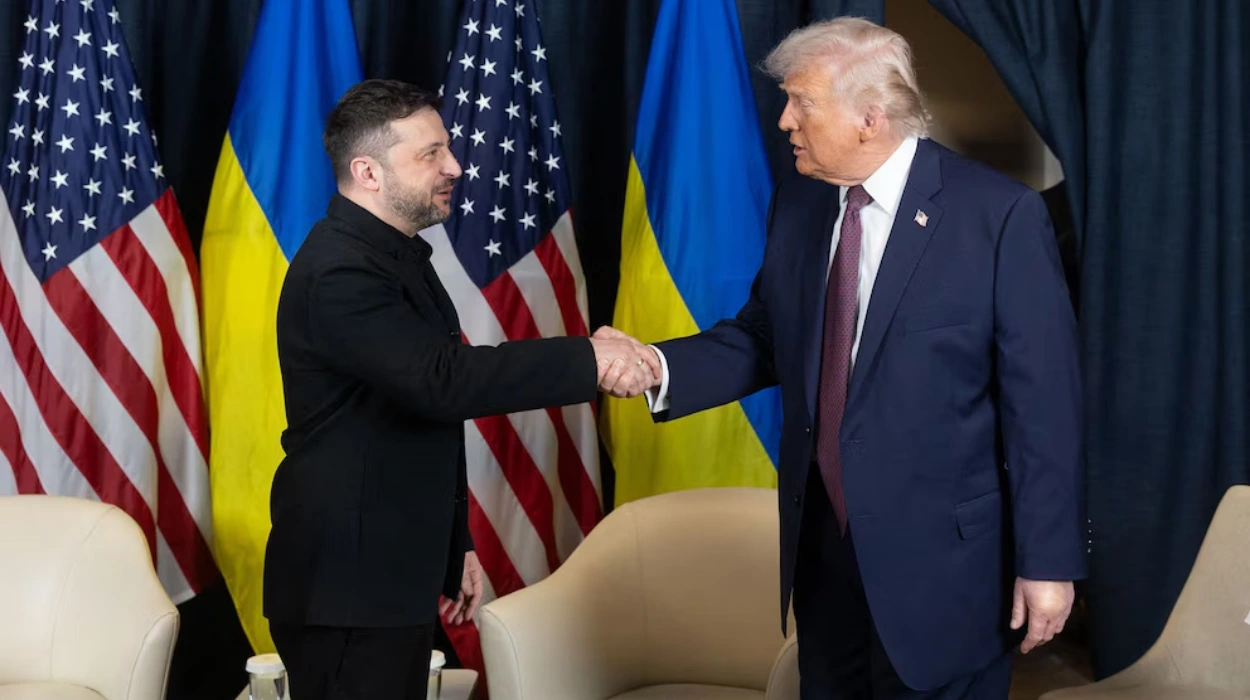
Volodymyr Zelenskyy confirms trilateral Ukraine-US-EU talks covered military political agendas

Kyiv (Washington Insider Magazine) January 26, 2026 –
Ukrainian President Volodymyr Zelenskyy confirmed trilateral talks with United
States and European Union representatives covered military aid coordination and
political settlement frameworks for the Russia-Ukraine conflict. Zelenskyy
described the January 25 virtual discussions as constructive, addressing
weapons deliveries, frontline stabilisation, and negotiation preconditions amid
intensified Russian assaults in Donetsk. The summit preceded EU foreign
ministers’ Brussels meeting on security guarantees as new trilateral
consultations scheduled for this week.
President Zelenskyy addressed journalists following the
virtual trilateral summit linking Kyiv, Washington, and Brussels coordination
centres. Zelenskyy reported discussions analysed key positions of all parties,
primarily military topics with difficult political matters included. United
States officials expressed optimism noting coverage of territories,
Zaporizhzhia plant, and de-escalation measures positioning sides toward
narrowing gaps.
European Union High Representative Kaja Kallas confirmed EU
delegation participation coordinating 27 member states’ positions on common
foreign security policy. Zelenskyy highlighted agreements on accelerated
Patriot systems and F-16 maintenance supporting sustained air defence
operations.
Zelenskyy trilateral summit participants agenda coverage
President Volodymyr Zelenskyy hosted the virtual meeting
with United States National Security Advisor Jake Sullivan representing the
Trump administration’s second-term priorities. Kaja Kallas led the EU side
ensuring member states alignment on Ukraine assistance frameworks. Agenda
encompassed battlefield assessments in Avdiivka, Kupiansk, and Kherson sectors
alongside counteroffensive planning for summer 2026.
Zelenskyy confirmed consensus on long-range ATACMS
permissions for Crimea strikes and Black Sea fleet operations. Political
discussions addressed Minsk format revival requiring Russian troop withdrawals
from 1991 borders with verification mechanisms and peacekeeper deployments.
Ukrainian delegation reported to Zelenskyy that meetings covered primarily
military topics while difficult political matters received attention, with new
trilateral meetings scheduled this week.
Kateryna Lisunova documented delegation feedback. Kateryna
Lisunova said in X post,
“UA DELEGATION REPORTED TO ZELENSKYY The
meetings covered – primarily military topics Difficult political matters were
discussed as well New trilateral meetings will happen this week The key
positions of all parties were analyzed (I like this one—it basically means,
‘Yeah, we’ve heard this insanity from russia before. Nothing new here.’)”
UA DELEGATION REPORTED TO ZELENSKYY
– The meetings covered – primarily military topics
– Difficult political matters were discussed as well
– New trilateral meetings will happen this week
– The key positions of all parties were analyzed (I like this one—it basically means,… https://t.co/s2FYqd04wn— Kateryna Lisunova (@KaterynaLis) January 26, 2026
Military assistance packages delivery schedules activation
Zelenskyy announced $2.5 billion US package activation
January 27 including 12 Patriot batteries, HIMARS systems, and 155mm shells. EU
committed €1.8 billion for Leopard 2 repairs and Storm Shadow replenishment
from RAF Lossiemouth. United Kingdom Prime Minister Keir Starmer confirmed
additional Storm Shadow transfers with pilot training expansion.
Germany authorised 30 Leopard 2A6 tanks from Rheinmetall
Oberndorf alongside NATO certifications. France pledged 24 Mirage 2000-5F
fighters with Cazaux conversion training by March 2026. Zelenskyy noted
improved artillery ratios reaching 1:2 favour through coalition resupply
optimisation.
Donetsk frontline developments russian assaults repelled
Ukrainian General Staff reported repulsion of 47 Donetsk
assaults, 28 Kharkiv attacks, and Kherson bridgehead stabilisation. Russian
advances captured Logvynivka village in Maryinka sector with 2.5 square
kilometres consolidation. Zelenskyy cited 110th Mechanised Brigade
counterattacks stabilising Avdiivka coke plant perimeter.
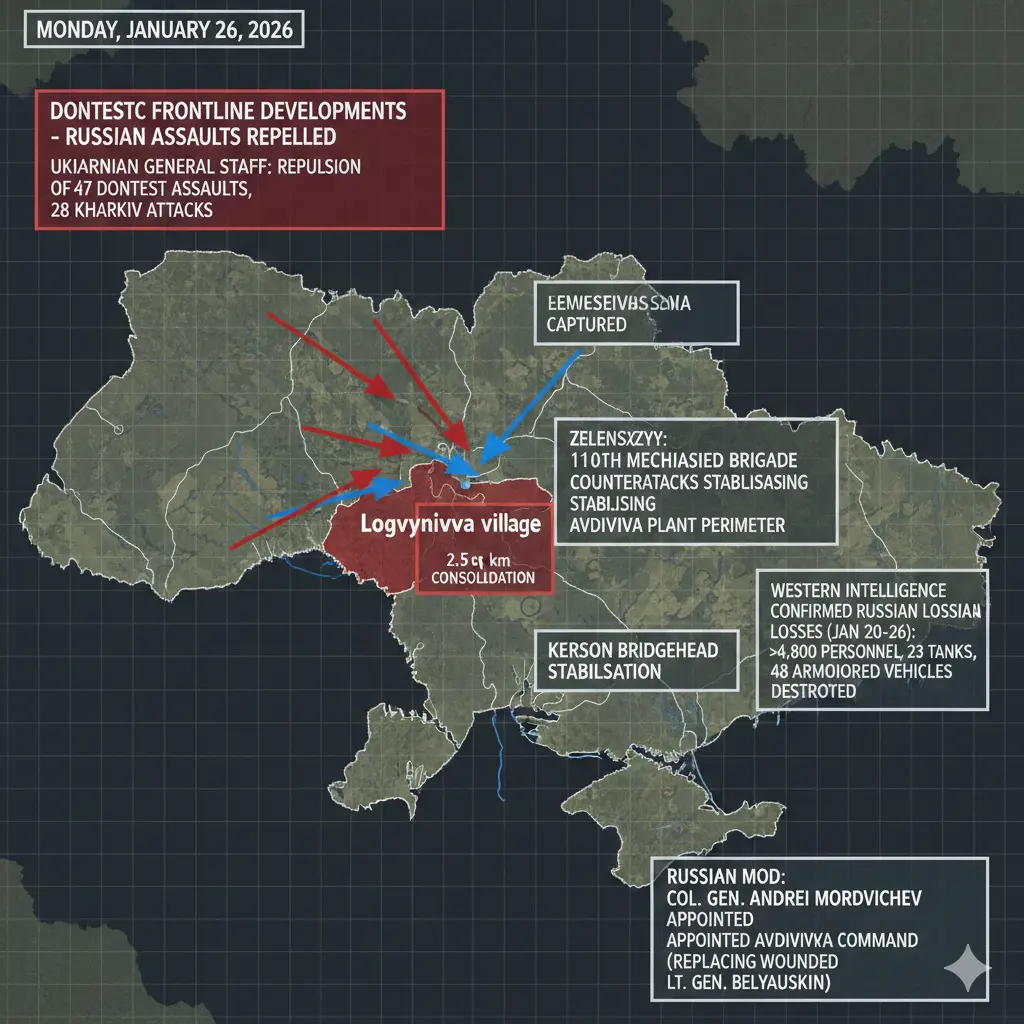
Western intelligence confirmed Russian losses exceeding
4,800 personnel January 20-26 alongside 23 tanks and 48 armoured vehicles
destroyed. Russian Ministry of Defence appointed Colonel General Andrei
Mordvichev to Avdiivka command replacing wounded Lieutenant General Belyauskin.
Political negotiation preconditions territorial integrity
demands
Zelenskyy outlined preconditions including full Russian
withdrawal to 1991 borders, Crimea and Donbas control restoration. Russia
demanded NATO renunciation and neutralisation status, rejected by Zelenskyy as
Budapest Memorandum repetition. US supported Minsk II revival conditional on
Russian compliance verification.
EU endorsed Zelenskyy’s 35-point peace formula for UN
General Assembly pathway. Trilateral talks in Abu Dhabi involving Russia,
Ukraine, and US ended without agreements but showed slow progress per Axios
reporting.
Aleksandar Djokic summarised developments. Aleksandar Djokic
(Александар Джокич) said in X post,
“Three-way talks between Russia,
Ukraine, and the US in Abu Dhabi ended without specific agreements, but
statements showed signs of slow progress. US officials were optimistic, saying
discussions covered territories, Zaporizhzhia plant, and de-escalation, putting
sides on a path to narrow gaps, per Axios. Zelensky called talks constructive,
while questioning Putins intent. A Russian source told TASS results were
achieved. Observers noted openness to dialogue, with The New York Times seeing
Zelenskys positivity as advancement despite key divides. Russia joined the new
negotiations format due to Trumps aggressive stance, per The Times.”
Three-way talks between Russia, Ukraine, and the US in Abu Dhabi ended without specific agreements, but statements showed signs of slow progress. US officials were optimistic, saying discussions covered territories, Zaporizhzhia plant, and de-escalation, putting sides on a path…
— Aleksandar Djokic (Александар Джокич) (@polidemitolog) January 26, 2026
European union foreign affairs council brussels conclusions
EU Foreign Affairs Council adopted conclusions reaffirming
Ukraine solidarity and €50 billion Ukraine Facility continuation through 2027.
Kaja Kallas reported 15 member states ratifying bilateral security agreements
for armed forces modernisation. Council condemned Russian energy grid strikes
as hybrid warfare escalation.
Seventeenth sanctions package targeted Russian shadow fleet
with 450 vessels and oil tanker seizures coordination. Member states committed
3 percent GDP defence spending for NATO interoperability standards.
United states trump administration policy continuity signals
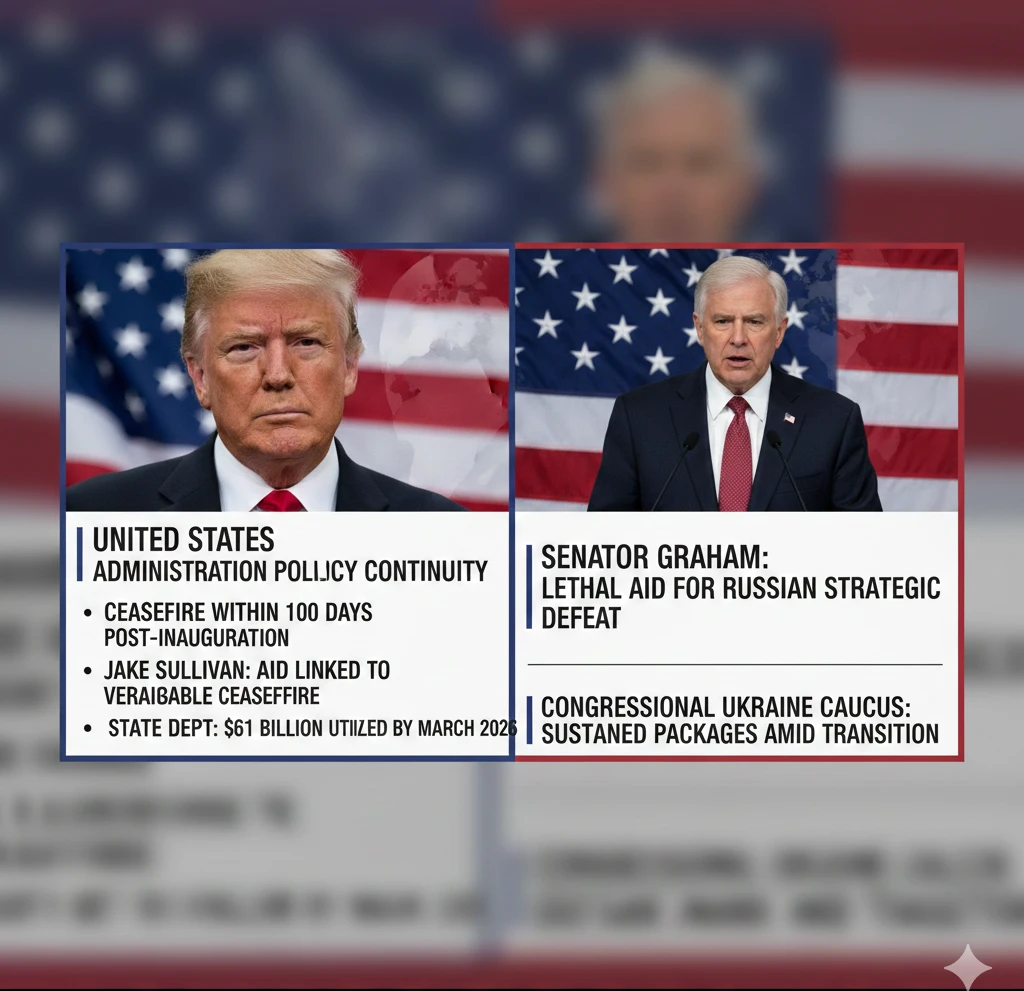
President Donald Trump prioritised ceasefire within 100 days
post-inauguration. Jake Sullivan linked assistance to verifiable ceasefire
parameters during trilateral talks. State Department confirmed $61 billion
supplemental utilisation by March 2026.
Senator Lindsey Graham advocated lethal aid for Russian strategic
defeat. Congressional Ukraine Caucus coordinated sustained packages amid
transition planning.
Russian military personnel losses command adjustments
Kremlin confirmed 1,200 daily casualties with 30,000 monthly
contract recruitment and 12,000 North Korean Luhansk deployments. Wagner
remnants under Yuri Panchenko coordinated Donetsk assaults with Chechen Akhmat
forces. FSB neutralised Ukrainian sabotage groups in Luhansk.
South Korean intelligence documented 320 North Korean
casualties with T-62 allocations. NATO classified involvement as combat threat
escalation.
Ukraine mobilisation amendments conscription enforcement
Verkhovna Rada passed amendments lowering conscription age
to 25 with electronic summons enforcement. Ministry of Interior delivered
450,000 notifications assigning 120,000 to active duty. Oleksandr Syrskyi
confirmed 95 percent combat unit manning with rotation optimisation.
Border Guard arrested 3,200 draft evaders activating amnesty
programs.
Black sea fleet engagements grain corridor operations
The Black Sea Fleet’s engagements have intensified amid
Ukraine’s maritime drone and missile campaigns, marking a pivotal shift in
regional naval dynamics since Russia’s full-scale invasion. Ukrainian Neptune
anti-ship missiles recently struck three Ropucha-class landing ships identified
as Minsk, Novocherkassk, and Tsezar Kunikov at Novorossiysk port, crippling
their operational capacity.
These vessels, critical for amphibious assaults and
logistics, suffered severe damage, with fires and structural failures rendering
them combat-ineffective. The strikes underscore Kyiv’s growing asymmetric
capabilities, leveraging indigenous weaponry to target Russia’s overstretched
fleet, previously concentrated in Sevastopol. Novorossiysk, now a reluctant
forward base over 300 kilometers east, highlights Moscow’s strategic retreat
under sustained pressure, forcing reliance on less protected infrastructure
amid ongoing Ukrainian drone incursions.
Parallel to these naval setbacks, the Black Sea Grain Initiative’s
revival has restored vital export corridors, easing global food security
strains. Operations resumed with 1.2 million tonnes shipped from Odesa and
Chornomorsk, facilitating Ukraine’s agricultural lifeline despite wartime
hazards. The International Maritime Organization (IMO) verified Russia’s
assurances of withdrawal from Sevastopol’s grain-handling zones, a concession
amid diplomatic maneuvering.
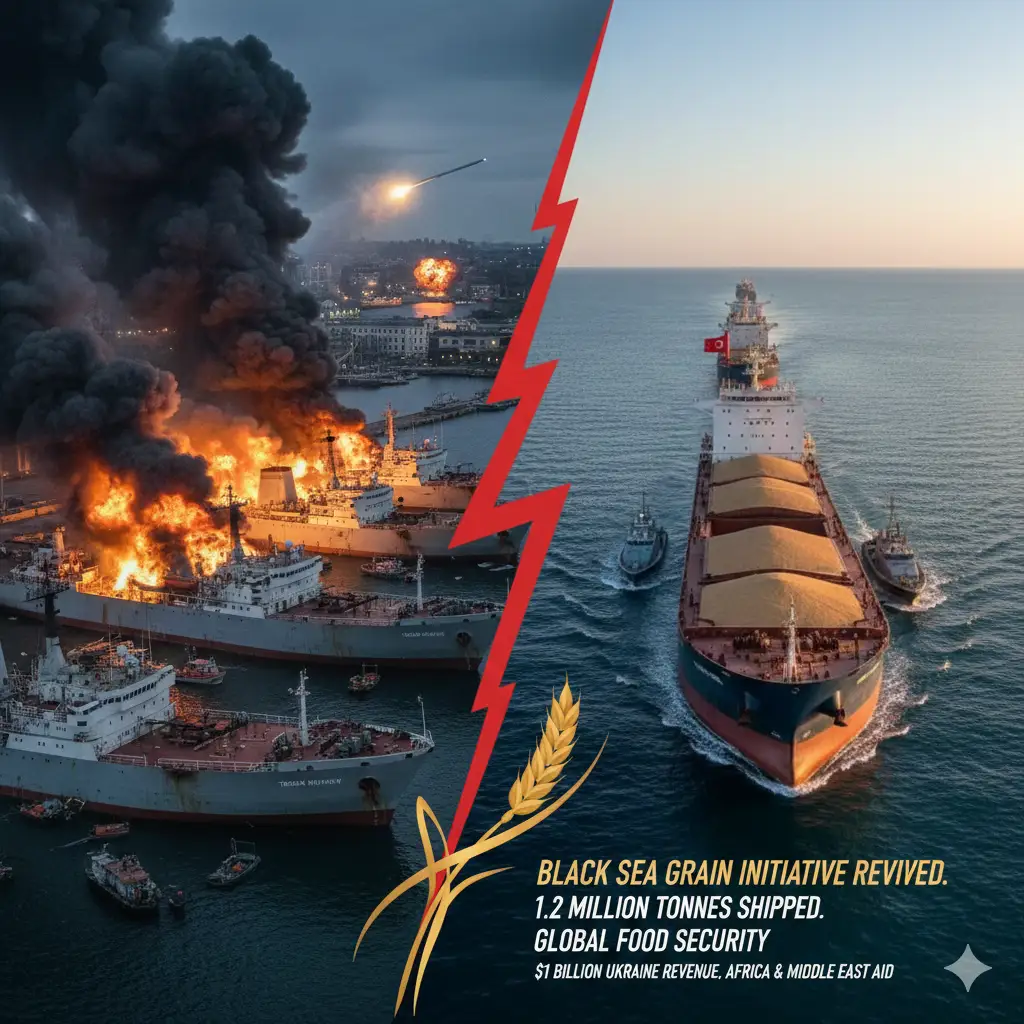
This corridor, initially brokered in 2022 by Turkey, the UN,
and Russia, collapsed last year over export disputes but now pulses with
renewed convoys, underscoring the economic imperatives overriding military
posturing. Shipments not only bolster Ukraine’s war chest generating over $1
billion in revenue but also mitigate famine risks in Africa and the Middle
East, where wheat prices had spiked 30% post-suspension.
Berlin reconstruction conference donor commitments secured
Germany hosted conference securing €12 billion for 2026
reconstruction. European Investment Bank approved €4.5 billion for energy grid
hardening. USAID committed $2.8 billion economic grants and World Bank $1.5
billion debt sustainability.
Kerch Bridge resumed single-lane operations at 500 vehicles
daily. Ukrainian SBU documented HIMARS strikes and underwater explosives.
Crimea railway ferry reactivated Novorossiysk hub at 15,000 tonnes daily.
Bilateral security pacts ratification progress timelines
UK-Ukraine 10-year pact awaits February 2026 ratification.
France partnership activated defence industry clauses. Poland LitPolUkr brigade
deployed Volyn for NATO presence. Baltic states coordinated Rzeszow F-35
rotations. Norway hosted January 20-21 consultations with track 1.5 dialogue
continuation. Jonas Gahr Støre confirmed verification working groups and
Canadian-Norwegian battlegroup options for Kursk buffer zone.