
- Putin
assured Modi of uninterrupted Russian oil. - Russia
signals defiance against US pressure. - Leaders
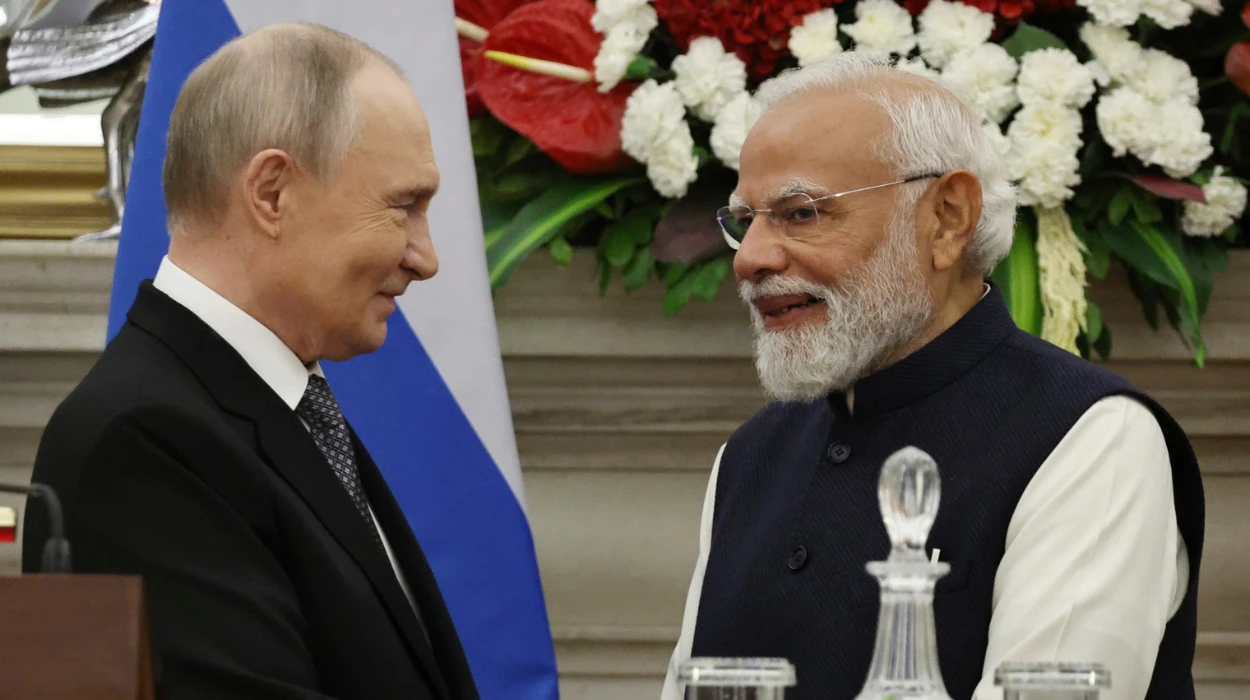
met in Delhi, reaffirmed strong ties.
The statement seemed to be aimed at western nations,
especially the US, that have tried to put pressure on New Delhi to reduce its
links to Moscow. It was issued on Friday following the yearly India-Russia
summit.
Due to India’s purchase of inexpensive Russian oil, US
President Donald Trump levied an additional 25% import duty on the country in
August, claiming it was undermining US sanctions and aiding Putin in financing
the invasion of Ukraine.
The Indian government called the punitive levies
“unreasonable and unjustified,” and New Delhi reacted angrily to
them. India and Russia have a long-standing connection that is regarded as one
of the nation’s most significant geopolitical and defense partnerships.
Putin made it apparent in his statement that Russia had no
intention of caving in to pressure from the United States on its energy
cooperation with India.
“Russia is a reliable supplier of energy resources and
everything necessary for the development of India’s energy sector,”
Putin said.
“We are ready to continue ensuring the uninterrupted supply of fuel for the
rapidly growing Indian economy.”
Modi stated that
“energy security has been a strong and
important pillar of the India-Russia partnership”
without specifically
mentioning oil.
Prior to his meeting with Modi, Putin had criticized US
meddling in India’s acquisition of Russian oil in a televised appearance,
stating he planned to bring it up with Trump.
It was Putin’s first trip to India since his invasion of
Ukraine, and there was a clear attempt to show that the two presidents’
friendship had not been strained.
Before having a private meal together on Thursday night,
Modi made the unprecedented decision to receive Putin right off the plane. The
two gave each other a hearty embrace as old friends.
Modi called India’s alliance with Russia “a guiding
star” in his statement, adding that “these relations have always
stood the test of time, based on mutual respect and deep trust.”
Both presidents emphasized
“that in the current
complex, tense, and uncertain geopolitical situation, Russian-Indian ties
remain resilient to external pressure”
in the joint statement released
following their discussions.
In defiance of the US and EU’s economic sanctions against
Russia, Putin had promised to strengthen ties with China and India prior to his
arrival in Delhi.
The two nations reached several agreements on defense and
economic cooperation as a consequence of Friday’s bilateral session. In order
to double commerce to $100 billion annually by 2030, the two nations finalized
an economic cooperation agenda.
The two presidents also decided to reorganize their defense
cooperation. Although this has decreased recently as Delhi has attempted to
diversify, Russia is still India’s largest supplier of armaments.
They pledged to jointly produce cutting-edge defense
platforms, even though there was no explicit mention of India purchasing any
particular Russian defense systems or Sukhoi Su-57 fighter aircraft.
How will uninterrupted Russian oil shipments affect Indian
fuel prices?
Continued Russian oil painting shipments to India will
probably stabilize or slightly reduce domestic energy prices by maintaining
access to blinked crude( presently$ 3.5- 5 per barrel below Brent), which
constitutes 34 of India’s significances and supports muck perimeters amid US
warrants pressure.
Russia inventories 1.6- 1.8 million barrels per day at
competitive landed costs, softening global volatility and enabling steady
petrol/ diesel rates( e.g., Delhi petrol at ₹94.72/ litre as of October 2025),
as reserves from Middle East or US sources would raise import bills by $3- 5
billion annually.
While Putin’s assurance during the December 2025 Delhi peak
reinforces 88 million tonnes imported in FY25, narrowing abatements and
warrants on enterprises like Rosneft/ Lukoil may force diversification,
potentially adding 5- 10 to pump prices if volumes drop below 1.8 million bpd.