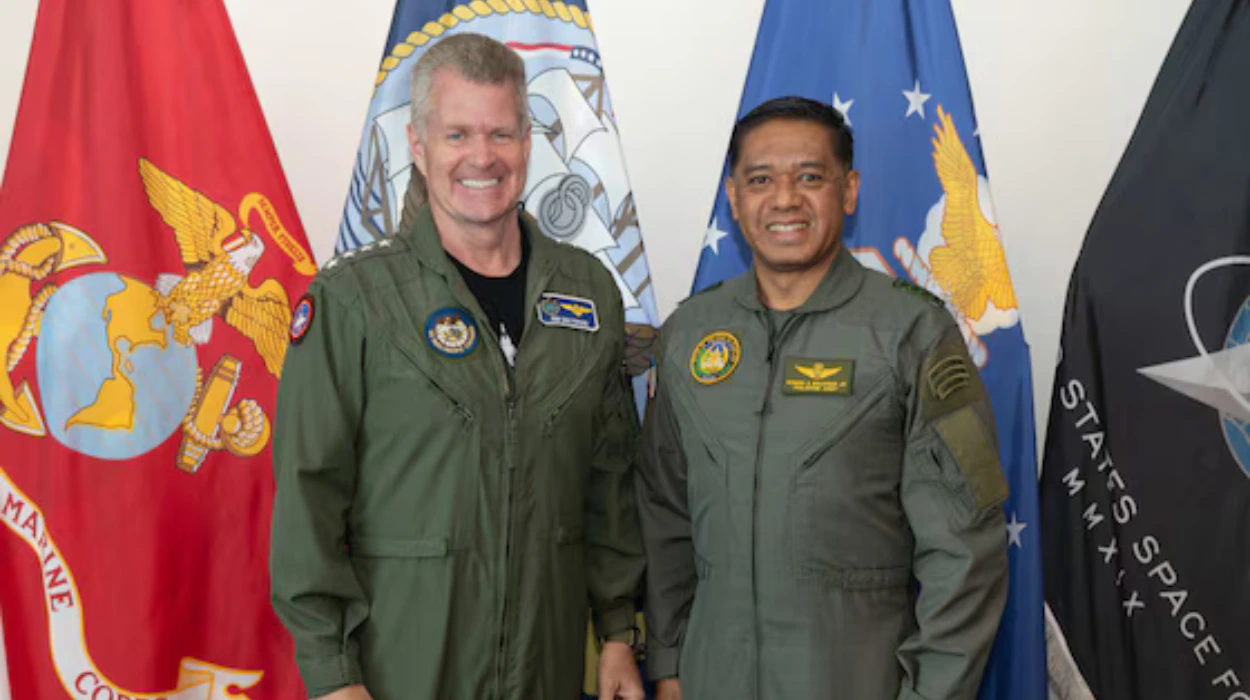
USINDOPACOM Hosts Philippines for Mutual Defense Board and Security Engagement Board

In August 2025, the United States Indo-Pacific Command
(USINDOPACOM) hosted the Armed Forces of the Philippines (AFP) for the annual
meeting of the Mutual Defense Board and Security Engagement Board (MDB-SEB) at
Camp Smith in Hawaii. This high-level bilateral event, held from August 7 to 8,
reaffirmed the shared commitment between the two nations to deepen defense and
security cooperation amid growing strategic challenges in the Indo-Pacific
region.
The meeting was co-chaired by USINDOPACOM Commander Admiral
Samuel J. Paparo and AFP Chief of Staff General Romeo Brawner, symbolizing the
ongoing partnership and mutual trust that has been fostered through decades of
alliance underpinned by the 1951 Mutual Defense Treaty. The boards approved a
sweeping agenda of cooperative military activities designed to enhance
operational readiness, interoperability, and deterrence in an increasingly
complex security environment.
A Robust Agenda: Over 500 Joint Engagements Approved
The scale of the collaboration between the US and Philippine
militaries was emphasized by the approval of more than 500 joint engagements
for the upcoming year. These activities range from large-scale joint military
exercises to smaller, subject matter expert exchanges involving various
branches and specialties.
Among the key approved initiatives is the continuation of
Exercise Balikatan 2026, the premier annual US-Philippines military exercise
focusing on improving combined defense capabilities. Reflecting on the volume
and diversity of cooperative endeavors, USINDOPACOM stated that these
engagements are meant to “foster sustained interaction between both
militaries and enhance operational readiness.”
Admiral Paparo and General Brawner’s signing of the annual
8-Star memo and activities list formally ratified this comprehensive plan. The
memo provides guidance and strategic coordination for numerous collaborative
efforts, ensuring both forces remain prepared to counter emerging threats and
respond effectively to natural disasters or other contingencies.
Maritime Cooperation as a Pillar of Regional Stability
A highlight of the discussions was the emphasis on bilateral
and multilateral Maritime Cooperative Activities (MCAs). Given the Philippines’
strategic location in the South China Sea and the Indo-Pacific’s broader
maritime expanse, maintaining freedom of navigation and securing critical sea
lanes are mutual priorities.
USINDOPACOM underscored that “maritime cooperative
activities are essential in ensuring freedom of navigation and improving
interoperability,” echoing concerns over regional territorial disputes and
challenges to maritime sovereignty. These activities also enable joint patrols,
intelligence sharing, and capacity building among maritime forces, contributing
to deterrence against potential aggression.
General Brawner highlighted the importance of these
operations for national and regional security, expressing confidence that
continued maritime cooperation would bolster the Philippines’ defense
capabilities and support a rules-based order in the Indo-Pacific.
Renewing Shared Commitment Under the Mutual Defense Treaty
At the core of the MDB-SEB meeting was the reaffirmation of
the 1951 Mutual Defense Treaty between the United States and the Philippines.
This treaty remains a foundational legal framework, compelling both countries
to come to each other’s defense in the event of an armed attack in the Pacific.
The Mutual Defense Board, established in 1958, and the
Security Engagement Board, created in 2006, collectively provide the
institutional mechanisms to manage and coordinate bilateral defense relations.
The annual MDB-SEB sessions ensure that both nations keep pace with evolving
strategic challenges by adapting their cooperative activities and planning to
current threats.
USINDOPACOM highlighted how the sustained military
partnership serves to “enhance stability in the Indo-Pacific region by
promoting security cooperation, encouraging peaceful development, responding to
contingencies, deterring aggression, and, when necessary, prevailing in
conflict.”
Broader Strategic Context and Regional Significance
The US-Philippines alliance comes amid heightened tensions
in the Indo-Pacific, particularly concerning an assertive China seeking to
expand its military and economic influence. The Philippines, with its proximity
to contested maritime zones, plays a vital role in regional security.
The strengthened military collaboration aligns with broader
US efforts to sustain a free and open Indo-Pacific, reassuring regional allies
and partners. This strategic alignment was further boosted by recent diplomatic
meetings, including US Secretary of State Marco Rubio’s engagement with
Philippine President Ferdinand Marcos Jr. in Washington, which culminated in
announcements of increased foreign assistance to support energy, economic, and
maritime growth in the Philippines.
Such diplomatic and military integrations signal
Washington’s commitment to bolstering the Philippines’ capacity to navigate
both traditional and non-traditional security challenges.
Enhancing Interoperability and Readiness
Efforts at the MDB-SEB focused strongly on improving
interoperability—the ability of US and Philippine forces to operate seamlessly
together across a range of domains and scenarios. This includes joint
communication systems, coordinated training protocols, and shared operational
doctrines.
The approved exercises and exchanges aim to build
familiarity and trust among troops, sharpen joint command capabilities, and
test combined responses to various contingencies such as humanitarian
assistance, disaster relief, and regional security threats.
General Brawner remarked on the importance of mutual trust
and collaboration, stating,
“Our shared commitment is reflected in the depth and
breadth of activities planned. Together, we stand stronger against challenges
to peace and stability.”
Forward Planning and Next Steps
The conclusion of the 2025 MDB-SEB saw each USINDOPACOM
service component hosting their Philippine counterparts to begin detailed
planning for the execution of approved activities in 2026. This forward-looking
approach ensures that joint engagements are timely, relevant, and aligned to
both nations’ strategic priorities.
Both militaries are poised to continue refining operational
concepts, sharing intelligence, and enhancing their combined deterrence
posture. The meeting underscored the importance of enduring alliances and
partnerships as bulwarks against instability in a changing security landscape.
The 2025 Mutual Defense Board and Security Engagement Board
meeting between USINDOPACOM and the Armed Forces of the Philippines reaffirmed
a robust and evolving partnership anchored in mutual defense and regional
stability. The approval of over 500 joint engagements, the emphasis on maritime
cooperation, and the steadfast commitment to the Mutual Defense Treaty reflect
the depth of this alliance.
In an era of complex Indo-Pacific security challenges, this
continued collaboration between the United States and the Philippines plays a
vital role in deterring aggression, enhancing interoperability, and promoting
peace through strength.