
The U.S. government is signaling a significant shift in its
approach to corporate America by potentially taking equity stakes in more
companies, following the unprecedented move to acquire a nearly 10% ownership
in semiconductor giant Intel. This development marks a new chapter in the
relationship between the federal government and the private sector, raising
important questions about the future of American economic policy and government
influence in business.
The Intel Deal: A Precedent for Government Equity Stakes
In August 2025, President Donald Trump announced that the
U.S. government would take a 10% passive ownership stake in Intel. This deal represents
a transformation of government grants awarded during the Biden administration
into an equity position. The arrangement was widely reported as the White House
converting roughly $10 billion of previously disbursed grants into ownership
shares, positioning the government as a significant stakeholder in one of
America’s foremost technology companies.
Trump stated during a press conference,
“Tan came in looking to secure his position, and he ended up
providing us with $10 billion for the United States. So, we gained $10 billion.
We engage in many agreements like that. I intend to pursue more.”
This echoed his broader strategy to strengthen American
industry and manufacturing by backing companies like Intel while maintaining
strategic oversight.
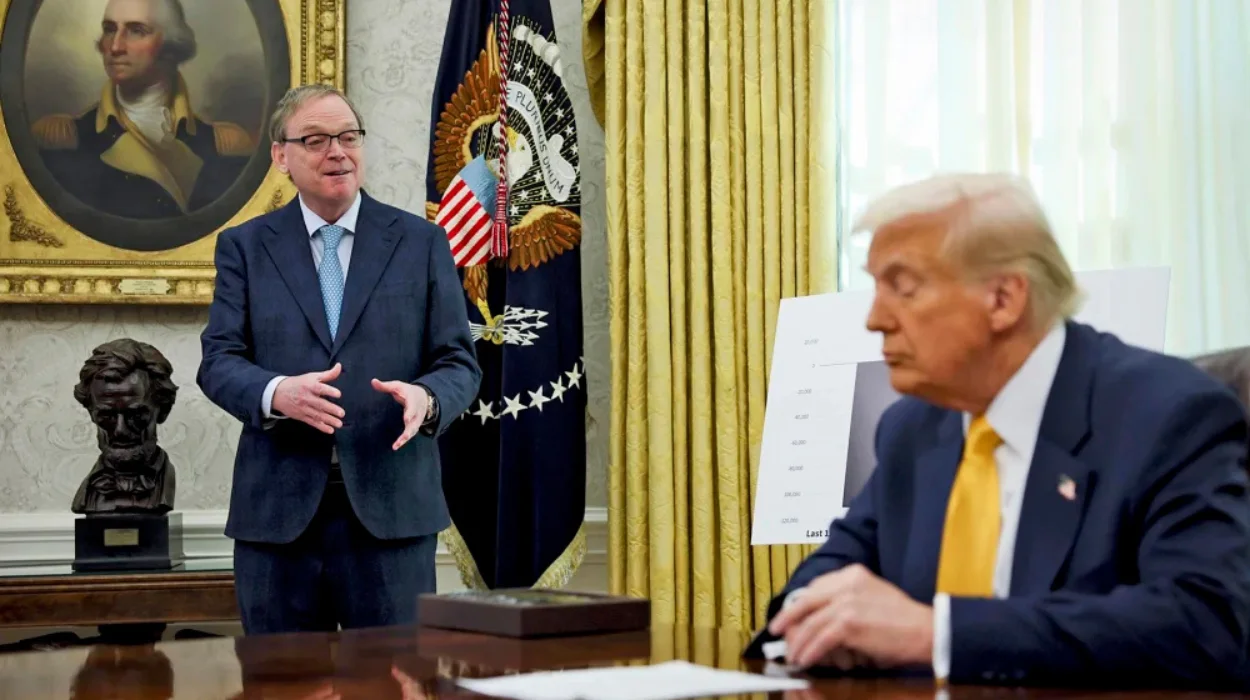
The White House National Economic Council Head, Kevin
Hassett, described the Intel investment as “a down payment” on a
broader vision for the U.S. to create a sovereign wealth fund — a reservoir of
government-owned equity stakes in American businesses aimed at advancing
national economic and strategic interests.
A New Paradigm in Government-Business Relations
This latest intervention sets a new precedent whereby
the U.S. government moves beyond grants and subsidies into actual ownership
roles in private enterprises. Hassett openly acknowledged in interviews that
further similar transactions could occur across different industries. When
CNBC’s Andrew Ross Sorkin asked if the government could take additional equity
positions in other companies nationwide, Hassett confirmed,
“It’s plausible, yes. That’s absolutely correct.”
Despite reassurances that the government’s stakes would
involve non-voting shares to mitigate fears of direct operational interference,
there remains skepticism. Critics warn that even passive holdings could give
the government leverage over corporate strategies, especially given the current
administration’s outspoken desire to influence American businesses to align
with its agenda.
President Trump defended the Intel equity investment
vigorously on social media, asserting,
“I PAID ZERO FOR INTEL, IT IS WORTH APPROXIMATELY 11 BILLION
DOLLARS. All goes to the USA. Why are ‘stupid’ people unhappy with that?”
He emphasized that such deals support American jobs and
strengthen the economy, portraying government participation as beneficial
rather than intrusive.
Motivations Behind Expanding Government Stakes
The Intel stake was part of a broader initiative to bolster
domestic technology manufacturing, especially in key sectors like
semiconductors and artificial intelligence. The U.S. government’s strategy
involves leveraging public investments to secure American leadership in these
crucial industries as geopolitical competition intensifies.
Commerce Secretary Howard Lutnick explained that the
potential equity stakes result partly from reallocating funds from existing
government grants, particularly under the CHIPS Act initiated during the Biden
administration, into actual ownership, stating,
“We should receive an equity interest for our investment…
rather than merely distributing grants.”
This shift aligns with the administration’s goal of
increasing both the economic returns and the strategic security benefits of
government support.
Industry and Market Reactions
Intel’s stock reacted modestly, rising by about 1% after the
deal was announced, building on gains seen earlier. Intel also gained a $2
billion investment from Japan’s Softbank, interpreted by market analysts as a
vote of confidence in the company’s revival and the government’s strategic
involvement.
However, Intel itself expressed concerns that the
government’s stake could potentially hamper its sales and business pursuits
internationally. This perspective highlights the tension between government
ownership and corporate autonomy, a debate likely to intensify as more
corporate stakes come under government control.
Future Prospects and Implications
The Trump administration’s approach suggests it may extend
similar equity investments to other companies beyond the semiconductor and AI
sectors. Hassett confirmed that while the focus is on technology industries for
now, the government might seek stakes in firms across various markets. This
ambitious plan aims to build a sovereign wealth fund for the United States, an
approach traditionally used by countries with large resource revenues, but new
to America’s economic strategy.
This path raises critical questions about the balance
between fostering innovation and maintaining free market principles. As the
government assumes ownership roles, businesses and investors will closely watch
the degree of government influence on corporate governance and strategy. CEOs,
facing these new dynamics, might reconsider their strategic decisions knowing
that government as an equity partner could assert preferences aligned with
national objectives.
President Trump’s assertive stance on this issue illustrates
a broader vision of economic nationalism intertwined with government
intervention in industry. He criticized past policies that allowed companies to
relocate operations overseas, noting,
“If we had a president that would have said, ‘Okay, you can
go to Taiwan, but we’re going to put a 100% tariff or 200 or 300 or 500%
tariff,’ they wouldn’t have left.”
His administration’s equity approach effectively complements
such trade policies by tying government support to ownership.
The U.S. government’s acquisition of a 10% stake in Intel
marks a significant departure from traditional American economic policy. It
represents an experimental “sovereign wealth fund” strategy designed
to strengthen domestic industries while promoting national security interests.
While the administration presents this as a necessary and beneficial move,
concerns about government overreach and its impact on corporate freedom
persist.
As the Trump administration signals intentions to take
stakes in more companies, this evolving paradigm will reshape the intersection
of government power and private enterprise, with major implications for
investors, corporations, and the broader economy.