
The diplomatic relationship
between the United States and Algeria traces back to the early 19th century
when the U.S. sought to establish maritime peace and trade relations with the
Barbary States, including Algiers. After Algeria gained independence from France
in 1962, formal bilateral relations were quickly established. The U.S. and
Algeria have since maintained diplomatic ties rooted in shared interests such
as regional security, economic cooperation, and counterterrorism. Algeria’s
strategic location in North Africa and its vast natural resources, including
significant oil and natural gas reserves, have made it an important partner for
the U.S. in its broader Mediterranean and Sahel engagement. Over the decades,
relations have evolved through cooperation on political, economic, and security
fronts, punctuated by Algeria’s role in mediating international conflicts such
as the Iran hostage crisis and efforts to combat Islamist extremism.
The political relationship stands
on foundations of mutual respect and dialogue, with periodic high-level visits
and bilateral agreements supporting collaboration. Algeria has been valued as a
pragmatic regional actor, often balancing between Western and other global
influences. Cooperation intensified following the 9/11 attacks, as Algeria
became a crucial partner in the global war on terror. Despite occasional
challenges stemming from human rights concerns and differing policy priorities,
the bilateral relationship remains strong and focused on advancing mutual
strategic interests.
Economic and trade ties between
the U.S. and Algeria
Economic engagement between the
United States and Algeria revolves
largely around energy, trade, and investment. Algeria is a major oil and gas
producer, exporting significant volumes primarily to Europe but also engaging
in energy trade talks with the U.S. American companies have interests in
Algeria’s hydrocarbons sector, including exploration, production, and
infrastructure development. Besides energy, trade relationships encompass a
range of goods and services, including agricultural products, machinery,
pharmaceuticals, and information technology.
In 2025, trade volumes between the
two countries will steadily grow, supported by bilateral frameworks encouraging
investment protections, market access, and regulatory cooperation. The U.S.
Agency for International Development (USAID) along with private sector initiatives
have facilitated projects aimed at diversifying Algeria’s economy, including
technology transfer and entrepreneurship promotion. Both nations participate
actively in forums focused on regional economic development and combating
illicit financial flows. Moving forward, expanding sectors such as renewable
energy, digital infrastructure, and education are expected to become focal
points for economic alignment, reflecting global shifts toward sustainability
and technological innovation.
Security and counterterrorism
cooperation
Security cooperation stands as a
fundamental pillar of the partnership between the United States and Algeria,
with both countries investing considerable diplomatic and military resources to
confront shared threats in North Africa and the Sahel region. Algeria’s
strategic geographical location bordering several fragile states—such as Libya,
Mali, and Niger alongside its Mediterranean coastline—makes it a key frontline
state in efforts to contain the spread of violent extremist organizations
(VEOs). Among the primary militant threats are Al-Qaeda in the Islamic Maghreb
(AQIM), regional affiliates of ISIS, and a nexus of transnational terrorist
networks exploiting porous borders and ungoverned spaces. U.S.-Algeria
collaboration focuses on disrupting these networks through intelligence
sharing, training, joint military exercises, and capacity building of Algerian
security forces, underscoring a mutually beneficial endeavor to foster regional
stability.
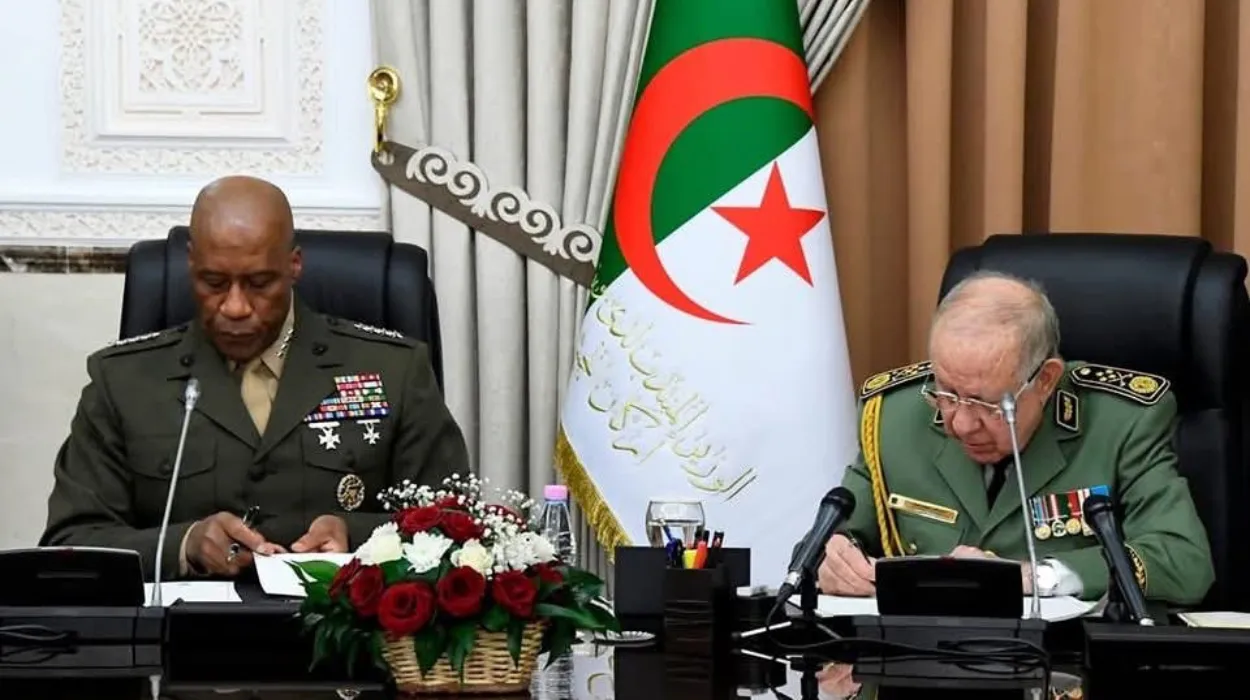
The partnership was significantly
bolstered in January 2025 with the signing of a historic Military Cooperation
Memorandum of Understanding (MOU) in Algiers by leaders from the U.S. Africa
Command and Algeria’s National People’s Army. This agreement, hailed as
“first-of-its-kind” in the bilateral relationship, institutionalizes joint
efforts encompassing counterterrorism, maritime search and rescue, military
healthcare, and strategic asset deployment. The newfound framework establishes
an annual Joint Military Commission to ensure ongoing coordination, reflecting
the deepening trust and shared objectives between the two militaries. This
development also marks a political shift in Algeria, traditionally aligned
militarily with Russia, indicating a diversification of foreign military
partnerships amid evolving regional threats and geopolitical pressures.
Operationally, the United States
plays an active role in empowering Algeria to combat terrorism domestically and
regionally by supplying military aid, advanced equipment, and advisory support
tailored to enhancing enforcement, surveillance, and rapid response
capabilities. Training programs form a core element, focusing on
counterinsurgency tactics, intelligence analysis, and technological integration
aimed at combating asymmetric warfare and emerging cyber threats. Algeria’s
comprehensive approach combines robust domestic law enforcement with a nuanced
diplomatic strategy that promotes regional cooperation, recognizing that
eradication of VEOs requires political solutions alongside military pressure.
U.S. policy recognizes Algeria’s counterterrorism model as a vital success
story in the region, employing coordinated interdiction efforts while
respecting sovereignty and pursuing justice system enhancements.
In 2025, the bilateral security
partnership reached heightened activity levels, with senior defense officials
from both countries conducting high-level dialogues to address dynamic threats
including terrorism financing and the burgeoning cybersecurity domain.
Collaborative workshops, such as those focusing on anti-money laundering and
counter-terrorism financing, underscore the broad scope of the partnership
extending beyond kinetic military engagements into financial and legal arenas.
Such cooperation ensures that terrorist networks face multi-dimensional
interruption, encompassing financial flows, recruitment platforms, and supply
chains. The U.S. Department of Justice and Treasury have worked alongside
Algerian counterparts to share expertise in investigative techniques and
judicial processes, marking a comprehensive approach to security governance.
The enduring security relationship
also aims to foster regional stability beyond Algeria’s borders. The Sahel
zone, characterized by combating insurgencies, illegal trafficking, and
governance gaps, benefits from Algeria’s leadership role and the U.S.’s
logistical and intelligence support. Joint initiatives include border security
enhancement, training of partner countries’ forces, and strategic information
sharing, highlighting the cascading positive effects of the bilateral
partnership on broader African security frameworks.
Challenges remain in the
partnership, including managing geopolitical sensitivities as Algeria balances
relations with Russia and other international actors while intensifying ties
with the U.S. The evolving nature of threats, incorporating terrorism
innovation and cyber warfare, demands adaptive collaboration models.
Additionally, ensuring human rights compliance and rule of law in
counterterrorism efforts remains a sensitive but necessary focus within
bilateral programs to align with international standards and democratic values.
U.S.-Algeria security and
counterterrorism collaboration is a dynamic, vital, and multi-layered
partnership addressing complex regional threats in North Africa and the Sahel.
The 2025 Military Cooperation MOU and ongoing high-level coordination exemplify
a shared commitment to preventing violent extremist expansion, improving
security frameworks, and enhancing governance capacity. This strategic alliance
significantly contributes to regional stability, reinforcing Algeria’s role as
a pivotal partner in U.S. foreign policy while supporting comprehensive
approaches to peace and security challenges on the continent and beyond.
Cultural and educational exchanges
Cultural diplomacy and educational
exchanges have been vital tools for fostering mutual understanding and
people-to-people ties between Algeria and the United States. Over recent years,
programs such as the Fulbright scholarships and agricultural training
initiatives have enabled Algerian students, academics, and professionals to
study and train in the U.S. These exchanges help build capacity in sectors
including science, technology, agriculture, and governance, contributing to
Algeria’s socio-economic development.
American cultural centers and
English language programs in Algeria facilitate cross-cultural communication
and provide platforms for dialogue on democratic values, human rights, and
social inclusion. Public diplomacy initiatives also include joint celebrations
of cultural heritage and cooperation in media and arts sectors. In 2025, these
programs continue to expand, reflecting a shared vision for long-term
partnership strengthened through educational and cultural collaboration.
Prospects for future U.S.-Algeria
relations
Looking ahead, U.S.-Algeria
relations are poised to deepen significantly amid shifting geopolitical
dynamics and evolving challenges in the Mediterranean and Sahel regions. Both
governments recognize the strategic necessity of sustained dialogue and partnership
to address climate change, migration, economic diversification, and regional
security. Algeria’s role as an energy supplier and security partner coupled
with the U.S.’s technological and economic influence positions both countries
to expand cooperation in new domains such as clean energy, digital
infrastructure, and public health.
Multilateral engagement through
forums such as the African Union, the United Nations, and Mediterranean
dialogues complement bilateral efforts, contributing to regional stability and
development goals. Enhanced people-to-people connections and private sector
collaboration will be key to solidifying economic ties. Challenges remain,
including addressing domestic reforms in Algeria and managing broader
geopolitical tensions, but ongoing diplomatic commitments signal optimism for a
resilient and multifaceted U.S.-Algeria partnership in the decades to come.