
- Trump admin cancels $1.9bn mental health funding.
- Cut announced unexpectedly Tuesday evening.
- Targets substance use care programs.
- Providers warn of patient impacts.
Up to 2,800 grantees, or roughly 26% of the Substance Abuse and Mental Health Services Administration's (Samhsa) total budget, got a letter immediately terminating their funding.
“It feels like Armageddon for everyone who’s on the frontlines of the addiction and mental health space,”
said Ryan Hampton, founder of Mobilize Recovery, a national advocacy organization for people in and seeking recovery.
“The scope of care that’s disrupted by these grants is catastrophic. Tens of thousands, if not hundreds of thousands, of people will die.”
According to two people acquainted with the layoffs who requested anonymity to discuss sensitive issues, Samhsa employees were neither informed of the cuts nor consulted about them. In 2025, the organization likewise saw significant budget cuts.
According to Hampton, providers discovered this morning that they would have to immediately terminate programs and lay off employees. As the initial point of contact for individuals in need of care, many of these programs are at the forefront of mental health and substance abuse.
“These are programs that save lives, so the impact could be really devastating,”
said Regina LaBelle, former acting director of the Biden White House office of national drug control policy and professor at Georgetown University.
“It really covers the spectrum of prevention, treatment and recovery services, both on substance use and mental health,”
said Yngvild Olsen, who until last July served as the director for the Center for Substance Abuse Treatment at Samhsa and is now a national adviser at Manatt Health.
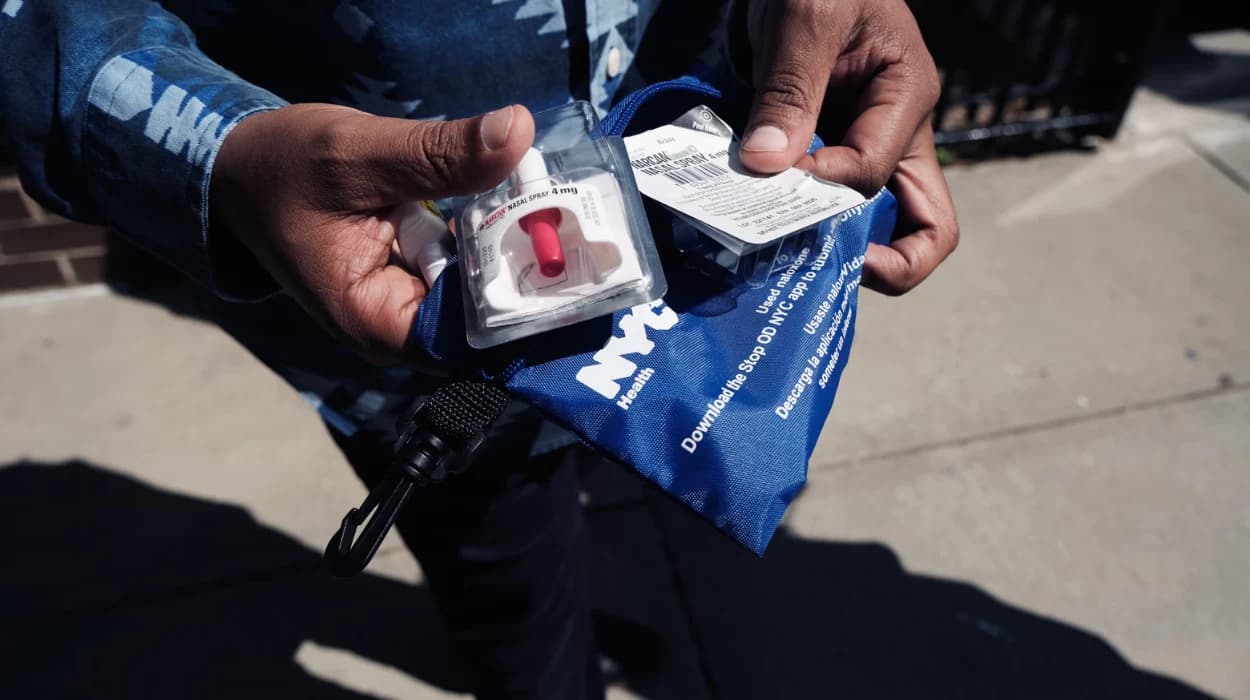
Overdose prevention efforts, naloxone distribution and use by first responders, mental health and substance use support in schools, support for pregnant and postpartum women receiving assistance for substance use disorders, underage drinking prevention, and recovery support programs are all impacted by the abrupt cuts.
Overdoses increased during the previous 20 years, but they started to decline in recent years. The US overdose rate decreased by 27% in 2024. According to Hampton, "a lot of lives are going to be lost" as a result of these sudden cuts.
"This morning, a lot of harm is occurring in real time."
Congress appropriated the money for Samhsa, which subsequently distributes it to NGOs across the nation. The cancellations don't seem to have affected Congress. LaBelle stated, "We didn't know that the administration would just basically use their regulatory authority to pull the plug," adding that Republicans and Democrats have been negotiating funds and that these cuts appear to be politically driven.
According to a letter to grantees from Christopher Carroll, the deputy assistant secretary at Samhsa, which the Guardian was able to receive, the awards were discontinued because they no longer matched the priorities of the Trump administration. According to the letter, the administration's objectives include "innovative programs and interventions" to lower mental illness, substance abuse, overdoses, and suicide.
“You can’t tell me that naloxone distribution, providing mental health support in schools, providing outreach to get people into treatment who are unhoused, providing drug court services, that these are not in line with administration priorities. They are 100% in line with administration priorities, as stated by the administration as recently as two or three months ago,”
Hampton said.
“All of us are in a state of complete and utter shock that the administration would take such a reckless action.”
Nearly all discretionary monies, which make up about $2 billion of Samhsa's budget, are being reduced. The 988 helpline, the certified community behavioral clinics program, and state opioid response block grants are among the grants that were unaffected.
When the reporter asked Samhsa if staff members were consulted or told about these changes and how they would impact care, Samhsa did not reply by the time of publication.
The reductions were implemented in accordance with the same regulations as earlier health agency layoffs and reductions, which were successfully contested in court.
“My hope is that this will go to court and the courts will stop it,”
Hampton said. But
“the harm is happening in real time right now, and as this gets sorted out in the courts, people will die. People will die.”
How will naloxone distribution be affected locally?
The SAMHSA entitlement cancellations will oppressively disrupt original naloxone distribution programs across the US, as numerous calculate directly on these civil finances for bulk purchasing, training, and community outreach.
Numerous community- grounded associations, health departments, and hype service programs face entitlement termination, forcing them to halt or gauge back naloxone tackle distribution within weeks due to incapability to cover costspost-January 13.
Countries without robust stashes or indispensable backing( e.g., Medicaid expansions or state budgets) will see the sharpest drops, particularly in pastoral and underserved civic zones dependent on SAMHSA for 70- 90 of naloxone backing.