
- Top
U.S. military officer visits Puerto Rico. - Visits
American troops and Navy warship. - U.S.
amasses large regional warship fleet.
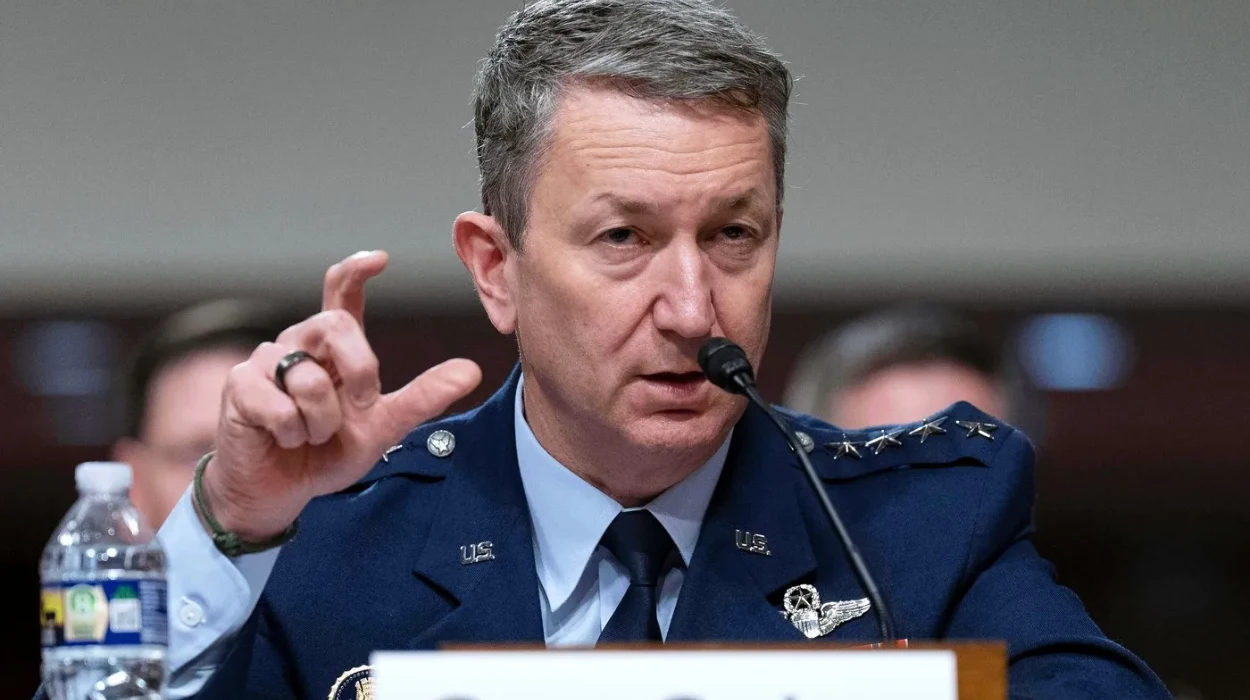
David L. Isom, a senior enlisted adviser to General Dan
Caine, the chairman of the Joint Chiefs of Staff and President Donald Trump’s
principal military advisor, will accompany Caine. The men will
“engage
with service members and thank them for their outstanding support to regional
missions,”
according to a statement from Caine’s office.
Since the U.S. Navy began bolstering its presence which now
includes the country’s most sophisticated aircraft carrier this will be Caine’s
second trip to the area. Following the arrival of ships carrying hundreds of
U.S. Marines for what officials described as a training exercise, Caine and
Defense Secretary Pete Hegseth traveled to Puerto Rico in September.
The deployed Marines were
“on the front lines of
defending the American,”
according to Hegseth at the time.
Caine’s visit this week coincides
with Trump’s assessment of the possibility of using force against Venezuela,
which he hasn’t ruled out as part of his administration’s intensifying effort
to stop drug trafficking into the United States. Many believe that the strikes,
which have killed over 80 people on 21 purported drug vessels, and the
accumulation of US warships are an attempt to force Venezuelan President
Nicolás Maduro to step down.
Additionally, the Trump administration is increasing
pressure by classifying the Cartel de los Soles, also known as the Cartel of
the Suns, as a foreign terrorist organization, despite the fact that Maduro is
not the leader of this group.
Until last year, organizations that utilize violence for
political purposes, such as al-Qaida or the Islamic State, were classified as
foreign terrorist organizations. In February, the Trump administration
implemented it for eight drug-trafficking criminal groups in Latin America.
Although it seldom names the organizations and has not
produced any proof, the administration accuses these designated groups of
running the boats it is attacking.
Hegseth stated last week that the United States will have a
“whole bunch of new options”
for dealing with Maduro as a result of
the Cartel de los Soles designation. Hegseth declined to clarify whether the
U.S. military intended to attack land targets within Venezuela and did not
elaborate on those alternatives.
“So nothing is off the table, but nothing’s automatically
on the table,”
he said.
How could this deployment affect tensions with Venezuela?
The U.S. service deployment in the Caribbean, including the
large line and colors amassed near Venezuela, has significantly escalated
pressures with the Venezuelan government. Venezuelan President Nicolás Maduro
has described the presence as the topmost trouble to the mainland in a century,
viewing it as a direct challenge and a prelude to possible U.S. service
intervention aimed at governance change.
In response, Venezuela has mustered around 25,000 colors
along its borders and littoral regions, bolstered regulars, and advised of
readiness to defend against any aggressive U.S. conduct. Maduro has condemned
the U.S. strikes on contended medicine- smuggling boats as part of a broader
service crusade.
This deployment risks further destabilizing the region,
raising the possibility of direct military battle and increased geopolitical
disunion with abettors of Venezuela similar as Russia and China, who have
blamed U.S. conduct.